Best No-Prep STEM Toys for 8-Year-Olds
Low-prep STEM toys for 8-year-olds that teach through hands-on play, not worksheet fatigue.

Snapshot
| Toy | Age | Price | Best for | Link |
|---|---|---|---|---|
| #1 National Geographic Epic Circuits Science Kit | 8+ | CAD $55–$85 | Electronics experiments without repeating Snap Circuits again | Check Price |
| #2 ThinkFun Laser Maze | 8+ | CAD $45–$70 | Light-bending logic and spatial reasoning puzzles | Check Price |
| #3 ThinkFun Roller Coaster Challenge | 6+ | CAD $45–$70 | Engineering logic through build-and-test coaster puzzles | Check Price |
| #4 ThinkFun Gravity Maze | 8+ | CAD $45–$70 | Co-solving logic challenges | Check Price |
Affiliate links. Prices can change.
At eight, no-prep STEM can move into real circuits, spatial logic, and build-test thinking, as long as the instructions are clear enough that a child can start without a long adult setup lecture.
That matters because many 8-year-olds are ready for harder ideas but not always ready for a complicated kit that takes half an hour to organize before anything interesting happens. The best no-prep STEM toys give quick feedback first, then layer in planning, troubleshooting, and persistence once the child is already engaged.
National Geographic Epic Circuits Science Kit
Reliable engagement, low setup friction, and strong replay value for real family routines.
This guide focuses on STEM toys that can live in a normal family routine: after school, on a weekend morning, during a quiet table block, or as a screen-free reset when a child wants something more challenging than a fidget but less open-ended than a blank craft bin.
If you are comparing broader science gifts, also see Best Science Kits for 8-Year-Olds. If the goal is lower-cost STEM, Best STEM Toys Under $40 for Kids is the better starting point.
What to Look For
- Fast entry. If setup is complicated, attention disappears before the learning starts.
- Visible feedback. Lights, movement, marble drops, laser paths, and solved cards help kids see what changed.
- Real troubleshooting. A good STEM toy lets a child test a guess, notice what failed, and try again without feeling punished.
- Contained pieces. No-prep does not mean no parts; it means the parts have an obvious home.
- Replay value. The best picks have challenge cards, experiments, or open variations instead of one finished project.
Our Top 6 Picks
Electronics experiments without repeating Snap Circuits again
Pros
- ✓ Fresh circuits angle
- ✓ 40+ experiments
- ✓ Good science gift positioning
Cons
- ✗ Needs organization
- ✗ May require adult help early
- ✗ Less open-ended than LEGO-style builds
ThinkFun Laser Maze
Light-bending logic and spatial reasoning puzzles
Pros
- ✓ Distinct science hook
- ✓ Compact challenge cards
- ✓ Strong older-kid puzzle value
Cons
- ✗ Button batteries
- ✗ Mostly solo play
- ✗ Too hard for younger beginners
Engineering logic through build-and-test coaster puzzles
Pros
- ✓ Clear challenge progression
- ✓ Great cause-and-effect feedback
- ✓ Stronger novelty than another circuit kit
Cons
- ✗ Pieces need organization
- ✗ One-player-at-a-time tendency
- ✗ Harder cards may need help
ThinkFun Gravity Maze
Co-solving logic challenges
Pros
- ✓ Great age fit for 9-year-olds
- ✓ Encourages planning
- ✓ Compact setup
Cons
- ✗ Can become one-kid-at-a-time
- ✗ Harder cards may need help
- ✗ Less open-ended than building sets
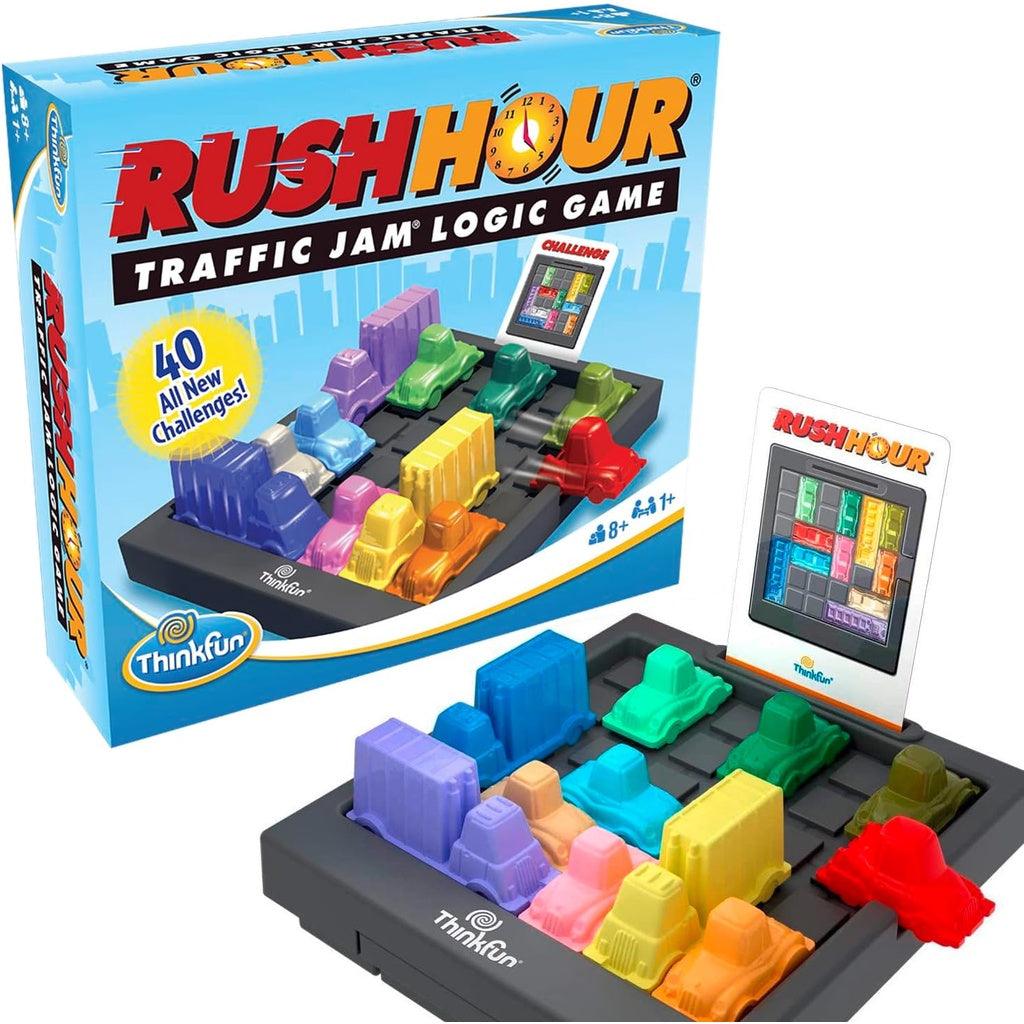
ThinkFun Rush Hour
Quiet logic focus and travel-friendly puzzles
Pros
- ✓ No batteries
- ✓ Portable
- ✓ Great thinking reps
Cons
- ✗ Single-player
- ✗ Can feel hard at first
- ✗ Needs progression support
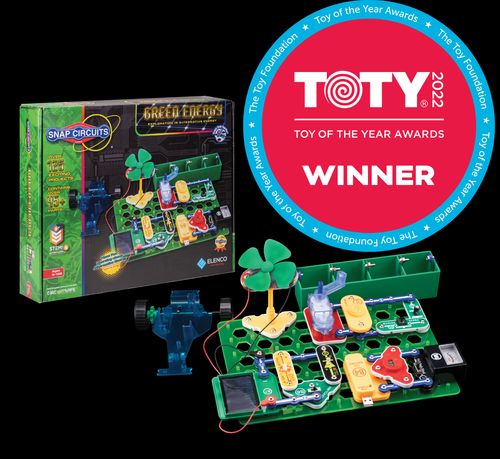
Snap Circuits Jr. SC-100
Hands-on logic and electronics
Pros
- ✓ Clear challenge progression
- ✓ High educational value
- ✓ Strong replay
Cons
- ✗ Can frustrate younger kids
- ✗ Needs organization
- ✗ Best with guidance early
Why These Picks Made the List
National Geographic Epic Circuits Science Kit
This is the most natural first pick for an 8-year-old who wants real science without turning the dining table into a parent-managed lab. The experiments create an obvious build-test loop: connect the pieces, check whether the circuit behaves as expected, then adjust. That loop is the useful learning part. It teaches cause and effect, not just vocabulary.
The tradeoff is storage. Circuit pieces need a tray, labelled bag, or dedicated box. If the parts get dumped into a mixed toy bin, the kit becomes frustrating quickly. It is best for a child who can follow a sequence with some independence, or for a parent who is willing to do the first one or two builds together and then step back.
ThinkFun Laser Maze
Laser Maze is a strong fit when you want STEM that feels different from another electronics set. It introduces reflection, angles, and spatial planning through challenge cards. The child can see the beam path, so mistakes feel concrete rather than mysterious.
It is mostly a solo puzzle, which is good for quiet focus but less ideal if siblings are both trying to play. It also asks for patience. If your child melts down when a puzzle does not solve quickly, start with the easiest cards and treat the first session as exploration, not performance. For a deeper engineering comparison, see Roller Coaster Challenge vs GraviTrax for Engineering Kids.
ThinkFun Roller Coaster Challenge
Roller Coaster Challenge works because the feedback is physical. Kids build a track, release the coaster, and immediately see whether the design works. That makes it especially useful for children who understand ideas better through movement than through diagrams.
The weakness is piece management. Tracks, posts, and challenge cards need a clear storage routine. It can also turn into a one-player-at-a-time toy if one child takes over the building. For an 8-year-old who likes testing and rebuilding, though, it is one of the better no-prep engineering choices because each challenge feels like a small design problem.
ThinkFun Gravity Maze
Gravity Maze is a quieter, more compact logic option. It combines marble runs with puzzle sequencing, so the child has to plan where towers go before the marble can reach the target. It is not as open-ended as a full building set, but it gives better progression than a toy that simply says "build anything."
This one can be excellent for co-solving with an adult: ask what the child thinks will happen before dropping the marble, then test it. That tiny prediction habit is real STEM thinking. If you need something more social and expandable, GraviTrax or LEGO-style systems may be better.
ThinkFun Rush Hour
Rush Hour is not flashy, but it is a useful thinking toy for short sessions. The pieces stay on the grid, the goal is obvious, and the challenge cards create steady progression. It is a good choice for a child who likes logic but gets overwhelmed by big kits with many loose parts.
The main risk is frustration at the start. Some kids try to solve each card by random movement instead of planning. Help by modelling one sentence: "Which car is blocking the red car first?" That shifts the toy from fiddling to strategy. Rush Hour also travels better than most STEM toys, so it can double as a restaurant or waiting-room option.
Snap Circuits Jr. SC-100
Snap Circuits Jr. remains a classic because it teaches electronics through reliable, satisfying builds. At eight, many kids can handle it with less help than they could at six or seven. The instruction format is clear, the pieces snap together securely, and finished circuits usually do something obvious.
The reason it is not the top pick here is novelty. Many families already know Snap Circuits, and some children want a fresher angle. If your child has never used a circuit kit, it is still one of the safest bets. If you are deciding between beginner coding and electronics, Botley vs Snap Circuits: Which Is Better for Kids? breaks down that choice.
How to Match the Toy to Your Child
Choose circuits if your child likes clear instructions and enjoys seeing lights, sounds, or motors respond. Choose Laser Maze, Gravity Maze, or Rush Hour if your child enjoys puzzles and can tolerate being stuck for a few minutes. Choose Roller Coaster Challenge if your child learns by building, testing, and changing something physical.
For reluctant STEM kids, start with the toy that feels least like school. A child who hates worksheets may still love launching a coaster or moving cars around a traffic-jam grid. For kids who already seek challenge, pick the toy with the longest progression path and protect the first few sessions from younger siblings interrupting.
Want better toy picks without the research rabbit hole?
Short, practical recommendations by age, need, and budget.
Practical Setup Tips
1) Make a two-minute start routine
Keep the toy, instructions, and main pieces together. The child should be able to open the box and start the first step without waiting for an adult to find batteries, cards, or missing parts.
2) Start below their ability level
The easiest cards are not a waste. They teach how the system works and create an early win. Move up once the child is asking for harder challenges.
3) Use one sentence of coaching
Avoid turning the toy into a lesson. Try prompts like "What changed?" or "What do you want to test next?" Those questions support reasoning without taking over.
4) Stop before the crash
For many 8-year-olds, 20 to 30 minutes of focused STEM play is a success. Ending while the toy still feels good makes it more likely they will return to it tomorrow.
FAQ
Are no-prep STEM toys still educational?
Yes. The educational value comes from prediction, testing, sequencing, and troubleshooting. A toy does not need a long adult-led lesson to teach real thinking.
What if my child gives up when a challenge gets hard?
Use the first session to learn the system, not to advance quickly. Sit beside them for one challenge, name the first stuck point, then let them make the next move.
Are these good for kids who dislike science at school?
Often, yes. Hands-on STEM can feel very different from worksheets. Pick a toy with visible feedback, like circuits, lasers, cars, marbles, or moving tracks.
Related reads
- Best Science Kits for 8-Year-Olds
- Best Creative Tech Toys for Kids
- Best STEM Toys Under $40 for Kids
- Roller Coaster Challenge vs GraviTrax for Engineering Kids
- Botley vs Snap Circuits: Which Is Better for Kids?
If You Can Only Buy One
National Geographic Epic Circuits Science Kit.
It gives the best balance of calm engagement, clear feedback, and real STEM learning for most 8-year-olds who are ready for hands-on electronics.
Want better toy picks without the research rabbit hole?
Get concise recommendations by age, need, and budget.
Where to go next
By age
Best Homework Break Toys for 8-Year-Olds
Keep the recommendations age-appropriate for your kid’s stage.
By need
Gifts for Neurodivergent Kids: A Parent's Guide (2026)
Jump to picks focused on ADHD, sensory, and regulation support.
By budget
Best Gifts for Kids Under $25 (2026)
Compare strong options in lower price brackets before you buy.
Related Articles

Best Screen-Free Math Toys for Preschoolers
Three current, hands-on math toys for preschoolers: counting, matching quantities, sorting, and early pattern work without turning play into a worksheet.
Read more →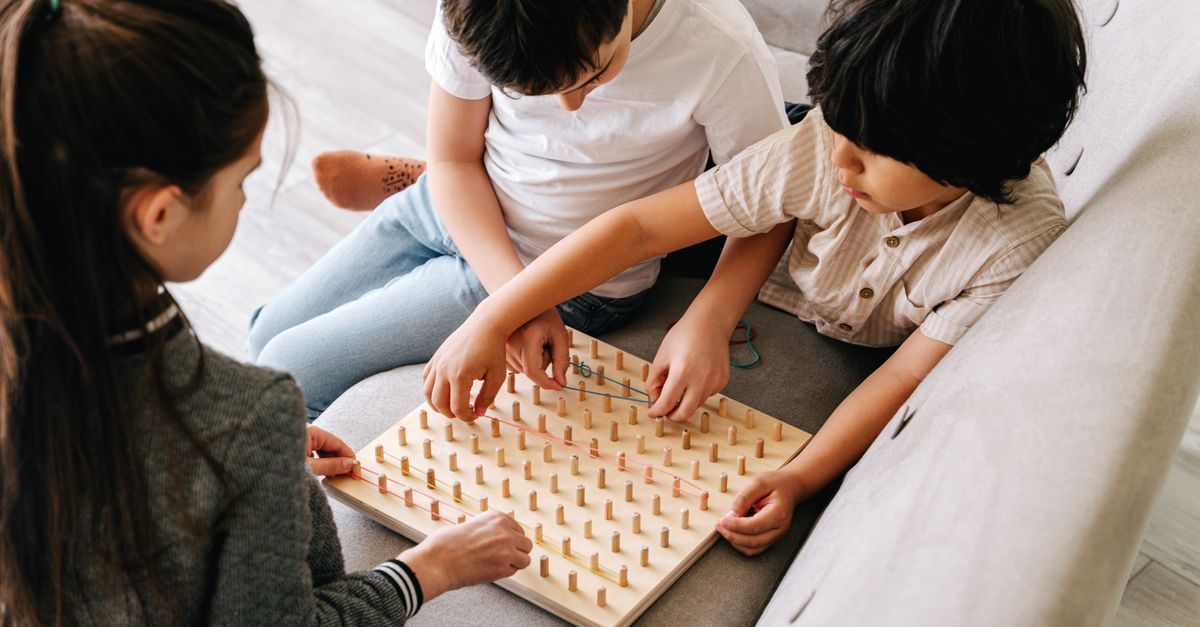
Best Low-Noise Tabletop Logic Toys for Apartments
Three manual logic toys for apartment tables, with honest guidance on setup, storage, loose pieces, and mechanical noise.
Read more →
Monster Scale vs Mental Blox for Early Logic
A comparison for families choosing between early math comparison play and spatial logic challenges.
Read more →