Best Screen-Free Math Toys for Preschoolers
Three current, hands-on math toys for preschoolers: counting, matching quantities, sorting, and early pattern work without turning play into a worksheet.
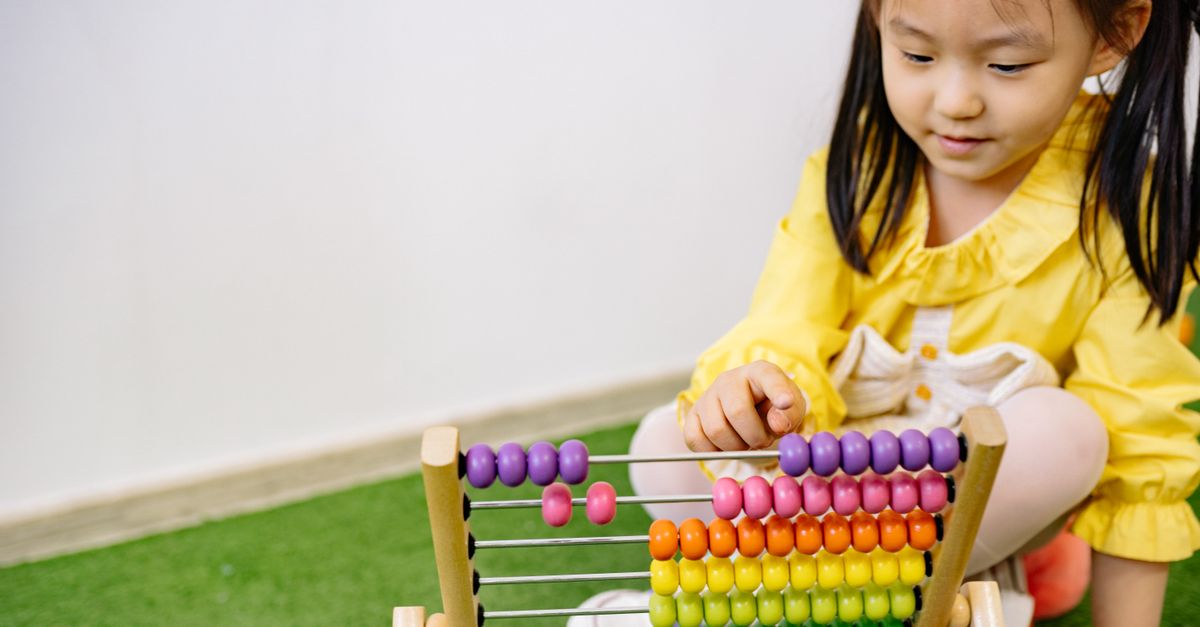
Snapshot
| Toy | Age | Price | Best for | Link |
|---|---|---|---|---|
| #1 Learning Resources Mathlink Cubes Preschool Math Activity Set | 3+ | Check current price | A guided first set for counting, matching quantities, simple patterns, and connecting cubes | Check Price |
| #2 Learning Resources MathLink Cubes Early Math Activity Set | Preschool and early kindergarten | Check current price | Children ready for more sorting, patterning, counting, and quantity-comparison activities | Check Price |
| #3 Fat Brain Toys Dimpl Digits | 2+ | Check current price | A younger preschooler beginning to notice numerals, colours, and number order | Check Price |
Affiliate links. Prices can change.
Preschool math is physical. Children notice more and fewer, make a line longer, build two equal towers, sort colours, and match a spoken number to a group they can touch. The strongest math toys make one of those actions easy to repeat without asking a child to sit through a lesson.
These three exact Amazon.ca listings were current when checked. Availability and prices change, so the cards link to the exact product rather than publishing a stale price. They are buying recommendations based on product information, not claims of hands-on testing.
Learning Resources Mathlink Cubes Preschool Math Activity Set
The clearest preschool-math starting point: chunky pieces, simple guided activities, and enough open-ended play to make counting and comparison visible.
Quick Answer
Choose the Mathlink Cubes Preschool Math Activity Set when you want a ready-made activity path for ages 3+. Choose the Early Math Activity Set when your child is already comfortable connecting cubes and wants more counting, sorting, and pattern prompts. Choose Dimpl Digits for a younger preschooler who is beginning to notice numerals but is not ready for a multi-piece activity box.
None needs a screen. All use small pieces or cards that belong in one labelled pouch or bin. For children who still mouth toys, follow the manufacturer age guidance and supervise appropriately.
What a Preschool Math Toy Should Actually Do
- Give the child something to count, compare, sort, join, or arrange.
- Make an adult prompt optional: “Can you make mine the same?” is enough.
- Allow free play after a short task. The toy should not become a tiny workbook.
- Match the child’s current tolerance for pieces, instructions, and cleanup.
Our Top 3 Picks
A guided first set for counting, matching quantities, simple patterns, and connecting cubes
Pros
- ✓ Preschool-specific activity set
- ✓ Cubes make quantity and length visible
- ✓ Can shift from prompts into open-ended building
Cons
- ✗ Loose cubes and cards need a container
- ✗ Adult may need to read the first activity
- ✗ Not a good fit for a child who cannot safely manage small pieces
Start with a one-minute task: build a tower of three, then build another tower of three. Ask whether they match. Next time, make a simple red-blue-red pattern or line up two groups and see which has more. The cubes give the idea a physical shape, which is more useful at this age than asking a child to answer from memory. Stop while the play is still easy; free building afterwards is fine.
Children ready for more sorting, patterning, counting, and quantity-comparison activities
Pros
- ✓ Keeps the same concrete cube language
- ✓ More room for repeated counting and pattern work
- ✓ Useful when a child has outgrown one-step prompts
Cons
- ✗ Activity pieces still need careful storage
- ✗ May feel too structured for a child who only wants free building
- ✗ Adult support helps at the beginning
This is the better second choice when a child already understands how cubes connect and can stay with a two- or three-part prompt. Use it for comparison, not performance: make five cubes, make four, line them up, and ask which row is longer. The answer matters less than letting the child check it with the objects in front of them.
Fat Brain Toys Dimpl Digits
A younger preschooler beginning to notice numerals, colours, and number order
Pros
- ✓ One-piece format is easier to put away
- ✓ Numbers are visible without a screen
- ✓ A gentler entry than a full activity set
Cons
- ✗ It does not teach counting quantities by itself
- ✗ Shorter play depth than cube sets
- ✗ Not a substitute for hands-on sorting or building
Dimpl Digits is the quietest, simplest choice here. It can help a young child become familiar with number shapes and order, but it is not a complete math programme. Pair it with ordinary household play: find two socks, put three crackers on a plate, or count steps. The real value is giving number talk a low-pressure object to point at.
Keep It Play, Not a Test
A preschooler does not need to finish every card or “master” a number before moving on. Use one short invitation, then let the child change the game. If they only want to make a very tall tower, count it together. If they sort every cube by colour, make a pattern from the rows. If they lose interest after four minutes, put it away without turning the toy into a conflict.
The adult language is the useful part: same, different, more, fewer, next, under, and beside. Those words make the math already happening in the child’s play easier to notice.
What to Say While They Play
Keep prompts short and concrete. “Can you make mine the same height?” turns a tower into comparison. “Which row has fewer?” lets a child check by touching each cube. “What comes next?” works for a colour or shape pattern. Then pause. Preschoolers need room to answer with their hands, not a running commentary.
When an answer is wrong, let the objects do the correcting. Put the towers beside each other, count again, or move one cube. That makes the toy a way to notice an idea rather than a quiz with a right-answer adult waiting nearby.
Want better toy picks without the research rabbit hole?
Short, practical recommendations by age, need, and budget.
FAQ
Are these toys only for preschool learning time?
No. They work best in short ordinary play windows. One small prompt before free building is enough.
Which set is better for a three-year-old?
Start with the Preschool Math Activity Set if the child can handle small pieces and short prompts. Dimpl Digits is the lower-complexity option for a younger child who is still mainly exploring number shapes.
Do I need to buy a math toy?
No. Sorting laundry, matching socks, setting out cups, and building block towers can all create the same early comparison talk. A toy is useful when it makes those invitations easier to repeat.
Related Reads
If You Can Only Buy One
Mathlink Cubes Preschool Math Activity Set. It gives preschoolers a clear starting point, then stays useful for counting, comparison, and pattern play after the first card is done.
Want better toy picks without the research rabbit hole?
Get concise recommendations by age, need, and budget.
Where to go next
By age
Best Toys for 4-Year-Olds (Learning Through Play) (2026)
Keep the recommendations age-appropriate for your kid’s stage.
By need
Gifts for Neurodivergent Kids: A Parent's Guide (2026)
Jump to picks focused on ADHD, sensory, and regulation support.
By budget
Best Gifts for Kids Under $25 (2026)
Compare strong options in lower price brackets before you buy.
Related Articles
Best STEM Toys for 10-Year-Olds: 4 Project Styles
Four current electronics, coding, drawing, and spatial-reasoning toys for 10-year-olds, with honest setup, device, replay, and frustration tradeoffs.
Read more →
Best Low-Noise Tabletop Logic Toys for Apartments
Three manual logic toys for apartment tables, with honest guidance on setup, storage, loose pieces, and mechanical noise.
Read more →
Monster Scale vs Mental Blox for Early Logic
A comparison for families choosing between early math comparison play and spatial logic challenges.
Read more →