Best Low-Noise Tabletop Logic Toys for Apartments
Three manual logic toys for apartment tables, with honest guidance on setup, storage, loose pieces, and mechanical noise.
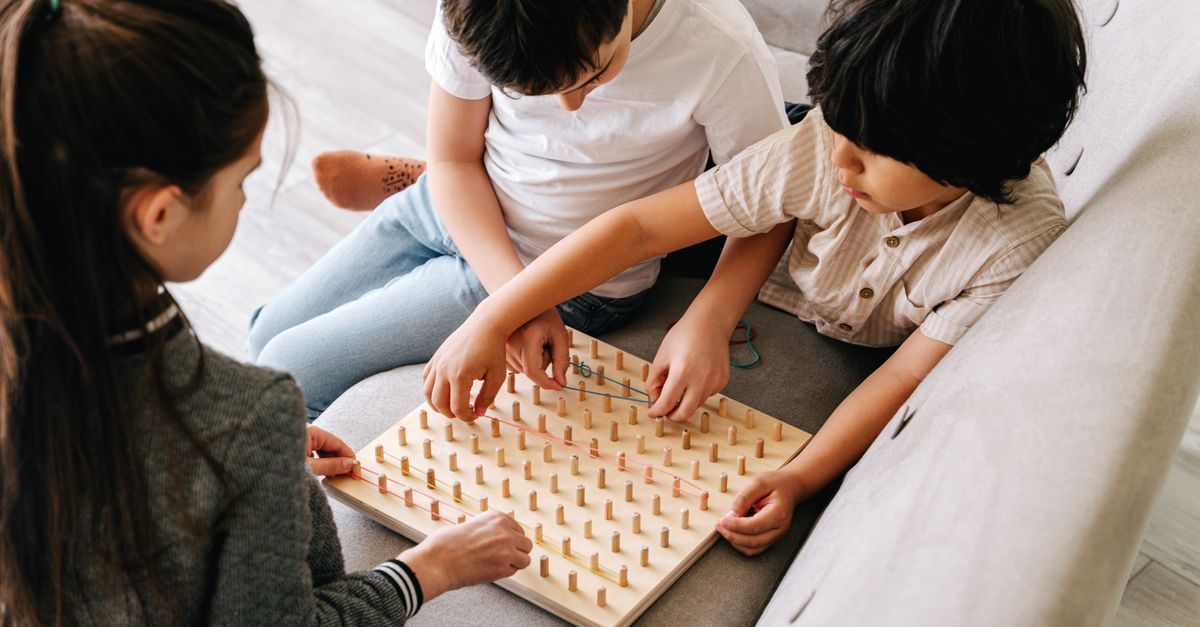
Snapshot
| Toy | Age | Price | Best for | Link |
|---|---|---|---|---|
| #1 ThinkFun Rush Hour Junior | 5+ | Check current price | Low-setup sliding logic for ages 5+ | Check Price |
| #2 Learning Resources Mental Blox Critical Thinking Game | 5+ | Check current price | Spatial challenges with a parent, sibling, or co-solver | Check Price |
| #3 ThinkFun Roller Coaster Challenge | 6+ | Check current price | Build-and-test logic for a child who enjoys engineering puzzles | Check Price |
Affiliate links. Prices can change.
Apartment-friendly logic toys need to hold attention without adding speakers, motors, or a sprawling floor setup. The strongest options stay on one tabletop, give the child a clear problem to solve, and have a stopping point that does not require negotiating one more electronic round.
Low-noise does not mean silent. Plastic cars slide, blocks knock together, and a coaster car rolls down track. A felt mat, rug, or placemat can reduce the sound that travels through a hard table or floor.
ThinkFun Rush Hour Junior
The easiest apartment pick to start and stop: one manual sliding grid, progressive challenge cards, and less loose-piece setup than the other options.
Quick Answer
Choose ThinkFun Rush Hour Junior for the smallest setup and cleanest solo puzzle loop. Choose Learning Resources Mental Blox when a parent, sibling, or co-solver can join the activity. Choose ThinkFun Roller Coaster Challenge for a child who wants build-and-test logic and can manage more pieces.
All three avoid electronic feedback. Rush Hour Junior has the lowest setup and noise risk. Mental Blox can clack on a hard surface. Roller Coaster Challenge has the most mechanical clicking and rolling, plus the longest cleanup.
What Makes a Logic Toy Apartment-Friendly?
- Manual feedback. The puzzle should work without beeps, recorded praise, or a motor.
- Tabletop boundaries. A grid, tray, or defined build board keeps the activity from spreading through the room.
- Visible progress. Challenge cards help a child know where to begin and when a round is finished.
- Honest storage. Loose blocks, posts, track, and cards still need a dedicated bin.
- A manageable frustration level. Start below the child's maximum skill so the first session teaches the play loop instead of ending in a standoff.
Our Top 3 Picks
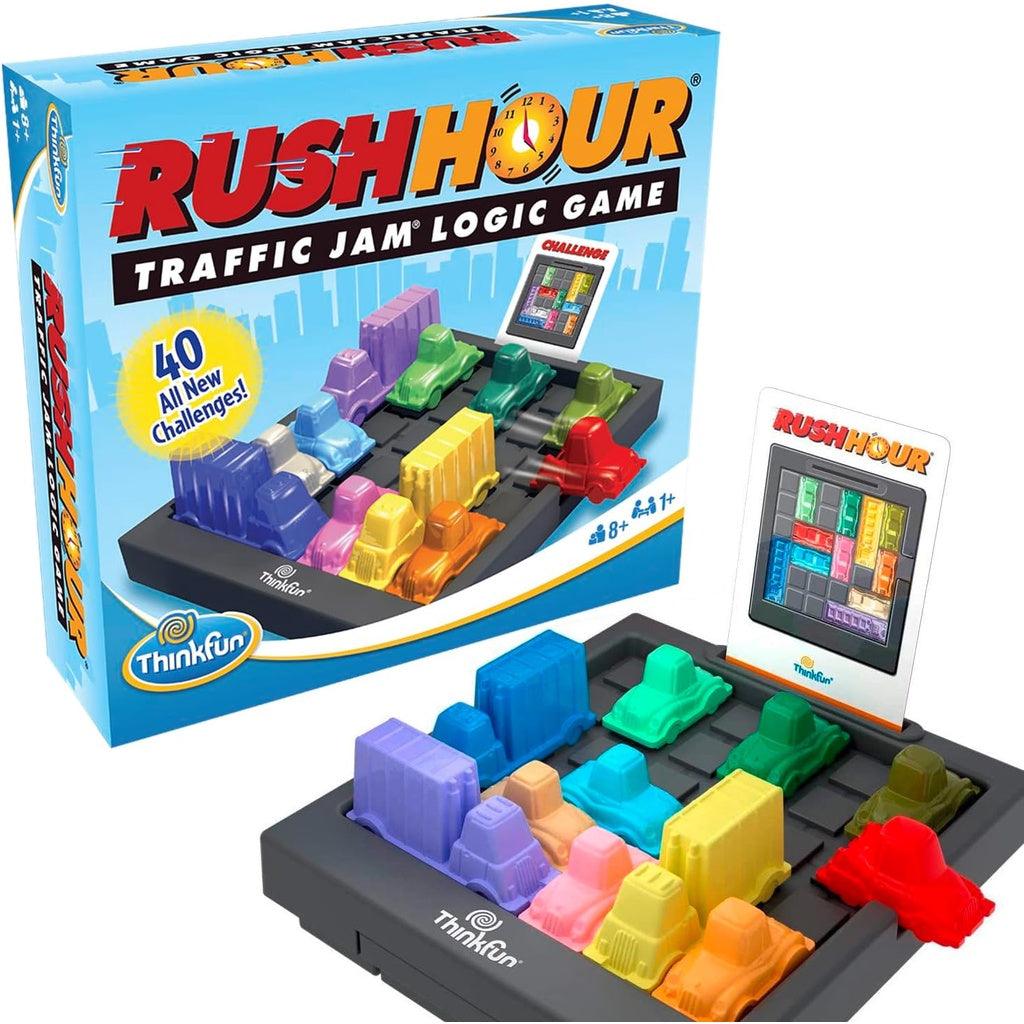
ThinkFun Rush Hour Junior
Low-setup sliding logic for ages 5+
Pros
- ✓ Manual play with no speaker or motor
- ✓ Forty progressive challenges
- ✓ Grid keeps the vehicles in one play area
Cons
- ✗ Primarily one-player play
- ✗ Plastic vehicles can tap on a hard table
- ✗ Harder cards may need patient support
Spatial challenges with a parent, sibling, or co-solver
Pros
- ✓ No screen, batteries, or electronic feedback
- ✓ Supports solo copying and partner instruction play
- ✓ Chunky blocks are easier to manage than tiny puzzle pieces
Cons
- ✗ Twenty loose blocks need a bin
- ✗ Blocks can clack on hard surfaces
- ✗ Younger players may need a reader or prompt giver
Build-and-test logic for a child who enjoys engineering puzzles
Pros
- ✓ Clear challenge progression
- ✓ The coaster-car test gives a visible result
- ✓ Combines spatial planning with physical building
Cons
- ✗ Many loose posts and track pieces
- ✗ Rolling and assembly create some mechanical noise
- ✗ Longest setup and cleanup of the three
At-a-Glance Comparison
| Product | Best use | Players | Piece reality | Relative noise |
|---|---|---|---|---|
| Rush Hour Junior | Short solo logic rounds | Primarily one | Vehicles stay on a sliding grid | Lowest of the three |
| Mental Blox | Spatial copying and verbal co-solving | One or more | Twenty blocks plus cards need a bin | Blocks can knock together |
| Roller Coaster Challenge | Longer build-and-test puzzles | Primarily one | Many posts and track pieces | Car rolls and parts click during setup |
1. ThinkFun Rush Hour Junior
Rush Hour Junior gives the child a starting layout and one clear goal: slide the cars and trucks until the red hero car can reach the exit. The current version includes 40 progressive challenges, so the child does not need to invent a puzzle or decide what to build.
For apartment use, the grid is the main advantage. The vehicles move inside a fixed play area, and a round can finish in about ten minutes. There are still separate cars, trucks, and cards, but the activity does not require a wide floor spread.
Begin with the easiest cards, even if the child seems ready for more. The first job is learning how pieces may move, not proving a skill level. If a child gets stuck, ask which vehicle is blocking the red car rather than moving the pieces for them.
Rush Hour Junior is mainly a one-player puzzle. Two children can alternate challenge cards or have one set the board while the other solves, but it does not naturally give both children equal control at the same time.
2. Learning Resources Mental Blox Critical Thinking Game
Mental Blox uses chunky shapes and activity cards for spatial reasoning. A child can recreate the structure shown on a card, or one person can describe a build while another tries to follow the verbal directions. That second mode gives this toy the clearest co-play option on the page.
The set includes twenty blocks and twenty activity cards. Those pieces are large enough to handle easily, but they still need a shallow lidded bin. On bare wood, the blocks can sound sharp when they fall or knock together. A felt placemat makes the play noticeably more apartment-friendly and gives the child a visible boundary.
Mental Blox is a better choice than Rush Hour Junior when the family wants conversation, turn-taking, and spatial words such as above, beside, taller, rotate, and mirror. It is a worse choice when the child needs fully independent quiet time from the first minute. A younger player may need someone to read, describe, or simplify the challenge.
3. ThinkFun Roller Coaster Challenge
Roller Coaster Challenge asks the player to place posts and track sections so the coaster car can travel through the completed build. The car gives a direct answer: the planned track carries it through, or the child needs to adjust the structure and test again.
This is the most physically involved puzzle here. It also has the most pieces and the greatest setup burden. Keep the posts, track, car, and cards in a dedicated lidded bin, and build inside a tray if pieces tend to travel. It belongs on a table or stable floor surface, not on a couch or bed.
The toy is low-noise compared with electronic or motorized options, but it is not silent. Track pieces click into place, posts can spill, and the coaster car rolls along plastic. Choose it when that mechanical sound is acceptable and the child wants a longer engineering puzzle rather than a fast sliding-grid round.
If your child is deciding between this and a larger marble system, read Roller Coaster Challenge vs GraviTraX for engineering kids.
Noise Comes From Pieces, Not Speakers
Removing electronics solves only one apartment problem. A box of plastic pieces dumped on laminate can be louder than a small toy with a restrained sound setting.
Use a felt mat, rug, or thick placemat under the play area. Give Mental Blox and Roller Coaster Challenge their own bins. Ask children to place unused pieces in the tray instead of making a pile on the table. These small setup choices reduce impact noise and make cleanup faster.
For households with a sleeping baby, noise-sensitive family member, or thin floors, Rush Hour Junior is the safest first choice. The other two can still work, but they need a softer surface and a child who can handle the pieces without dumping them.
Match the Toy to the Child
Choose Rush Hour Junior when
- the child likes vehicles and visual puzzles;
- independent play matters;
- storage space is tight;
- you want one short challenge at a time.
Choose Mental Blox when
- the child likes building from a picture;
- a parent or sibling can join;
- verbal directions and spatial language are part of the fun;
- chunky pieces are preferable to tiny puzzle parts.
Choose Roller Coaster Challenge when
- the child enjoys building, testing, and rebuilding;
- a longer setup is acceptable;
- the family has a dedicated storage bin;
- some rolling and clicking noise will not cause a problem.
Frustration and Replay
Challenge progression helps only when the child begins at the right point. Separate a few easy cards for the first week. Let the child learn the rhythm of set up, think, test, and reset before presenting a difficult card as a test of persistence.
For Rush Hour Junior, keep the early cards in order. For Mental Blox, build one simple card together and then switch roles. For Roller Coaster Challenge, make sure the child understands how the track pieces connect before expecting independent problem solving.
Stop after a satisfying win. A logic toy is more likely to return to the table when the previous session ended with success and every piece went back into the correct box.
Want better toy picks without the research rabbit hole?
Short, practical recommendations by age, need, and budget.
FAQ
Are these toys completely silent?
No. They avoid speakers and motorized noise, but plastic pieces can slide, click, roll, or knock together. A felt mat reduces sound transmitted through a table or floor.
Which is easiest to store?
Rush Hour Junior has the most contained play format. Mental Blox and Roller Coaster Challenge need separate bins for loose pieces.
Which works best for two children?
Mental Blox has the clearest partner and group modes. The two ThinkFun games are primarily one-player challenges, though children can alternate cards or roles.
Which has the most setup?
Roller Coaster Challenge. Each puzzle uses posts and track sections, so building and resetting take longer than sliding vehicles or copying a block card.
What ages do these toys start at?
Rush Hour Junior and Mental Blox are designed for ages 5+. Roller Coaster Challenge starts at 6+.
What if my child gets frustrated quickly?
Begin below their apparent skill level and let them complete two easy challenges before moving up. If the child regularly needs an adult to finish the puzzle, step back to an easier card or a simpler product.
Related Reads
- Mental Blox vs Rush Hour Junior for Logic Skills
- Roller Coaster Challenge vs GraviTraX for Engineering Kids
- Best STEM Toys for 10-Year-Olds
- Best Screen-Free Coding Robots for Kids
- Gifts for Kids Who Love Science
The Bottom Line
Start with Rush Hour Junior when you need the quietest, most contained option. Choose Mental Blox for co-solving and spatial conversation. Choose Roller Coaster Challenge when deeper build-and-test play matters more than minimal setup and near-silent pieces.
Want better toy picks without the research rabbit hole?
Get concise recommendations by age, need, and budget.
Where to go next
By age
Best Toys for 4-Year-Olds (Learning Through Play) (2026)
Keep the recommendations age-appropriate for your kid’s stage.
By need
Gifts for Neurodivergent Kids: A Parent's Guide (2026)
Jump to picks focused on ADHD, sensory, and regulation support.
By budget
Best Gifts for Kids Under $25 (2026)
Compare strong options in lower price brackets before you buy.
Related Articles
Best STEM Toys for 10-Year-Olds: 4 Project Styles
Four current electronics, coding, drawing, and spatial-reasoning toys for 10-year-olds, with honest setup, device, replay, and frustration tradeoffs.
Read more →
Best Screen-Free Math Toys for Preschoolers
Three current, hands-on math toys for preschoolers: counting, matching quantities, sorting, and early pattern work without turning play into a worksheet.
Read more →
Monster Scale vs Mental Blox for Early Logic
A comparison for families choosing between early math comparison play and spatial logic challenges.
Read more →