Best Science Kits for 8-Year-Olds (2026)
9 science kits that turn your kitchen table into a lab. Real experiments, real learning, real mess. Worth it.

Snapshot
| Toy | Age | Price | Best for | Link |
|---|---|---|---|---|
| National Geographic Mega Science Kit | 8+ | CAD $30–$45 | Variety lovers who want to try everything | Check Price |
| Thames & Kosmos Chem C500 | 8+ | CAD $50–$80 | Kids ready for real chemistry | Check Price |
| Snap Circuits Jr. SC-100 | 8+ | CAD $30–$45 | Future engineers who need to know how things work | Check Price |
| Scientific Explorer My First Mind Blowing Science Kit | 6-10 | CAD $15–$25 | First science kit ever (gateway kit) | Check Price |
Affiliate links. Prices can change.
Eight is the golden age for science kits. Old enough to follow instructions independently. Young enough to think making slime is the greatest achievement in human history.
Thames & Kosmos Chemistry Set
Real chemistry with safe materials. 150+ experiments that actually teach the science, not just the spectacle.
The kits on this list go beyond the baking soda volcano. They teach real concepts (chemistry, physics, biology, engineering) through experiments that are genuinely fun and just messy enough to feel like real science.
Quick answer: choose Snap Circuits for repeatable, low-mess experimenting; a chemistry kit for a child who wants visible reactions and does not mind cleanup; a microscope for the patient observer; or the National Geographic Mega Science Kit when you still do not know which branch of science will stick. The best kit is the one that matches how your child likes to work, not the box with the longest experiment count.
What Makes a Good Science Kit for This Age
- Real experiments, not crafts. If the "experiment" is just mixing colours, it's an art project. Good kits teach cause and effect.
- Clear instructions. An 8-year-old should be able to read and follow along without you translating every step.
- Multiple experiments. One-and-done kits aren't worth the money. Look for 20+ activities minimum.
- Clear safety and supervision notes. Age-appropriate materials matter, but so do readable warnings, a stable workspace, and an adult who can step in for heat, chemicals, or tricky measurements.
Our Top Picks
Variety lovers who want to try everything
Pros
- ✓ 75+ experiments across multiple disciplines
- ✓ Includes real lab tools
- ✓ Clear, illustrated instructions
Cons
- ✗ Some experiments need household supplies
- ✗ Quality of individual components is basic
- ✗ Container doesn't organize well
Seventy-five experiments covering chemistry, physics, and earth science. The sheer variety means your kid can bounce between growing crystals, building a volcano, and launching rockets in the same week. Not the deepest kit in any one area, but the best starting point if you don't know what your child likes yet.
Kids ready for real chemistry
Pros
- ✓ 28 guided experiments with real chemicals
- ✓ Teaches actual chemistry concepts
- ✓ Lab manual is genuinely educational
Cons
- ✗ Some chemicals need careful handling
- ✗ Not flashy or Instagram-worthy
- ✗ Manual is text-heavy
The entry-level Thames & Kosmos chemistry set. It won't explode or glow (those kits are gimmicks), but it will teach your child what pH means, how indicators work, and why some reactions bubble. The lab manual reads like a real (simplified) textbook. For kids who want to understand, not just watch.
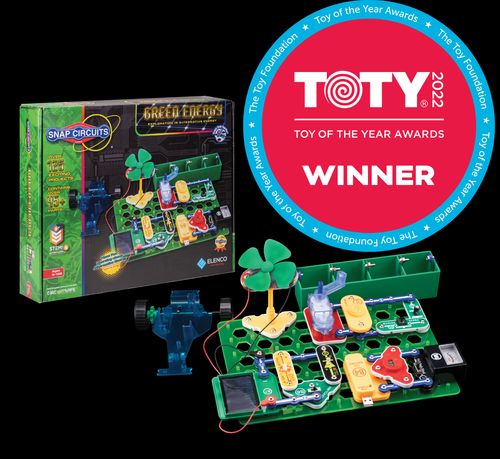
Future engineers who need to know how things work
Pros
- ✓ 100+ projects from one kit
- ✓ No tools needed, snaps together
- ✓ Teaches real circuit concepts
Cons
- ✗ Instruction book is dense for 8-year-olds
- ✗ No digital/coding component
- ✗ Pieces need organization
Build working circuits: alarms, radios, lights, fans. Every project teaches a real electronics concept. The snap-together design means no soldering, no wiring, no frustration. At 100+ projects, this kit has months of content. Parents consistently rate it as the science kit their kids return to most.
First science kit ever (gateway kit)
Pros
- ✓ Extremely affordable
- ✓ Wow-factor experiments (colour-changing, fizzing)
- ✓ Easy enough for younger 8-year-olds
Cons
- ✗ Only 11 experiments
- ✗ Very basic science
- ✗ Runs out fast
The cheapest kit on this list and a solid starting point. Colour-changing milk, fizzing reactions, and slimy polymers. None of it is deep science, but it's the kit that makes a kid say "can we do more?" If your child has never done a science experiment at home, start here. Then upgrade.
Patient kids who love watching things transform
Pros
- ✓ Grows real crystals (takes days)
- ✓ Teaches patience and observation
- ✓ Beautiful results
Cons
- ✗ Requires waiting (days to weeks)
- ✗ Only one type of experiment
- ✗ Results vary
You mix a solution, pour it into a mould, and wait. Over several days, real crystals form. It teaches patience, observation, and the basics of supersaturation. The results are genuinely beautiful. Fair warning: not every crystal grows perfectly, but that's also a lesson. Science doesn't always cooperate.
Kids who love anything that launches, flies, or explodes
Pros
- ✓ Build and launch real rockets
- ✓ Chemical and air-powered options
- ✓ Outdoor fun with real physics
Cons
- ✗ Outdoor only
- ✗ Rockets get lost in trees
- ✗ Chemical rockets are one-shot
Build a rocket. Fill it with the chemical propellant. Launch it. Watch it fly. Repeat. The physics concepts (thrust, drag, trajectory) happen naturally because your kid is watching something they built actually fly. Best used in a park or large yard. And yes, you will lose at least one rocket to a tree.
Kids who learn better when play comes first
Pros
- ✓ Build 10 playable circuit games
- ✓ Klutz instructions are always clear
- ✓ Combines science with craft
Cons
- ✗ More craft than pure science
- ✗ Components feel light
- ✗ Limited replay once built
Build 10 games that use real circuits: a lie detector, a steady-hand game, a quiz buzzer. The Klutz approach is craft-first, science-second, which works well for kids who resist "educational" toys. They think they're making a game. They're actually learning about conductivity, switches, and circuit design.
Kids who love the show (built-in motivation)
Pros
- ✓ Brand recognition makes it exciting
- ✓ 51 experiments
- ✓ Good variety of chemistry basics
Cons
- ✗ Younger-skewing (may feel 'babyish' to mature 8-year-olds)
- ✗ Tie-in branding fades quickly
- ✗ Instructions could be clearer
If your kid watches the Magic School Bus, the branding alone will get them to the table. Fifty-one experiments covering acids, bases, polymers, and reactions. The experiments themselves are solid entry-level chemistry. Best for younger 8-year-olds or kids who need that familiar character to get engaged.
Curious observers who want to see the invisible
Pros
- ✓ Real microscope (not a toy)
- ✓ Prepared slides included
- ✓ Up to 1200x magnification
Cons
- ✗ Fragile, needs careful handling
- ✗ Prepared slides run out
- ✗ Light source is basic
Not a kit, but the single most impactful science tool you can give an 8-year-old. Looking at a leaf cell for the first time changes how a kid sees the world. The prepared slides get them started, and then they start putting everything under the lens: hair, fabric, pond water, food. Curiosity takes over.
Want better toy picks without the research rabbit hole?
Short, practical recommendations by age, need, and budget.
Buying Guide
Match the kit to your kid
"I want to see cool reactions!" Scientific Explorer, National Geographic Mega Kit, or the Rocket Kit. Visual, fast, exciting.
"I want to understand how things work." Snap Circuits, Thames & Kosmos Chem C500, or the microscope. Deeper learning, more patience required.
"I want to build something." Klutz Circuit Games, Snap Circuits, or the crystal growing kit. Hands-on creation.
Budget tiers
Under $15: Scientific Explorer Mind Blowing Science Kit, 4M Crystal Growing Kit
$25-50: National Geographic Mega Kit, Snap Circuits Jr., Rocket Kit, Klutz Circuit Games
$50+: Thames & Kosmos Chem C500, AmScope Microscope
How to keep the momentum going
The biggest risk with science kits isn't the kit. It's doing three experiments and then the box goes on a shelf. Set a routine: "Science Saturday" or "Wednesday experiments." Kids thrive on predictability, and making it a regular thing means they actually finish the kit.
The real setup test
Before buying, picture the first ten minutes. Snap Circuits needs a clear table and a way to keep the snap pieces together, but cleanup is fast. Chemistry kits need water, paper towel, a washable tray, and often a few household ingredients. Crystal kits need a place where a cup can sit untouched for several days. A microscope needs careful focusing and a small box for slides.
That setup difference matters more than the advertised experiment count. A child who loses patience while an adult hunts for baking soda may do better with circuits or prepared slides. A child who loves measuring, pouring, and watching a reaction unfold may find a one-minute circuit build underwhelming. If you want independent play, do the first experiment together and see whether your child can read the next card, measure accurately, and reset the station without reminders.
Storage affects replay value too. Keep chemicals sealed and separate from food, label half-used packets, and put small lab tools in a lidded container. For circuit kits, sort pieces by type instead of dropping everything back into one box. A kit that can be restarted in two minutes gets used; a kit that requires rebuilding the workspace usually does not.
Research Queue: Ooze Labs Chemistry Station
Thames & Kosmos Ooze Labs Chemistry Station is a strong topic-fit candidate for younger or more play-driven 8-year-olds. The manufacturer's current page lists it for ages 6+, with approximately 20 experiments, printed experiment cards that clip to the station, and activities such as chromatography, pH testing, crystals, filtering, slime, and fizzing reactions. The station itself keeps the beakers and tools visible, which can make the first experiment feel easier to start than a traditional box-and-manual chemistry set.
The tradeoff is that this is still a chemistry workspace, not a no-mess toy. It needs a protected table, water access, cleanup time, and adult oversight even though the manufacturer describes the included chemicals as non-hazardous. It also leans toward colourful, fast-feedback reactions rather than the deeper manual-based progression of Chem C500.
Amazon.ca availability could not be verified from this environment, so I have not added it as an affiliate pick or claimed that it is currently available there. Treat it as a retailer-check candidate if your child wants the role-play feel of a lab station and would be discouraged by a text-heavy manual.
Where to Go Next
- More gifts for science-loving kids
- Easy science toys for kids who get frustrated fast
- Epic Circuits vs Snap Circuits
- STEM toys for older kids
FAQ
Are science kits safe for 8-year-olds to use alone?
Some 8-year-olds can follow parts of these kits independently, but an adult should read the safety section first and stay available. Supervise heat, chemical mixing, sharp tools, glass slides, and any experiment the instructions mark for adult help. Independence should mean the child can read, measure, and clean up reliably—not that the adult disappears.
What if my kid finishes the kit and wants more?
That's the dream. Upgrade to the next level: Snap Circuits Jr. to Snap Circuits Pro, Chem C500 to Chem C3000, or add a microscope to any biology-curious kid's collection.
Do science kits actually teach anything?
The good ones do. Look for kits with explanation sections, not just instructions. If the manual says "mix A and B, watch it fizz" without explaining why, it's entertainment, not education.
Which science discipline should we start with?
Start with chemistry. It has the most visual, exciting experiments for this age. Fizzing, colour changes, and crystal growing are all chemistry. Once they're hooked, branch into physics (Snap Circuits, rockets) or biology (microscope).
If You Can Only Buy One
Snap Circuits Jr. It teaches real concepts, has 100+ projects, is completely safe, and kids come back to it for months. No other kit on this list has that combination of depth, replay value, and learning.
Want better toy picks without the research rabbit hole?
Get concise recommendations by age, need, and budget.
Where to go next
By age
Best Homework Break Toys for 8-Year-Olds
Keep the recommendations age-appropriate for your kid’s stage.
By need
Gifts for Neurodivergent Kids: A Parent's Guide (2026)
Jump to picks focused on ADHD, sensory, and regulation support.
By budget
Best Gifts for Kids Under $25 (2026)
Compare strong options in lower price brackets before you buy.
Related Articles

Best Screen-Free Math Toys for Preschoolers
Three current, hands-on math toys for preschoolers: counting, matching quantities, sorting, and early pattern work without turning play into a worksheet.
Read more →
Best Low-Noise Tabletop Logic Toys for Apartments
Three manual logic toys for apartment tables, with honest guidance on setup, storage, loose pieces, and mechanical noise.
Read more →
Monster Scale vs Mental Blox for Early Logic
A comparison for families choosing between early math comparison play and spatial logic challenges.
Read more →