Best STEM Toys for Kids Who Hate Worksheets
Hands-on STEM toys that teach logic and science through doing, not passive instruction.

Snapshot
| Toy | Age | Price | Best for | Link |
|---|---|---|---|---|
| #1 ThinkFun Roller Coaster Challenge | 6+ | CAD $45–$70 | Engineering logic through build-and-test coaster puzzles | Check Price |
| #2 National Geographic Epic Circuits Science Kit | 8+ | CAD $55–$85 | Electronics experiments without repeating Snap Circuits again | Check Price |
| #3 Learning Resources Mental Blox Critical Thinking Game | 5+ | CAD $35–$55 | Spatial logic, following directions, and co-solving | Check Price |
| #4 Ravensburger GraviTrax Starter Set | 8+ | CAD $55–$85 | Physics through play | Check Price |
Affiliate links. Prices can change.
Some kids do not dislike science or math. They dislike being asked to sit still, copy answers, and prove they understood something before they have had a chance to touch it.
That is the real buying problem here. A good STEM toy for a worksheet-resistant child gives them a concrete thing to build, test, notice, and fix. The learning is still there, but it arrives through motion, cause-and-effect, and small successes instead of another page of instructions.
ThinkFun Roller Coaster Challenge
Reliable engagement, low setup friction, and strong replay value for real family routines.
This guide focuses on toys that are practical, repeatable, and useful beyond the first week. The strongest picks below are not necessarily the flashiest STEM gifts. They are the ones most likely to survive a tired after-school mood, a child who hates being corrected, or a family routine that only has 20 focused minutes to spare.
What to Look For
- Fast entry. If the adult has to read a manual for 15 minutes, the toy will feel like homework in disguise.
- Visible feedback. A marble rolls, a circuit lights up, a coaster car crashes, or a robot moves. Kids need to see what changed.
- Permission to try again. The best STEM toys make mistakes feel like the point of play, not proof that the child failed.
- Adjustable challenge. A toy should work on an easy day and still have depth when your child wants a bigger puzzle.
- Manageable pieces. STEM kits can create clutter fast. Storage matters almost as much as the activity.
Our Top 6 Picks
Engineering logic through build-and-test coaster puzzles
Pros
- ✓ Clear challenge progression
- ✓ Great cause-and-effect feedback
- ✓ Stronger novelty than another circuit kit
Cons
- ✗ Pieces need organization
- ✗ One-player-at-a-time tendency
- ✗ Harder cards may need help
Electronics experiments without repeating Snap Circuits again
Pros
- ✓ Fresh circuits angle
- ✓ 40+ experiments
- ✓ Good science gift positioning
Cons
- ✗ Needs organization
- ✗ May require adult help early
- ✗ Less open-ended than LEGO-style builds
Spatial logic, following directions, and co-solving
Pros
- ✓ Good group/sibling play
- ✓ Strong spatial reasoning
- ✓ Low-tech and classroom-friendly
Cons
- ✗ Requires reading or verbal prompts
- ✗ Pieces can scatter
- ✗ Less flashy as a gift
Physics through play
Pros
- ✓ Strong experimentation loop
- ✓ Visual cause/effect
- ✓ Expandable
Cons
- ✗ Needs floor/table space
- ✗ Pieces can be lost
- ✗ Best with a clear build area
Snap Circuits Jr. SC-100
Hands-on logic and electronics
Pros
- ✓ Clear challenge progression
- ✓ High educational value
- ✓ Strong replay
Cons
- ✗ Can frustrate younger kids
- ✗ Needs organization
- ✗ Best with guidance early

Monthly project-based STEM learning
Pros
- ✓ New project cadence
- ✓ Builds confidence
- ✓ Good instructions
Cons
- ✗ Subscription cost
- ✗ Waiting between crates
- ✗ Some projects need help
How to Choose for a Worksheet-Resistant Kid
Start with the kind of resistance you actually see at home. Some kids avoid worksheets because writing is tiring. Some understand the concept but hate being tested. Others get embarrassed when a wrong answer is visible on paper. The best STEM toy changes the emotional shape of the task.
If your child likes building but avoids written instructions, choose Roller Coaster Challenge or GraviTrax. Both turn physics into a test track: build, release, watch, adjust. They also give a child an easy sentence to say when something fails: “The track needs changing,” not “I got it wrong.”
If your child likes gadgets, lights, and switches, choose Epic Circuits or Snap Circuits Jr. Electronics kits can be excellent for kids who need a concrete payoff. The risk is that one misplaced piece can make the whole build fail, so start beside them for the first few projects. Your goal is not to teach every circuit term on day one. It is to help them experience: “I can make this work.”
If your child gets overloaded by complicated builds, Mental Blox is the calmer option. It still builds STEM-relevant thinking — spatial reasoning, pattern matching, working memory, visual planning — but it feels more like a puzzle game than a science assignment. It is also one of the better picks when siblings or a parent want to co-solve without taking over.
For kids who thrive on finished projects, KiwiCo Tinker Crate can work well because the activity has a clear start, middle, and end. The tradeoff is timing and cost. A subscription is less useful if your child wants to repeat the same challenge many times or if your family already has too many half-finished kits.
Why These Picks Made the List
ThinkFun Roller Coaster Challenge
Roller Coaster Challenge is the best overall fit because the learning loop is obvious. Kids choose a challenge card, place pieces, test the coaster, and revise the layout. That is engineering thinking without a lecture.
It is especially good for kids who enjoy dramatic feedback. A successful run feels satisfying, and a failed run is usually funny rather than discouraging. The biggest limitation is turn-taking. One child tends to control the build, so it works best as solo focus time or with a parent who asks questions instead of grabbing pieces.
National Geographic Epic Circuits Science Kit
Epic Circuits is for kids who want science to feel like an experiment, not a worksheet. The 40-plus activities give families enough variety to avoid doing the same battery-and-bulb demonstration over and over.
This is a better choice for an eight- or nine-year-old than a very young beginner. There are still instructions, and some kids will need help matching parts. Keep the first session short: one successful experiment beats five rushed ones that end in frustration.
Learning Resources Mental Blox Critical Thinking Game
Mental Blox is not marketed as a flashy STEM kit, but it earns its place because spatial reasoning is foundational. Kids copy builds, follow challenge prompts, describe shapes, and plan moves. Those are real logic skills.
It is also useful when your child resists “educational” toys. There are no wires, batteries, or workbook pages. A parent can make it easier by reading the prompt aloud, building side by side, or letting the child invent a challenge for someone else.
Ravensburger GraviTrax Starter Set
GraviTrax is a stronger pick for kids who want room to experiment. The marble track system invites prediction: Will the marble have enough speed? Is the slope too shallow? Where does it lose momentum?
The tradeoff is space. It needs a clear floor or table area and a storage plan. If your home cannot leave a track out for a while, use a tray, mat, or one dedicated build zone so cleanup does not become the reason nobody plays.
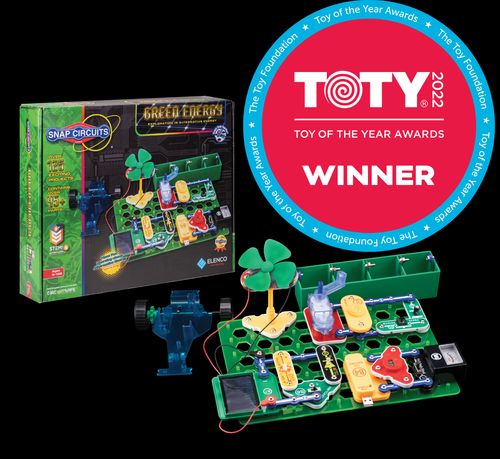
Snap Circuits Jr. SC-100
Snap Circuits Jr. remains a classic because the pieces are sturdy, the builds are clear, and the payoff is immediate. It is a good match for kids who like following steps when the result is a fan, sound, light, or switch.
For worksheet-resistant kids, the key is pacing. Do not turn it into a vocabulary lesson about current and resistance right away. Build first, name the concept later. If your child is newer to coding or robotics, you may also want our guide to Best Smart Toys for Kids New to Coding.
KiwiCo Tinker Crate (Subscription)
Tinker Crate is the pick for families who want projects to arrive pre-bundled. It reduces the “what should we do today?” decision and can make STEM feel like a monthly event.
It is not the best fit for kids who hate waiting, dislike adult help, or abandon one-time projects quickly. If your child needs repeatable open-ended play instead, start with GraviTrax, LEGO-style building, or the building-focused options in Best Building Toys Beyond LEGO.
Want better toy picks without the research rabbit hole?
Short, practical recommendations by age, need, and budget.
Practical Setup Tips
1) Start with a win, not the “right level”
Choose an easier challenge than your child can technically handle. Confidence matters more than perfect calibration for the first session. You can raise the difficulty once the toy feels safe.
2) Keep the explanation short
Try: “Build it, test it, change one thing.” That simple loop works for coasters, marble runs, circuits, and logic blocks. Save the science vocabulary for after your child has seen the effect.
3) Use a visible parts system
A muffin tin, shallow tray, or labelled zipper bags can prevent STEM toys from turning into floor clutter. This matters for kids who already avoid tasks that look chaotic.
4) Pair movement with table play
A quick movement break before STEM play can improve transitions. Ten jumping jacks, wall pushes, or a walk around the house is often enough to make seated building easier.
5) Stop before the crash
If your child is still engaged after 20 minutes, it is tempting to keep going. For frustration-prone kids, stopping on a win protects the next session. Leave one challenge unfinished only if that motivates them rather than irritating them.
Common Buying Mistakes
The most common mistake is buying the toy that looks most educational instead of the one your child will willingly touch. A dense kit with perfect learning outcomes is not useful if it creates a fight every time it comes out.
The second mistake is over-helping. Adults often want to fix the build quickly, especially when a child is close to melting down. Instead, try narrowing the next action: “Should we change the height or the turn?” Giving two options keeps the child in control while reducing the cognitive load.
The third mistake is leaving too many STEM kits open at once. If your shelf has circuits, robotics, coding cards, marble runs, and half-built crates all visible, your child may avoid the whole category. Rotate one or two at a time.
FAQ
Are these toys only for kids with a diagnosis?
No. These picks can help many kids who need lower-friction learning, clearer feedback, calmer transitions, or less writing-heavy practice.
What is the best STEM toy for a kid who hates being wrong?
Choose a toy where failure is built into the activity. Roller Coaster Challenge and GraviTrax are strong because testing and revising feel like normal play. Mental Blox is good when your child needs a quieter, less dramatic challenge.
Should I avoid kits with instructions?
Not always. Instructions can help if the payoff is fast and visible. The problem is not instructions; it is long instruction-following with no reward. Start beside your child and quit after one successful build.
How many STEM toys should we use at one time?
Start with two active options: one build-and-test toy and one calmer logic toy. Add more only when your child is actually asking for variety.
What if my child gets bored quickly?
Use shorter sessions, rotate weekly, and focus on toys with immediate feedback. For more low-pressure options, see Best Toys for Kids Who Get Bored Easily.
Related reads
- Best STEM Toys for 10-Year-Olds
- Best Coding Toys for Kids
- Gifts for Kids Who Love Science
- Best Building Toys Beyond LEGO
- Best Toys for Kids Who Get Bored Easily
If You Can Only Buy One
ThinkFun Roller Coaster Challenge is the safest first pick for most worksheet-resistant kids.
It gives a clear build-test-fix loop, enough challenge progression for replay, and a satisfying payoff without making the activity feel like another school assignment.
Want better toy picks without the research rabbit hole?
Get concise recommendations by age, need, and budget.
Where to go next
By age
Best Toys for 4-Year-Olds (Learning Through Play) (2026)
Keep the recommendations age-appropriate for your kid’s stage.
By need
Gifts for Neurodivergent Kids: A Parent's Guide (2026)
Jump to picks focused on ADHD, sensory, and regulation support.
By budget
Best Gifts for Kids Under $25 (2026)
Compare strong options in lower price brackets before you buy.
Related Articles

Best STEM Toys for 10-Year-Olds: 4 Project Styles
Four current electronics, coding, drawing, and spatial-reasoning toys for 10-year-olds, with honest setup, device, replay, and frustration tradeoffs.
Read more →
Best Screen-Free Math Toys for Preschoolers
Three current, hands-on math toys for preschoolers: counting, matching quantities, sorting, and early pattern work without turning play into a worksheet.
Read more →
Best Low-Noise Tabletop Logic Toys for Apartments
Three manual logic toys for apartment tables, with honest guidance on setup, storage, loose pieces, and mechanical noise.
Read more →