Best Quiet Calming Toys for Kids Who Get Overstimulated
Low-noise visual and hands-on toys for a short reset, without screens, music, or a big setup.
Snapshot
| Toy | Age | Price | Best for | Link |
|---|---|---|---|---|
| #1 Coitak Liquid Motion Bubbler Timer (3-pack) | 3+ | CAD $30–$45 | Watching slow liquid motion during a short, quiet break | Check Price |
| #2 hand2mind Express Your Feelings Sensory Bottles | 3+ | CAD $35–$55 | A brief visual activity paired with naming a feeling alongside a familiar adult | Check Price |
| #3 Marble Mesh Fidget | 6+ | CAD $6–$13 | Small, quiet hand movement while waiting or listening | Check Price |
| #4 Fat Brain Toys Dimpl | 1+ | CAD $15–$25 | Younger kids who enjoy simple pop-and-repeat play | Check Price |
Affiliate links. Prices can change.
When a child has had too much noise, activity, or change, the useful toy is often the one that asks the least of them. A quiet object to watch or handle can give a short pause without turning the moment into another activity to manage.
This is a small list on purpose. It separates slow visual toys from simple hands-busy toys, and it keeps non-toy supports such as textured stickers and worry stones out of the ranked picks.
Coitak Liquid Motion Bubbler Timer (3-pack)
A quiet, self-contained visual option for a short reset at home, in a calm-down corner, or at a desk.
What to Look For
- Low sensory load. Look for slow movement, little or no sound, and no score, timer, or flashing reward loop.
- A clear use case. A toy should work for one ordinary moment: waiting before dinner, a quiet corner after school, or a short pause before the next task.
- The right kind of input. Some kids prefer something to watch. Others would rather make a small, repetitive movement with their hands.
- An easy stopping point. The best option does not require a parent to negotiate an elaborate game when the child is already done.
Our Top 4 Picks
Watching slow liquid motion during a short, quiet break
Pros
- ✓ Quiet visual movement
- ✓ No setup before use
- ✓ Three timers can live in different rooms
Cons
- ✗ Mostly a watch-and-wait toy
- ✗ Can leak if damaged
- ✗ Some kids lose interest quickly
A brief visual activity paired with naming a feeling alongside a familiar adult
Pros
- ✓ Quiet and self-contained
- ✓ Faces give a simple conversation prompt
- ✓ Useful for a short transition routine
Cons
- ✗ Costs more than a basic fidget
- ✗ Works best with adult participation
- ✗ May feel young for some older kids
Marble Mesh Fidget
Small, quiet hand movement while waiting or listening
Pros
- ✓ Low-cost
- ✓ Quiet
- ✓ Small enough for a pocket or backpack
Cons
- ✗ Can tear with rough use
- ✗ Easy to misplace
- ✗ Not every child likes the texture
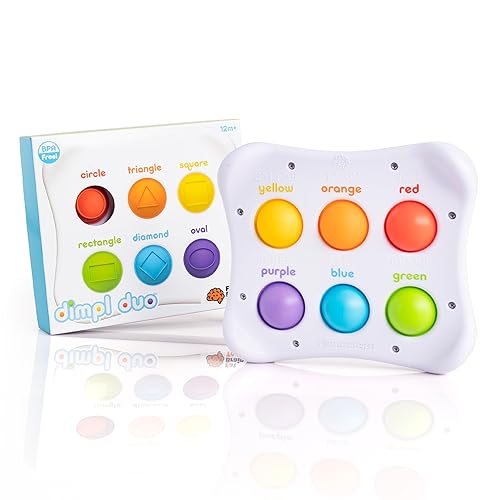
Fat Brain Toys Dimpl
Younger kids who enjoy simple pop-and-repeat play
Pros
- ✓ Quiet
- ✓ Durable
- ✓ Easy to understand without instructions
Cons
- ✗ Skews younger
- ✗ Short play windows
- ✗ Limited challenge for older kids
Why These Picks Made the List
Coitak Liquid Motion Bubbler Timer (3-pack)
The Coitak timer is the most directly visual pick here. A child can turn it over and watch the liquid move without needing to follow rules, solve a challenge, or make a choice every few seconds. The three-pack is useful only if you have more than one place where a quiet object would actually stay put, such as a bedroom, homework table, or calm corner.
It is not a toy for long stretches of independent play. It is also a liquid item, so keep it where a crack or leak would be manageable. If a child starts banging it or treating it as a race, it is probably the wrong tool for that moment.
hand2mind Express Your Feelings Sensory Bottles
These bottles add a small bit of language to a visual activity. They can be a good fit when a child wants to look at something while a parent, teacher, or caregiver offers a low-pressure prompt such as, “Does this face look a bit like your day?” The point is not to make the child explain themselves. It is simply a gentle option if they want to talk.
They cost more than a basic fidget and may feel too young for some older children. They also make more sense as a shared, short routine than as an open-ended toy bin item.
Marble Mesh Fidget
A marble mesh fidget is for a child who would rather have a small movement in their hands than another thing to watch. It is quiet, inexpensive, and easy to keep in a jacket pocket or backpack for a wait at pickup, a restaurant, or the few minutes before a task begins.
The tradeoff is that it is a very simple toy. Some children will like the steady movement; others will be bored immediately. The mesh can also tear if it is pulled hard, so it is not the best fit for rough play.
Fat Brain Toys Dimpl
Dimpl is a straightforward, quiet pop toy for younger children who like repeated cause-and-effect play. It needs no setup and has no loose parts, which can make it useful for a small quiet basket at home or in the car.
Its limits matter here: it is aimed at younger kids and is unlikely to hold the attention of many school-age children for long. Choose it for a child who already likes this kind of pop toy, not because the age label alone says it is suitable.
Choose the Input, Not the Label
Start with what the child has already shown you. If they watch a lava lamp, aquarium, or rain on a window, begin with the Coitak timer. If they prefer to keep their hands occupied while they look away from the room, the marble mesh fidget is the better first experiment.
The hand2mind bottles sit between those two approaches. They offer something visual and, if the child is open to it, a simple way to name a feeling. Dimpl is the most age-sensitive option: it is worth keeping in the mix for a younger child, but it is not a universal pick for every child who gets overstimulated.
No product can guarantee that a child will settle or stay engaged. Keep the first try brief, notice what they reach for again, and leave the rest of the choices out of sight.
Home, School, and Travel Fit
At home, put a liquid timer on a stable surface where it is unlikely to be thrown or stepped on. Sensory bottles work best where a child can sit beside a familiar adult for a few minutes without being rushed. Keep either liquid option away from a spot where a leak would ruin books, electronics, or a favourite rug.
For a backpack, waiting room, or car, the marble mesh fidget is the easiest option because it is quiet and takes almost no room. Dimpl also travels well for younger children, though it is larger and more noticeable. Check any classroom or program rules before sending a fidget along; a quiet toy is still something a teacher may need to approve.
Want better toy picks without the research rabbit hole?
Short, practical recommendations by age, need, and budget.
Practical Setup Tips
1) Offer one choice, not a whole basket
When the goal is a quieter moment, put out one appropriate toy and let the child accept or ignore it. Too many options can create another decision to make.
2) Keep the moment short and optional
Use the toy as a pause before the next ordinary step, not as a requirement to “calm down.” If it is not helping the moment feel easier, put it away and try another routine later.
3) Protect the quiet part
Turn off the competing TV, music, or noisy toys first. A visual timer cannot do much if it is one more object in a busy room.
4) Store liquid toys where adults can check them
Inspect liquid timers and bottles for damage before handing them over. If a container is cracked, leaking, or missing a cap, remove it from use.
FAQ
Are these toys only for kids with a diagnosis?
No. This list is about a common situation, not a diagnosis. Children vary widely in what they find pleasant or useful, so the better guide is the child’s age, preferences, and the setting.
Should I choose a visual toy or a fidget first?
Choose the one that resembles what your child already enjoys. A child who watches slow movement may prefer the timer; a child who keeps their hands busy while listening may prefer the marble mesh fidget.
How many toys should we keep available?
Start with one or two. A small, familiar choice is more useful here than a large collection of “calming” products.
Related reads
Want better toy picks without the research rabbit hole?
Get concise recommendations by age, need, and budget.
Where to go next
By age
Best Toys for 4-Year-Olds (Learning Through Play) (2026)
Keep the recommendations age-appropriate for your kid’s stage.
By need
Sensory, Movement, and Structured Play for Kids With ADHD
Jump to picks focused on ADHD, sensory, and regulation support.
By budget
Best Gifts for Kids Under $25 (2026)
Compare strong options in lower price brackets before you buy.
Related Articles
Best Toys for Kids Who Rush Through Homework
Four optional short reset activities, with clear stop points, practical limits, and no promise to change homework speed or accuracy.
Read more →
Contained Bedroom Toys: Three Low-Mess Picks
Three contained bedroom toys, with storage, sound, light, timing, and shared-room limits spelled out.
Read more →
Calm Strips vs Marble Mesh Fidget for Classroom Focus
A quiet fidget comparison for school, homework, and kids who need discreet tactile input.
Read more →