Sensory, Movement, and Structured Play for Kids With ADHD
Four current toys for movement, hands-busy play, structured drawing, and spatial play, with honest age, setup, noise, and stopping guidance.
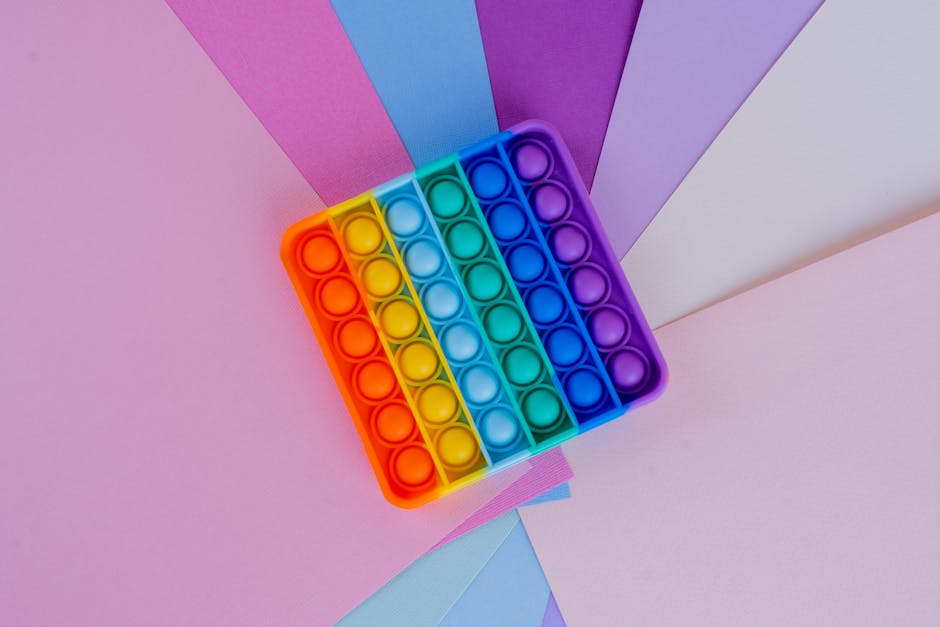
Snapshot
| Toy | Age | Price | Best for | Link |
|---|---|---|---|---|
| #1 The Original Stomp Rocket Stunt Planes | 5+ | Check current price | Outdoor movement with a short launch-and-retrieve loop | Check Price |
| #2 Plus-Plus HEXEL Spectrum | 3+ | Check current price | Quiet bending and folding with one connected object | Check Price |
| #3 Crayola Light-Up Tracing Pad with Eye-Soft Technology | 6+ | Check current price | A drawing child who likes structure and a one-page finish | Check Price |
| #4 Shashibo Shape Shifting Box (Original Series, Spaced Out) | 8+ | Check current price | Older kids who like spatial, hands-busy transformation | Check Price |
Affiliate links. Prices can change.
A diagnosis does not tell you which toy a child will enjoy. Some kids with ADHD seek large movement. Some want something in their hands. Some settle into drawing or a visual-spatial challenge. The useful buying question is: what kind of play does this child already choose, and where will the toy be used?
These are ordinary toys, not ADHD treatments. They are not guaranteed to improve focus, change behaviour, or make transitions easier. The goal is a play option that fits the child's age, interests, space, and tolerance for sound and frustration.
The Original Stomp Rocket Stunt Planes
A conditional first pick for movement-seeking kids with safe outdoor space. One launch per plane creates a concrete round-based stopping cue.
Quick Match
- For big outdoor movement: Stomp Rocket Stunt Planes, age 5+
- For quiet hand movement: Plus-Plus HEXEL Spectrum, age 3+
- For drawing with a visible finish: Crayola Light-Up Tracing Pad, age 6+
- For older kids who like spatial transformation: Shashibo Original Series, age 8+
The best match may change by setting. An outdoor launcher is not a homework fidget. A pocket toy may be too absorbing during instruction. A tracing pad can be satisfying at home but awkward in a waiting room. Choose for the actual moment, not the diagnosis label.
Four Current Picks
Outdoor movement with a short launch-and-retrieve loop
Pros
- ✓ Immediate physical feedback
- ✓ Three foam planes
- ✓ Concrete round-based stopping cue
Cons
- ✗ Outdoor space and a safety boundary required
- ✗ First-time assembly
- ✗ Not a quiet indoor option
Stomp Rocket turns one hard step into a visible result: a foam plane launches, glides, or attempts a stunt. The child then retrieves it and tries again. That short action-feedback loop suits kids who would rather move than sit with a small desk toy.
This is the loudest and most space-hungry pick here. An adult should set a launch boundary away from roads, roofs, trees, windows, and other people. Wind changes the play quickly, and a poor launch can become frustrating if the goal is a perfect stunt rather than experimentation.
Use a simple finish: one launch per plane, then collect all three. Choose it for a child who already seeks running, jumping, or cause-and-effect outdoor play, not because movement is assumed to help every child with ADHD.
Plus-Plus HEXEL Spectrum
Quiet bending and folding with one connected object
Pros
- ✓ Pocket-size
- ✓ No loose pieces
- ✓ Starts immediately
Cons
- ✗ Simple play loop may wear thin
- ✗ Small-parts choking hazard for children under 3
- ✗ Can still distract during instruction
HEXEL is six larger Plus-Plus pieces linked by an elastic cord. It bends, folds, and stacks without producing a loose construction set when intact. Plus-Plus labels it age 3+ and warns that it contains small parts and is not suitable for children under 3 because of a choking hazard.
Its strength is also its limit. The loop is small and repetitive. A child who wants a goal, story, or large movement may lose interest quickly. Quiet also does not automatically mean classroom-approved. Test it at home and check the specific teacher's rules before assuming it belongs at a desk.
A practical stopping point is one chosen shape, then fold it and put it back in a pouch.
A drawing child who likes structure and a one-page finish
Pros
- ✓ Clear start and finish
- ✓ Child chooses the image
- ✓ Quiet tabletop play
Cons
- ✗ Needs batteries, paper, and pencils
- ✗ Can feel like schoolwork
- ✗ Requires a flat surface
The tracing pad gives the child an image to follow instead of asking them to invent a blank-page idea. That can lower the first-step burden for a child who already likes drawing, characters, or copying shapes. It also creates a visible finish: one page is done.
Prepare the batteries, paper, and pencil before offering it. Otherwise the "easy start" becomes an adult setup delay. Do not choose it as a focus tool for a child who dislikes drawing or finds tracing too close to handwriting practice.
The pad works best at a stable table or on the floor. It is less useful for travel or a short break when supplies are not already together.
Older kids who like spatial, hands-busy transformation
Pros
- ✓ One contained object
- ✓ Many possible shapes
- ✓ No batteries
Cons
- ✗ Can be hard to restore
- ✗ Manufacturer age is 8+
- ✗ Younger use requires adult supervision
Shashibo is a 2.4-inch magnetic puzzle cube that unfolds into many forms. It offers more variety and problem-solving than HEXEL, which makes it better for an older child who enjoys spatial play and does not need a single right answer.
Returning it to cube form can become a separate puzzle. Keep the maker's shape guide available, show one simple transformation, and allow the child to stop without restoring it perfectly. Fun In Motion lists the Original Series for ages 8+, with younger use under adult supervision.
Choose by the Moment
The child wants big movement
Use the Stomp Rocket outdoors. It asks for safe space, retrieval, and a clear round limit, but it does not ask the child to sit still before play can begin.
Hands want something to do
HEXEL is the simpler, quieter choice for ages 3+. Shashibo offers more shapes and spatial challenge for ages 8+, with more sound and frustration risk.
The child wants a visible project
The tracing pad fits a child who likes making a finished picture. It is not a universal quiet-time solution. If drawing already creates resistance, choose a different loop.
School is the setting
Ask the teacher before sending any fidget or sensory toy. A tool is not useful in class if it pulls attention from instruction, becomes a social object, makes noise, or conflicts with classroom rules. Large movement toys stay at home or outdoors.
Make the First Session Easier
Offer one toy, not a full sensory bin. Prepare the environment before the child starts. For Stomp Rocket, define the launch line. For HEXEL, choose where it will be stored. For Crayola, set out fresh paper and a pencil. For Shashibo, keep a simple shape guide nearby.
You can name a concrete ending such as one round, one picture, or one chosen shape. That may make the endpoint easier to explain, but whether it helps is child-specific.
Watch the real response. If a toy repeatedly increases conflict, gets thrown, becomes impossible to stop, or requires constant adult correction, it is not a good fit for that moment. That does not make the child or toy wrong.
Related guides: learning toys for kids with ADHD | after-school activities for eight-year-olds | quiet calming toys for overstimulated kids
Want better toy picks without the research rabbit hole?
Short, practical recommendations by age, need, and budget.
FAQ
Do sensory toys improve ADHD symptoms?
This guide does not make that claim. These are play options with different movement, sound, setup, and feedback. Medical or school-support questions belong with the professionals who know the child.
Which toy is quietest?
HEXEL and the tracing pad are the quietest picks. Shashibo clicks. Stomp Rocket is an active outdoor toy.
Which pick has the clearest stopping point?
The tracing pad can stop after one page. Stomp Rocket can stop after one launch per plane. HEXEL and Shashibo need an agreed shape or return-to-storage cue.
What if my child is younger than eight?
Use the maker's age guidance. HEXEL starts at 3+, Stomp Rocket at 5+, and the tracing pad at 6+. Shashibo is the older-child pick at 8+.
Should I buy several at once?
Usually not. Start with the play loop the child already chooses. One well-matched toy teaches you more than a large mixed bundle that creates clutter and makes preference hard to read.
Want better toy picks without the research rabbit hole?
Get concise recommendations by age, need, and budget.
Where to go next
By age
Best Toys for 4-Year-Olds (Learning Through Play) (2026)
Keep the recommendations age-appropriate for your kid’s stage.
By need
Gifts for Neurodivergent Kids: A Parent's Guide (2026)
Jump to picks focused on ADHD, sensory, and regulation support.
By budget
Best Budget Sensory Toys Under $20
Compare strong options in lower price brackets before you buy.
Related Articles
Best Toys for Kids Who Rush Through Homework
Four optional short reset activities, with clear stop points, practical limits, and no promise to change homework speed or accuracy.
Read more →
Contained Bedroom Toys: Three Low-Mess Picks
Three contained bedroom toys, with storage, sound, light, timing, and shared-room limits spelled out.
Read more →
Calm Strips vs Marble Mesh Fidget for Classroom Focus
A quiet fidget comparison for school, homework, and kids who need discreet tactile input.
Read more →