Best Focus Toys for 7-Year-Olds at Home
Practical toys that help 7-year-olds settle, focus, and stay with tasks longer at home.
Snapshot
| Toy | Age | Price | Best for | Link |
|---|---|---|---|---|
| #1 Learning Resources Mental Blox Critical Thinking Game | 5+ | CAD $35–$55 | Spatial logic, following directions, and co-solving | Check Price |
| #2 ThinkFun Rush Hour Junior | 5+ | CAD $25–$45 | Fast-start traffic-jam logic puzzles | Check Price |
| #3 Educational Insights BrainBolt Boost | 5+ | CAD $30–$45 | Instant-start memory and pattern play | Check Price |
| #4 Liquid Motion Bubbler Timer | 3+ | CAD $15–$25 | Visual calming during short reset breaks | Check Price |
Affiliate links. Prices can change.
Seven-year-olds can handle more logic, planning, and frustration than younger kids, but home focus still depends on fast wins. A toy that looks educational on a product page can fail in real life if it takes too long to set up, creates a pile of pieces, or needs an adult to referee every step.
At this age, the strongest focus toys do one of three jobs: they help a child settle before a task, give them a short thinking challenge, or offer quiet hands-on play that does not become a screen-time negotiation. The goal is not to make home feel like school. The goal is to make reading, homework, waiting, and after-dinner transitions a little easier.
Learning Resources Mental Blox Critical Thinking Game
Reliable engagement, low setup friction, and strong replay value for real family routines.
This guide focuses on practical focus toys for 7-year-olds at home: kitchen-table challenges, quiet corners, sibling-safe activities, homework breaks, and calm options for kids who need their hands busy before their brain can settle. For desk-specific tools, also see Best Desk Fidgets for Homework Time.
What to Look For
- Fast entry. If setup is complicated, attention disappears before the toy can help.
- Clear feedback. Kids stay engaged when they can see progress quickly: a tower matches the card, a traffic jam clears, or a pattern lights up.
- Replay value. Good toys survive past the novelty spike because the challenge can change.
- Regulation support. The best focus toys help kids return to a usable body state, not just stay busy.
- Right-sized challenge. Seven-year-olds need effort without repeated failure.
- Cleanup that matches the routine. A toy that creates a 30-minute cleanup is a poor fit before homework.
The parent test is simple: does this toy make the next part of the day easier? If it helps your child start homework, wait through dinner prep, calm after school, or practise staying with one problem, it is doing useful work. If it creates noise, arguments, or scattered pieces right before a hard transition, save it for weekend play.
Our Top 6 Picks
Spatial logic, following directions, and co-solving
Pros
- ✓ Good group/sibling play
- ✓ Strong spatial reasoning
- ✓ Low-tech and classroom-friendly
Cons
- ✗ Requires reading or verbal prompts
- ✗ Pieces can scatter
- ✗ Less flashy as a gift
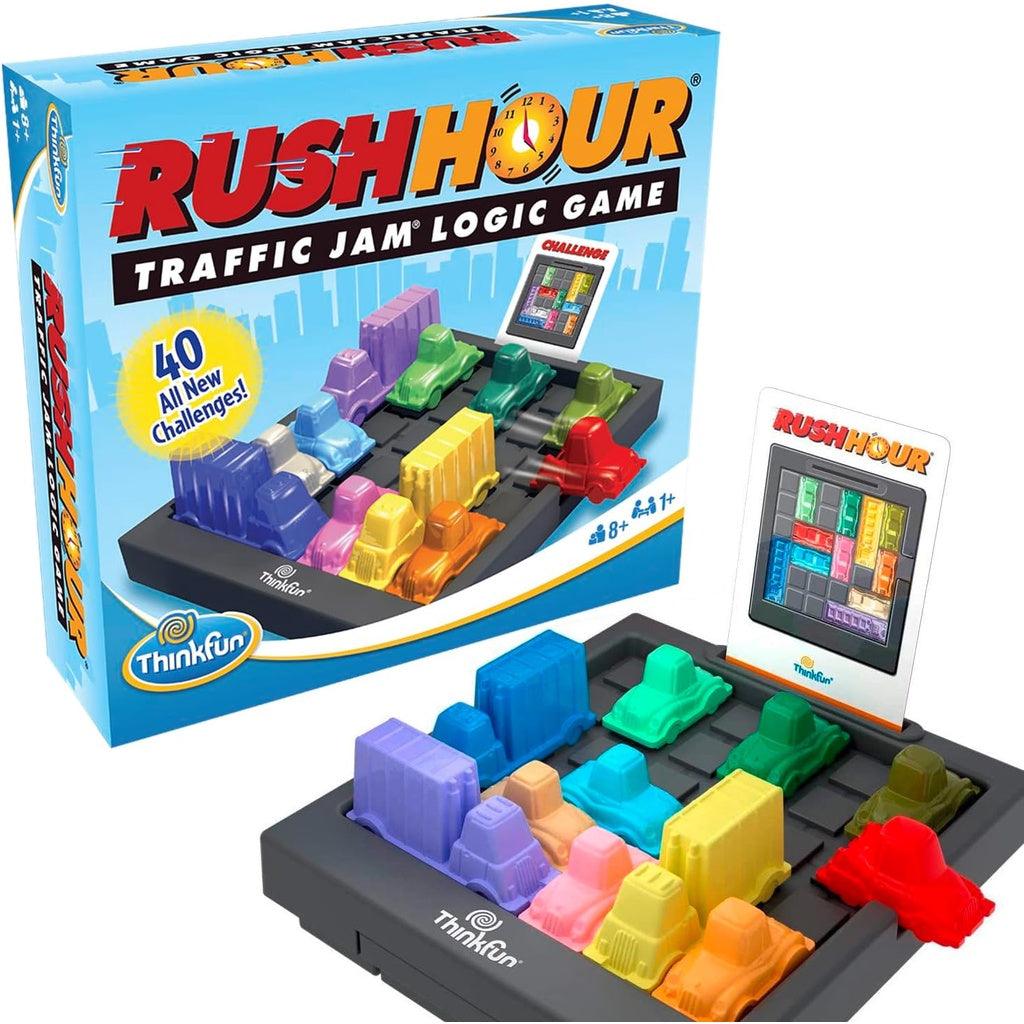
ThinkFun Rush Hour Junior
Fast-start traffic-jam logic puzzles
Pros
- ✓ Very low setup
- ✓ Clear challenge cards
- ✓ Good early logic practice
Cons
- ✗ Single-player
- ✗ Can feel repetitive
- ✗ Limited collaborative play
Instant-start memory and pattern play
Pros
- ✓ No pieces to manage
- ✓ Fast solo turns
- ✓ Good visual memory reps
Cons
- ✗ Electronic sound/light toy
- ✗ Needs batteries or charging
- ✗ Less open-ended than build toys
Liquid Motion Bubbler Timer
Visual calming during short reset breaks
Pros
- ✓ Quiet visual input
- ✓ Low setup
- ✓ Good calm-down corner fit
Cons
- ✗ Can leak if damaged
- ✗ Mostly passive
- ✗ Some kids lose interest quickly
Silent tactile input on desks, notebooks, and devices
Pros
- ✓ Invisible in class
- ✓ No loose parts
- ✓ Great for quick regulation
Cons
- ✗ Adhesive wears over time
- ✗ Limited texture per strip
- ✗ Needs clean surfaces
Pocket-size tactile calming and transition support
Pros
- ✓ Portable
- ✓ Quiet
- ✓ Great for waiting rooms and transitions
Cons
- ✗ Easy to lose
- ✗ Not highly engaging for long sessions
- ✗ Material quality varies
Why These Picks Made the List
Learning Resources Mental Blox Critical Thinking Game
Mental Blox is the best overall fit because it gives a 7-year-old a real thinking challenge without a screen. The cards ask kids to copy, build, compare, remember, and reason with shapes. That combination is useful for focus because the child has to look carefully, hold a goal in mind, and adjust when the first build is not right.
It also works well with a parent or sibling. One person can read the card while the child builds, then they switch roles. The main caution is piece management. Keep the blocks in a tray or shallow bin and choose only a few cards at first. If your child gets discouraged by spatial tasks, start with cooperative builds rather than timed challenges.
ThinkFun Rush Hour Junior
Rush Hour Junior is a strong second pick because the setup is quick and the feedback is satisfying. A child can see the traffic jam, try a move, reverse it, and eventually free the target vehicle. That visible cause-and-effect loop is excellent for kids who need logic practice in small doses.
For home focus, use it as a short bridge before homework or reading: solve one easy card, then start the next task. Do not begin with the hardest cards when the child is tired. If Rush Hour is mainly for travel, Best Road Trip Toys for 6-Year-Olds explains how to pack it without losing pieces.
Educational Insights BrainBolt Boost
BrainBolt Boost is useful when you want an instant-start memory toy with no loose parts. Seven-year-olds often like the light pattern challenge because it feels like a game, but it still practises attention, sequencing, and working memory.
The tradeoff is stimulation. Lights and sound can be motivating for one child and too much for another. Use it in short blocks, especially after school. It is not as open-ended as blocks or puzzles, but it can be a good reset when you need a clear endpoint: three rounds, then done.
Liquid Motion Bubbler Timer
A liquid motion bubbler is not the toy that teaches focus directly. It helps a child arrive at focus. Watching the liquid fall gives the eyes a slow target and gives the body a moment to settle before a harder task.
Use it between school and homework, after a sibling conflict, or beside a calm-down corner. It is mostly passive, so it should not be your only option. It works best when paired with a clear next step: “Watch it twice, then we choose one Mental Blox card.” For more regulation-heavy ideas, see Calm-Down Corner Toys That Actually Help.
Calm Strips (Textured Stickers)
Calm Strips are a small, quiet support for kids who need tactile input while listening, reading, or waiting. Put one on a notebook, desk edge, water bottle, or homework folder so the child has a defined place for their fingers.
They are not exciting, and that is the point. A good desk fidget should not become the main event. The biggest limitation is adhesive life and surface choice. Clean the surface first, and avoid putting them somewhere your child will peel them constantly.
Textured Sensory Worry Stones (6-pack)
Worry stones are best for pocket-size transition support. They can help a 7-year-old keep hands busy during a read-aloud, car ride, appointment, or quiet homework instruction. Unlike many fidget toys, they do not click, spin, flash, or invite performance.
The risk is that they are easy to lose and may become pocket clutter. Give one stone a specific job: one for the backpack, one for the reading corner, one for the car. If your child wants more active fidgets, Best Homework Fidgets for Kids is the better next step.
A Simple Home Focus Routine
A focus toy works better when it is part of a predictable routine instead of a random bribe. Try this pattern:
1. Body check. If your child is buzzing, start with movement: wall pushes, animal walks, or carrying laundry.
2. Regulation tool. Use the bubbler, Calm Strip, or worry stone for one quiet minute.
3. Thinking rep. Choose one Mental Blox card, one Rush Hour card, or three BrainBolt rounds.
4. Real task. Move directly to reading, homework, dinner setup, or cleanup.
5. Finish visibly. End on a clear completion point, not on an adult's vague hope that focus will last longer.
This routine keeps the toy in service of the day. It also protects the child from feeling like every helpful tool is secretly schoolwork. If homework breaks are your main pain point, Best Toys for Focus Breaks Between Homework has more ideas.
Want better toy picks without the research rabbit hole?
Short, practical recommendations by age, need, and budget.
Practical Setup Tips
1) Keep only 3 to 5 toys visible
Fewer options usually means deeper play and less overwhelm. For 7-year-olds, one sensory calmer, one logic toy, and one quiet creative option is usually enough for weekdays.
2) Use short play blocks
Try 10 to 20 minute sessions with a clear start and finish. A focused seven-minute puzzle session is better than a dragged-out 30-minute battle.
3) Pair movement with focus toys
A quick movement break before table play improves transitions. Movement is not a reward for finishing; for many kids it is the prerequisite for starting.
4) Put pieces on a tray
Mental Blox and puzzle toys are less frustrating when pieces stay visible and contained. A tray also makes cleanup feel finite instead of endless.
5) Rotate weekly
Rotation keeps engagement high without constant new purchases. Keep the highest-success toy available, then rotate the second and third options so the child does not burn through everything at once.
FAQ
Are these toys only for kids with a diagnosis?
No. These picks can help many kids who need better focus, calmer transitions, or lower stimulation play. They can also support ADHD, autism, anxiety, sensory processing differences, or ordinary after-school fatigue.
How many toys should we use at one time?
Start with 3 to 5 active options. Too much visual choice can reduce sustained attention. For weekdays, even 2 or 3 well-chosen toys may work better.
What if my child gets bored quickly?
Use shorter sessions, rotate weekly, and focus on toys with immediate feedback and open-ended replay. Also check whether the task after the toy is too long; the toy cannot fix an unrealistic homework routine.
Should focus toys be used during homework?
Sometimes. Quiet tactile tools can help while listening or thinking. Logic games are usually better before or between homework tasks, not during worksheets where they compete for attention.
Related reads
- Best Desk Fidgets for Homework Time
- Best Toys for Focus Breaks Between Homework
- Best Homework Fidgets for Kids
- Calm-Down Corner Toys That Actually Help
- BrainBolt Boost vs Rush Hour Junior for Focus Breaks
If You Can Only Buy One
Learning Resources Mental Blox Critical Thinking Game.
It gives the best balance of challenge, replay value, and low-tech focus practice for most 7-year-olds at home, especially if you keep the setup contained and start with cooperative cards.
Want better toy picks without the research rabbit hole?
Get concise recommendations by age, need, and budget.
Where to go next
By age
Best Homework Break Toys for 7-Year-Olds
Keep the recommendations age-appropriate for your kid’s stage.
By need
Sensory, Movement, and Structured Play for Kids With ADHD
Jump to picks focused on ADHD, sensory, and regulation support.
By budget
Best Gifts for Kids Under $25 (2026)
Compare strong options in lower price brackets before you buy.
Related Articles
Best Toys for Kids Who Rush Through Homework
Four optional short reset activities, with clear stop points, practical limits, and no promise to change homework speed or accuracy.
Read more →
Contained Bedroom Toys: Three Low-Mess Picks
Three contained bedroom toys, with storage, sound, light, timing, and shared-room limits spelled out.
Read more →
Calm Strips vs Marble Mesh Fidget for Classroom Focus
A quiet fidget comparison for school, homework, and kids who need discreet tactile input.
Read more →