Best Sensory Toys Under $25 for Kids
Budget-friendly sensory toys that still support regulation and focus.
Snapshot
| Toy | Age | Price | Best for | Link |
|---|---|---|---|---|
| #1 Fat Brain Toys Dimpl | 1+ | CAD $15–$25 | Silent desk fidget for sustained focus | Check Price |
| #2 LeapFrog Learning Friends 100 Words Book | 18 months+ | CAD $20–$25 | Early vocabulary and guided language play | Check Price |
| #3 Marble Mesh Fidget | 6+ | CAD $6–$13 | Quiet hand movement and repetitive tactile regulation | Check Price |
| #4 Munchables Sensory Chew Necklace | 3+ | CAD $18–$25 | Wearable chew tool for ongoing oral sensory needs | Check Price |
Affiliate links. Prices can change.
You do not need a premium sensory kit to make daily life smoother. For many families, the most useful sensory tools are small, replaceable, and easy to keep in a backpack, homework bin, car seat pocket, or calm-down basket.
The trick is buying for the sensory need, not just the price. A cheap toy that is too loud, too babyish, too messy, or too easy to lose will not feel like a bargain after a week. The best under-$25 sensory toys have a clear job: quiet hands, safe chewing, visual settling, early language play, or quick tactile input.
This list keeps the budget low while still looking at age fit, cleanup, school use, and frustration risk. Some picks are better for toddlers, some for early elementary kids, and some for kids who need discreet regulation during homework or class.
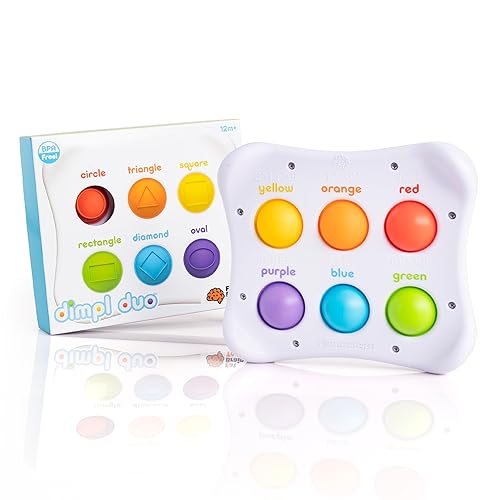
Fat Brain Toys Dimpl
Best low-cost first pick for quiet tactile input, especially for younger kids or older kids who still like simple pop-and-press feedback.
What to Look For
- A specific regulation job. Decide whether you need chewing, quiet hands, visual calming, or a distraction-free travel toy.
- Realistic age fit. Under-$25 sensory toys often skew young; older kids may need something more discreet or more challenging.
- Low replacement pain. Small fidgets and chews get lost. Budget picks should be affordable enough to replace without drama.
- School and cleanup reality. Quiet, washable, pocketable tools usually get used more than toys with loose parts or loud audio.
Our Top 6 Picks
Fat Brain Toys Dimpl
Silent desk fidget for sustained focus
Pros
- ✓ Truly silent
- ✓ Durable
- ✓ Pocket-size
Cons
- ✗ Short play windows
- ✗ Skews younger
- ✗ Limited challenge
Early vocabulary and guided language play
Pros
- ✓ Strong language outcomes
- ✓ Simple interaction model
- ✓ Trusted learning brand
Cons
- ✗ Skews younger
- ✗ Can feel repetitive for older kids
- ✗ Audio can be loud
Marble Mesh Fidget
Quiet hand movement and repetitive tactile regulation
Pros
- ✓ Very affordable
- ✓ Quiet
- ✓ Pocket friendly
Cons
- ✗ Can tear with rough use
- ✗ Less engaging for some younger kids
- ✗ Easy to misplace
Wearable chew tool for ongoing oral sensory needs
Pros
- ✓ Always available
- ✓ Looks like jewelry
- ✓ Easy to clean
Cons
- ✗ Not for under 3
- ✗ Cord can break with hard use
- ✗ Visible at school
Safe oral input that replaces clothing chewing
Pros
- ✓ Discreet at school
- ✓ Different toughness levels
- ✓ Designed by an SLP
Cons
- ✗ Need replacing periodically
- ✗ Easy to lose
- ✗ Not for biters who break things
Silent tactile input on desks, notebooks, and devices
Pros
- ✓ Invisible in class
- ✓ No loose parts
- ✓ Great for quick regulation
Cons
- ✗ Adhesive wears over time
- ✗ Limited texture per strip
- ✗ Needs clean surfaces
Why These Picks Made the List
Fat Brain Toys Dimpl
Dimpl is the easiest first buy if you want a quiet, durable tactile toy under $25. The silicone bubbles give satisfying push-and-pop feedback without clicking, rattling, slime, or loose pieces. It is small enough for a desk, stroller, backpack, or waiting room bag.
The honest limitation is age fit. Dimpl is officially toddler-friendly and can feel too simple for older kids who want a challenge. It still works for some early elementary kids because it is silent and socially low-risk at home, but it is not a “keep them busy for an hour” toy. Think of it as a reset button, not the main event.
LeapFrog Learning Friends 100 Words Book
This is the oddest fit on a sensory list, but it earns a place for younger kids who like button pressing, predictable audio, and guided language. The pages give structure, the interactions are simple, and the learning value is stronger than a random noisy toy at the same price.
For sensory use, the audio is both the advantage and the drawback. It can engage toddlers and preschoolers who need an obvious response, but it may be too loud or repetitive for sound-sensitive homes. It is not a good pick for older kids or bedtime calm. It is best for early vocabulary, car-seat engagement, or a short parent-nearby activity.
Marble Mesh Fidget
A marble mesh fidget is the cheapest useful hand fidget here. It gives repetitive finger movement, fits in a pocket, and stays quiet enough for homework, waiting rooms, or calm corners. If your child picks, taps, or needs something small in hand while listening, it is a low-risk test.
The tradeoff is durability. Rough pullers can tear the mesh, and the small size makes it easy to lose. Buy it only if your child can use a fidget gently, or treat it as a replaceable tool rather than a forever toy.
Munchables Sensory Chew Necklace
The Munchables necklace is for ongoing oral sensory needs: chewing sleeves, collars, pencils, fingers, or toys that are not safe to chew. A wearable chew is helpful because it is available when the need appears, not buried in a drawer across the room.
The school fit depends on your child. Some kids like that it looks like jewelry; others feel self-conscious wearing a chew. It also needs regular washing, and hard chewers can damage cords or chew pieces over time. If chewing happens mostly during writing, the ARK pencil toppers may be more discreet.
ARK Therapeutic Chewable Pencil Toppers
ARK pencil toppers are a practical under-$25 option when chewing shows up during homework, handwriting, or classwork. They put the oral input directly where the behavior happens: on the pencil. Different toughness levels are useful because a light chewer and a destructive chewer do not need the same tool.
They are small, so they can disappear. They also need replacing when worn. The upside is that they are more school-discreet than a necklace for many kids, and they can protect clothing, fingers, and erasers from constant chewing.
Calm Strips (Textured Stickers)
Calm Strips are best for kids who need tactile input but do not manage loose fidgets well. Stick one to a desk, notebook, water bottle, or device case and the tool is always there. They are silent, flat, and much harder to turn into a toy that gets tossed across the room.
They need clean surfaces and the adhesive will not last forever. Texture preference also matters: some kids love the subtle feel, while others need stronger input. They are a smart trial if classroom discretion is more important than novelty.
Best Pick by Need
For toddlers and preschoolers, start with Dimpl or the LeapFrog book. For early elementary kids who need quiet hands, try the marble mesh fidget or Calm Strips. For oral sensory needs, choose the Munchables necklace if the child wants wearable access and ARK pencil toppers if chewing is mostly tied to schoolwork.
If the main issue is after-school overload rather than a single sensory behavior, consider pairing one budget fidget with a bigger routine from Best Budget Sensory Toys Under $20 or Best Sensory Toys for ADHD Kids. A small toy helps most when it has a place in the day.
Want better toy picks without the research rabbit hole?
Short, practical recommendations by age, need, and budget.
Practical Setup Tips
1) Buy one category at a time
Do not buy six cheap fidgets and hope one works. Start with the need you actually see: chewing, tapping, picking, visual seeking, or restless waiting. If the need changes by setting, keep one tool at home and one in the backpack.
2) Teach the rule before the toy leaves home
For school or appointments, explain what the tool is for: hands only, mouth only, quiet use, or desk use. Kids are more likely to keep access when the rules are specific.
3) Make cleaning boring and routine
Chews, pencil toppers, and pocket fidgets collect lint and germs. Give them a small container and wash them on a predictable schedule so the tool stays usable.
4) Watch the replacement pattern
If a toy keeps getting lost or destroyed, the price is not the only issue. The child may need a fixed-location tool like Calm Strips, a tougher chew, or a bigger at-home sensory option instead of tiny portable pieces.
FAQ
Are cheap sensory toys worth it?
Yes, if they match the need. A $6 marble fidget can be more useful than an expensive kit when the real problem is quiet hand movement. Cheap toys are not worth it when they are noisy, too babyish, unsafe for chewing, or constantly lost.
What is the best under-$25 sensory toy for school?
Calm Strips, ARK pencil toppers, and marble mesh fidgets are the strongest school-friendly options here because they are quiet and compact. Check classroom rules first, especially for wearable chews or loose fidgets.
What should I avoid in budget sensory toys?
Avoid mystery multipacks with tiny pieces, loud clickers for noise-sensitive classrooms, liquid toys for rough kids, and chews that are not made for chewing. Cheap is fine; unsafe or disruptive is not.
How many sensory toys does one child need?
Usually fewer than parents think. One tool for hands, one for chewing if needed, and one calm-down option is enough to start. Add only after you know what actually gets used.
Related reads
Want better toy picks without the research rabbit hole?
Get concise recommendations by age, need, and budget.
Where to go next
By age
Best Toys for 4-Year-Olds (Learning Through Play) (2026)
Keep the recommendations age-appropriate for your kid’s stage.
By need
Sensory, Movement, and Structured Play for Kids With ADHD
Jump to picks focused on ADHD, sensory, and regulation support.
By budget
Best Budget Sensory Toys Under $20
Compare strong options in lower price brackets before you buy.
Related Articles
Mental Blox vs Rush Hour Junior for Logic Skills
Compare two low-tech logic toys for kids who need more thinking reps without screens.
Read more →
Monster Scale vs Numberblocks MathLink Cubes for Preschool Math
Compare two hands-on math toys for early counting, number sense, and quiet learning play.
Read more →
Best Calm Waiting-Room Toys for Kids
Small quiet toys for appointments, restaurants, waiting rooms, and other moments where kids need help staying regulated.
Read more →