Best Toys for Kids Under $30
Affordable toy picks under $30 with real replay value, not just impulse buys.

Snapshot
| Toy | Age | Price | Best for | Link |
|---|---|---|---|---|
| #1 Fat Brain Toys Dimpl | 3–5 in this guide | Check current price | A younger child who enjoys simple, repeatable press-and-pop play | Check Price |
| #2 ThinkFun Rush Hour Junior | 5+ | Check current price | A child who likes moving pieces to solve a clear, solo challenge | Check Price |
| #3 ThinkFun Math Dice Junior | 6+ | Check current price | Two or more players who enjoy quick number challenges | Check Price |
| #4 Exploding Kittens Original Edition | 7+ | Check current price | Families or siblings who enjoy quick, silly card-game competition | Check Price |
Affiliate links. Prices can change.
A good budget toy does one clear job: it gives the child a reason to come back without creating a storage, setup, or cleanup problem that makes adults hide it after a week. There is no single best toy for every kid under $30, so this guide is sorted into overlapping age lanes rather than treating preschoolers and tweens as the same shopper.
Price check, not a permanent promise: on September 27, 2026, Amazon.ca showed the exact ASINs below in stock with an order control at C$19.99, C$21.91, C$13.72, C$24.98, and C$23.96 respectively, before tax and delivery. Prices, sellers, and availability can change quickly. Use the direct links to check the current price, and skip a pick if it has moved above your budget.
Fat Brain Toys Dimpl
A conditional top pick for the 3–5 lane: it starts instantly, stores as one piece, and suits a child who genuinely likes press-and-pop repetition. It is not the universal best choice for older kids.
How to use this guide
Start with the lane closest to the child's current play skills, then move up only if they already enjoy that kind of challenge. A younger child may love a simple, repeatable toy; an older child usually needs a puzzle, a social game, or a transformable object with more to figure out. The card price says Check current price on purpose: the dated check establishes the list's budget fit, but it should not become a stale price claim.
Ages 3–5: simple hands-on play
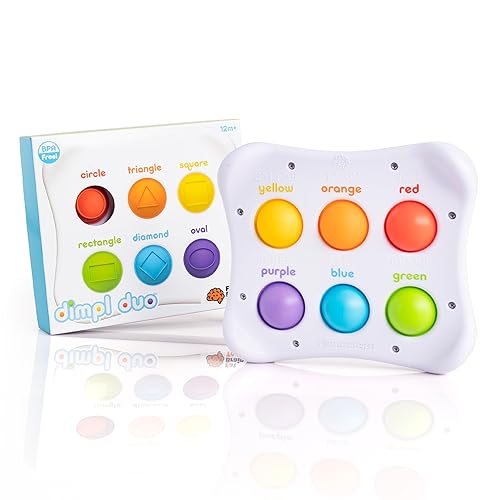
Fat Brain Toys Dimpl
A younger child who enjoys simple, repeatable press-and-pop play
Pros
- ✓ One compact piece
- ✓ Starts without instructions
- ✓ No loose play pieces to sort
Cons
- ✗ Very low challenge ceiling
- ✗ Older siblings may outgrow it
- ✗ Not a full shared-play toy
Dimpl is the low-friction option, not a deep activity. A child who likes pressing, flipping, and repeating can pick it up without an adult setting a scene or explaining rules. That makes it handy for a short waiting stretch, a car bag, or the few minutes before dinner. Put it back in the same pouch or drawer when the moment is over; there are no pieces to hunt down.
The tradeoff is replay depth. It is a better fit for a younger preschooler than for a child who wants to build, compete, or make something. If siblings are far apart in age, do not buy this as the shared gift: the older child will likely be an observer rather than a real player.
Ages 5–7: early logic without a long setup
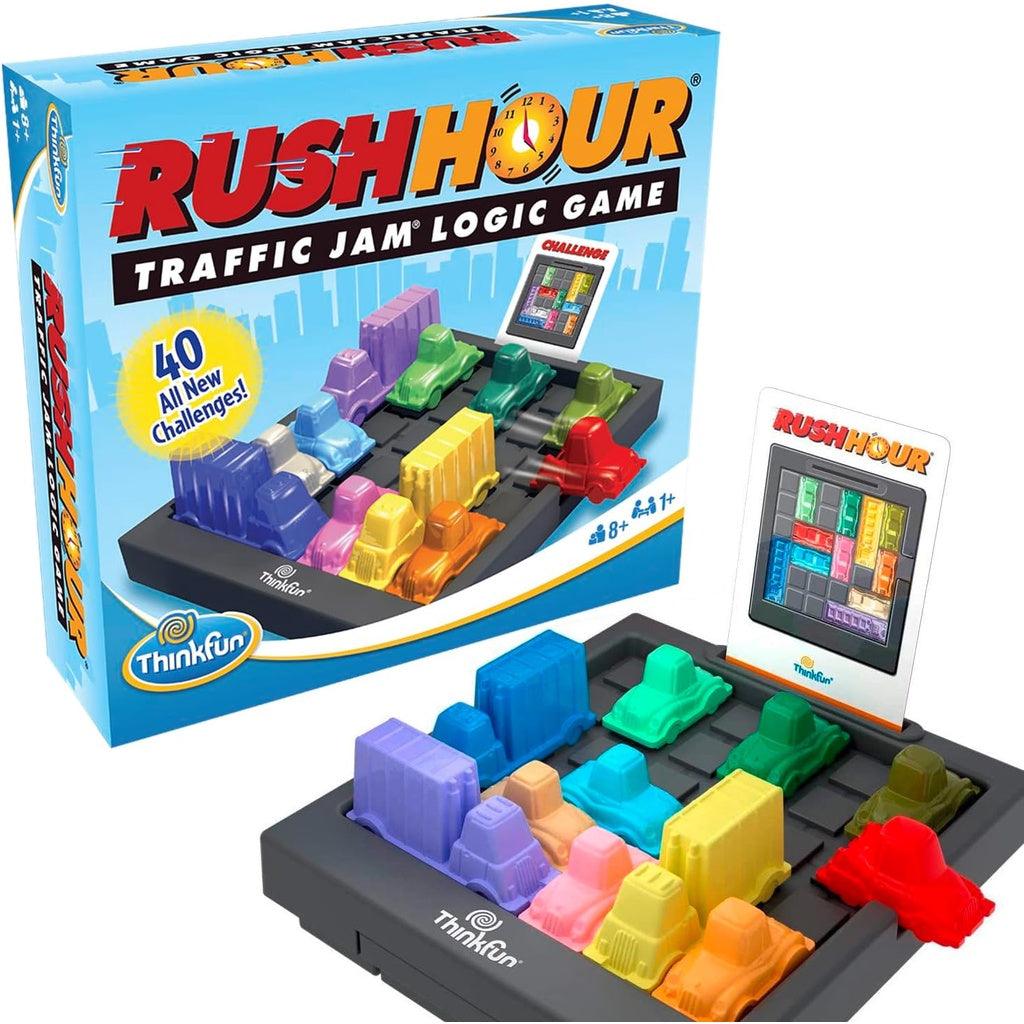
ThinkFun Rush Hour Junior
A child who likes moving pieces to solve a clear, solo challenge
Pros
- ✓ 40 challenge cards
- ✓ Clear goal on every turn
- ✓ Compact box for storing cars and cards
Cons
- ✗ Mostly one-player play
- ✗ Harder cards can frustrate
- ✗ Pieces still need a put-away routine
Rush Hour Junior gives a child one concrete job: slide the cars until the red car can leave. That is easier to enter than an open-ended building set, and each challenge card provides a natural stopping point. Set the board and one card on a table rather than dumping every piece out. When play ends, return the cars and cards to the box before choosing the next activity.
It works beside a sibling more than with one. One child can solve while another chooses the next card or suggests a move, but it is not a cooperative game with equal roles. Start below the child's confidence level if wrong turns quickly become upsetting; an easy win is a better first session than proving the hardest card is difficult.
Ages 6–8: number play with real turn-taking
ThinkFun Math Dice Junior
Two or more players who enjoy quick number challenges
Pros
- ✓ Small, contained game
- ✓ Works with 2+ players
- ✓ Fast reset between rounds
Cons
- ✗ Requires comfort with basic numbers
- ✗ Not a pretend-play toy
- ✗ Dice and score pieces can disappear
Math Dice Junior is strongest when someone wants a short game, not a worksheet replacement. An adult can model the first round, then step back once the child understands the target and the turn order. It is a practical sibling pick when both children can participate at roughly the same level; younger children can roll or help choose, but repeated correction will spoil the game.
Keep the dice and scoring pieces in the original container or a small zip pouch. The setup is light, but a missing die ends the session. Children who dislike numbers or comparison may prefer the next lane's social card game instead.
Ages 7–10: a compact family game
Families or siblings who enjoy quick, silly card-game competition
Pros
- ✓ For 2–5 players
- ✓ Small deck stores easily
- ✓ A real shared-play option
Cons
- ✗ Rule reading helps at first
- ✗ Take-that cards can cause arguments
- ✗ Not useful for solo play
Exploding Kittens earns its place because the people in the room create the replay, not because it is a universal calm-down tool. It is a useful budget gift for siblings, cousins, or a family that already likes card games. Read the rules together once, agree that action cards are part of the game, and use a small card box or band so the deck does not become a loose pile in a toy drawer.
Skip it for a child who hates surprise setbacks or for a home where competitive games reliably turn into conflict. The same action cards that make one family laugh can make another child feel singled out. For one child playing alone, Rush Hour Junior or Shashibo makes more sense.
Ages 8–12: hands-busy spatial challenge
An older child who likes transforming one object into many shapes
Pros
- ✓ One-piece storage
- ✓ Many shape combinations
- ✓ No batteries or separate play pieces
Cons
- ✗ Magnetic clicks are audible
- ✗ Returning to a cube can frustrate
- ✗ The 8+ age label matters
Shashibo is a good older-kid choice when a child likes spatial puzzles but does not want a full table setup. It lives as one cube, then becomes a series of folds and shapes. Its 36 internal rare-earth magnets make it more absorbing than a basic fidget, but that also means it is not an all-ages shared object. Keep it in the 8+ child's own storage spot rather than leaving it in a mixed-age floor-toy bin.
The replay is in trying different shapes, not in reaching one finish line. Some children will enjoy that; others will get annoyed when they cannot return it to a cube right away. If frustration builds, pause rather than turning the toy into an adult rescue project.
Pick the play style, then protect the budget
- Need the simplest start: choose Dimpl for the 3–5 lane, knowing it will not grow far with the child.
- Want a quiet solo challenge: choose Rush Hour Junior for 5+ or Shashibo for 8+.
- Want siblings to have equal roles: Math Dice Junior works when both can handle the numbers; Exploding Kittens works when everyone can handle playful competition.
- Want the smallest cleanup load: Shashibo and Dimpl are one-piece options. Card and dice games need a pouch, box, or a firm rule that every piece returns before the next activity starts.
Do not stretch the budget by buying every lane. One toy that matches the child and has a clear home in the house beats five bargain items that create a mixed-parts drawer. For gift ideas at a lower ceiling, see Best Gifts for Kids Under $25. For a child who needs a different kind of play loop, see Best Toys for Kids Who Get Bored Easily.
Want better toy picks without the research rabbit hole?
Short, practical recommendations by age, need, and budget.
FAQ
Are these toys only for kids with a diagnosis?
No. This guide sorts by age, play style, and family setup, not diagnosis. Choose the toy that matches what the child already enjoys: simple hands-on repetition, logic, numbers, social games, or spatial challenge.
How many toys should we use at one time?
Start with one prepared option, especially for games with cards or dice. A small visible selection is easier to put away than a large pile. If siblings are playing together, choose a game with roles for both rather than handing them two unrelated toys and expecting shared play.
What if my child gets bored quickly?
Check whether the toy is too easy, too hard, or simply the wrong play style before buying more. Reintroduce a card game at family time, leave one easy Rush Hour card ready, or save a compact toy for travel. A new context can be more useful than another purchase.
Related reads
Want better toy picks without the research rabbit hole?
Get concise recommendations by age, need, and budget.
Where to go next
By age
Best Toys for 4-Year-Olds (Learning Through Play) (2026)
Keep the recommendations age-appropriate for your kid’s stage.
By need
Gifts for Neurodivergent Kids: A Parent's Guide (2026)
Jump to picks focused on ADHD, sensory, and regulation support.
By budget
Best Gifts for Kids Under $25 (2026)
Compare strong options in lower price brackets before you buy.
Related Articles
Mental Blox vs Rush Hour Junior for Logic Skills
Compare two low-tech logic toys for kids who need more thinking reps without screens.
Read more →
Monster Scale vs Numberblocks MathLink Cubes for Preschool Math
Compare two hands-on math toys for early counting, number sense, and quiet learning play.
Read more →
Best Calm Waiting-Room Toys for Kids
Small quiet toys for appointments, restaurants, waiting rooms, and other moments where kids need help staying regulated.
Read more →