Best Screen-Free Weekend Toys for 5-Year-Olds
Screen-free toy picks that keep 5-year-olds engaged indoors with less power struggle.
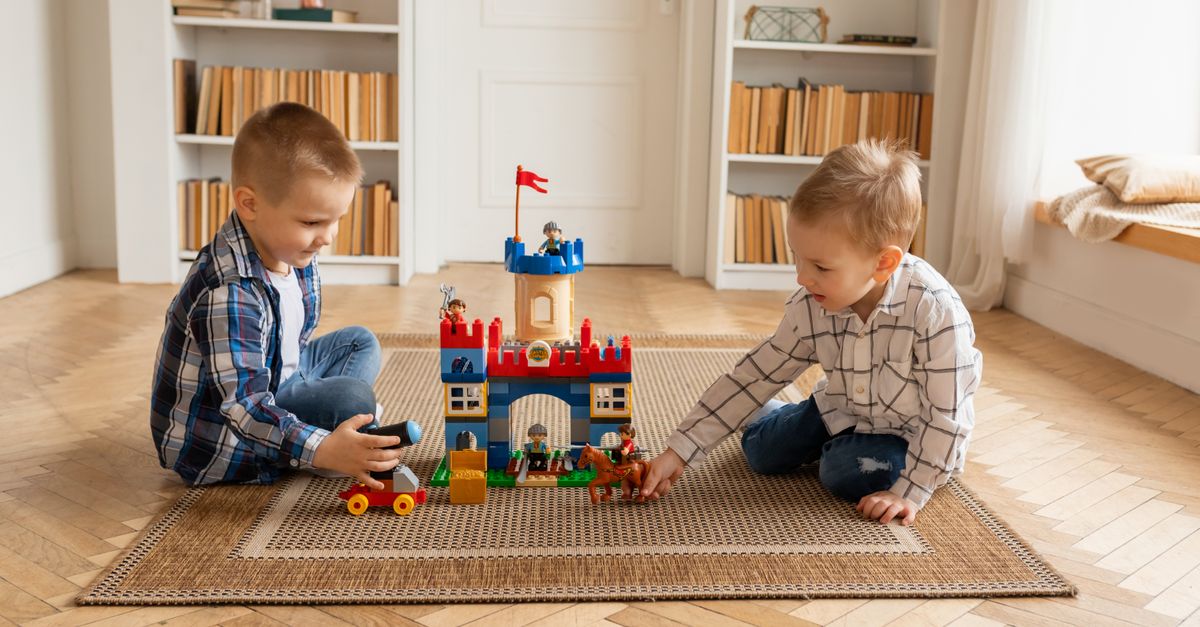
Snapshot
| Toy | Age | Price | Best for | Link |
|---|---|---|---|---|
| #1 Learning Resources Mental Blox Critical Thinking Game | 5+ | CAD $35–$55 | Spatial logic, following directions, and co-solving | Check Price |
| #2 Hape Math Monster Scale | 3+ | CAD $30–$45 | Hands-on weight comparison, counting, and early addition | Check Price |
| #3 hand2mind Numberblocks MathLink Cubes Activity Set | 3+ | CAD $30–$45 | Early number sense with character-backed hands-on math | Check Price |
| #4 Plus-Plus Big Building Set | 5+ | CAD $20–$35 | Fine-motor creative focus | Check Price |
Affiliate links. Prices can change.
Weekend screen limits are hardest when the alternative is vague. A 5-year-old usually cannot “just go play” for a long Saturday afternoon without help from the room, the toy shelf, and the first invitation into play.
The best screen-free weekend toys for 5-year-olds are easy to start, satisfying quickly, and simple enough that parents do not become full-time activity directors. They should give kids something concrete to build, sort, solve, pretend, or repeat while leaving room for imagination.
This guide is for families who want less tablet negotiation without turning the weekend into a Pinterest project. The picks below favour visible progress, low mess, short resets, and enough replay value to survive more than one rainy day.
Learning Resources Mental Blox Critical Thinking Game
Reliable engagement, low setup friction, and strong replay value for real family routines.
This guide focuses on toys that are practical, repeatable, and useful beyond the first week. I weighted each option toward real weekend use: quick setup after breakfast, quiet play during a sibling nap, and an easy way to reset before dinner.
What to Look For
- A clear first move. Five-year-olds do better when the toy shows them how to begin: copy a card, build a tower, balance a scale, or decorate a scene.
- Short setup. If a parent needs 20 minutes to prepare the activity, it probably will not become a weekend habit.
- Hands-on feedback. Blocks click, scales tip, tiles connect, and puzzles visibly change. That feedback replaces the constant reward loop of screens.
- Low mess for repeat use. Screen-free should not mean glitter, slime, and a full kitchen cleanup every time.
- Flexible session length. Good weekend toys work for ten minutes or forty, depending on the child's energy.
Our Top 6 Picks
Spatial logic, following directions, and co-solving
Pros
- ✓ Good group/sibling play
- ✓ Strong spatial reasoning
- ✓ Low-tech and classroom-friendly
Cons
- ✗ Requires reading or verbal prompts
- ✗ Pieces can scatter
- ✗ Less flashy as a gift
Hape Math Monster Scale
Hands-on weight comparison, counting, and early addition
Pros
- ✓ Concrete math play
- ✓ Good preschool fit
- ✓ Quiet tabletop setup
Cons
- ✗ Skews young
- ✗ Small loose weights
- ✗ Limited challenge for older kids
Early number sense with character-backed hands-on math
Pros
- ✓ Strong preschool math fit
- ✓ Concrete counting play
- ✓ Recognizable Numberblocks hook
Cons
- ✗ Skews young
- ✗ Small cubes need storage
- ✗ Less useful once basic counting is mastered
Plus-Plus Big Building Set
Fine-motor creative focus
Pros
- ✓ Compact
- ✓ Quiet tabletop use
- ✓ Strong concentration
Cons
- ✗ Smaller pieces
- ✗ Learning curve
- ✗ Can frustrate younger kids
Portable quiet play for travel and waiting rooms
Pros
- ✓ Very affordable
- ✓ Travel friendly
- ✓ Instant setup
Cons
- ✗ Sticker loss
- ✗ Shorter sessions
- ✗ Theme-limited
Open-ended building and creative focus
Pros
- ✓ Quiet play
- ✓ Long replay value
- ✓ Works solo or together
Cons
- ✗ Higher upfront cost
- ✗ Pieces scatter
- ✗ Needs storage bin
Why These Picks Made the List
Learning Resources Mental Blox Critical Thinking Game
Mental Blox is a strong screen-free weekend toy because it offers a clear challenge without needing batteries, apps, or a long rulebook. A 5-year-old can copy structures, follow verbal directions, or invent new builds. The blocks are big enough to feel satisfying, and the challenge cards give parents an easy prompt when play stalls.
This is best when an adult or older sibling can read the card at first. If your child is easily frustrated by “make it match” tasks, start with free building before moving into the logic challenges.
Hape Math Monster Scale
The Math Monster Scale turns early math into something physical. Kids can see one side drop, adjust the pieces, and test again. That kind of hands-on feedback is useful on screen-free weekends because it gives the same “try, see, fix” loop that keeps kids engaged digitally, but in a slower tactile way.
It skews younger than some toys on this list, so it is strongest for 5-year-olds who still enjoy preschool-style pretend play. Turn it into a shop, monster-feeding game, or “which side is heavier?” challenge to extend its life.
hand2mind Numberblocks MathLink Cubes Activity Set
Numberblocks MathLink Cubes work well for kids who already recognise the characters. The familiar faces create an easy on-ramp, while the cubes support counting, comparing, patterning, and simple addition. For a 5-year-old who resists workbook-style learning, this can make number play feel more like building.
Storage matters. Cubes are useful only if they are easy to find and reset. Keep the set in a small lidded bin and avoid mixing it with every other block in the house.
Plus-Plus Big Building Set
Plus-Plus Big is a compact creative toy that can hold attention without taking over the room. It is good for kids who like repetitive fine-motor work: connect, extend, flatten, curve, rebuild. The pieces also travel better than many construction sets, which helps if weekend routines include restaurants, grandparents, or waiting rooms.
The learning curve is real. Some 5-year-olds need a few demonstrations before the pieces feel intuitive. Start with simple snakes, letters, roads, or colour patterns before expecting detailed models.
Melissa & Doug Reusable Sticker Pad
A reusable sticker pad is the easiest low-cost quiet option here. It works when you need ten peaceful minutes, when a younger sibling is napping, or when everyone is too tired for a game with rules. The activity is simple: choose a scene, arrange stickers, tell a tiny story, reset later.
Its weakness is staying power. This will not replace a whole afternoon of screen time. Think of it as a transition tool: after lunch, before leaving the house, or while a parent finishes a chore.
Magna-Tiles Clear Colors 32-Piece Set
Magna-Tiles are the most open-ended building option on the list. For 5-year-olds, the magnetic connection gives quick success, which makes them easier to return to than many fiddly construction toys. Kids can build garages, castles, animal homes, marble ramps with household items, or pretend-play backdrops.
The price is higher, but replay value is strong. If the set becomes a sibling toy, consider whether 32 pieces is enough. A small set works for one child; two children may need a larger shared pool or clear turn-taking around favourite shapes.
A Weekend Rotation That Reduces Screen Battles
1) Put out one “starter toy” before breakfast
Do not wait for the screen request. Put Mental Blox, Magna-Tiles, or the sticker pad somewhere visible with one tiny prompt: “Can you build a bridge for three animals?” or “Can you make the tallest monster tower?”
2) Use screens as a planned block, not the default fallback
Many families still use screens on weekends. The key is whether the child knows what comes before and after. A simple rhythm helps: outside time, toy basket, snack, screen block, then a reset toy.
3) Keep messy and non-messy choices separate
These picks are mostly low mess on purpose. If you also use paint, slime, or sensory bins, keep those for supervised windows. For independent weekend play, choose toys that can be cleaned in under five minutes.
4) Refresh the same toy with a new mission
Instead of buying constantly, change the prompt. Build a zoo, a car wash, a pattern wall, a treasure scale, or a sticker story about a lost puppy. Five-year-olds often need a new invitation more than a new product.
5) End before the toy turns sour
If play is starting to wobble, take a photo, celebrate the build, and clean up. Ending well makes it more likely the child will accept the same screen-free toy next weekend.
Best Fit by Weekend Need
- Rainy morning: Magna-Tiles or Mental Blox give the most flexible indoor play.
- Quiet time: Melissa & Doug Reusable Sticker Pad or Plus-Plus Big are easier to contain.
- Early math without worksheets: Hape Math Monster Scale and Numberblocks MathLink Cubes are the strongest fits.
- Sibling play: Mental Blox and Magna-Tiles work better than single-child sticker scenes.
- Restaurant or travel bag: Plus-Plus Big and the reusable sticker pad are the easiest to pack.
- Child who gets bored fast: Use challenge cards, timed missions, or story prompts instead of leaving the toy open-ended from the start.
Want better toy picks without the research rabbit hole?
Short, practical recommendations by age, need, and budget.
FAQ
What is the easiest screen-free weekend toy for a 5-year-old to start independently?
Magna-Tiles and reusable sticker pads are usually the easiest. They have obvious first moves and do not require reading. Mental Blox is excellent too, but some children need an adult to introduce the challenge cards.
How long should a 5-year-old play without screens?
There is no perfect number. Start with short, successful blocks: ten to twenty minutes of engaged play is a win. Longer stretches usually come from a good setup, a clear prompt, and a toy the child already understands.
Are educational toys better than pretend-play toys for screen-free weekends?
Not automatically. The best toy is the one your child will actually use. Educational value is strongest when the toy also supports pretend play, building, storytelling, or experimentation.
What if my child keeps asking for the tablet?
Avoid turning every request into a debate. Offer a concrete next action: “Build one tower, then we will check the plan,” or “Choose sticker scene or Magna-Tiles while I make lunch.” A visible routine works better than repeated explanations.
How many toys should be out at once?
Usually one to three. Too many visible options can make a 5-year-old wander without settling. Keep the rest in a closet or bin and rotate when the current choices feel stale.
Related reads
- Best Screen-Free Weekend Toys for 6-Year-Olds
- Screen-Free Toys for Kids
- Best Gifts for Kids Under $25
- Best Toys for Kids Who Get Bored Easily
- Best Travel Toys for Airplanes with Kids
If You Can Only Buy One
Learning Resources Mental Blox Critical Thinking Game is the best first choice if you want a screen-free toy with structure, replay value, and parent-friendly prompts. If your child strongly prefers open-ended building, choose Magna-Tiles instead.
Want better toy picks without the research rabbit hole?
Get concise recommendations by age, need, and budget.
Where to go next
By age
Best Shared Sibling Toys for 5-Year-Olds
Keep the recommendations age-appropriate for your kid’s stage.
By need
Gifts for Neurodivergent Kids: A Parent's Guide (2026)
Jump to picks focused on ADHD, sensory, and regulation support.
By budget
Best Gifts for Kids Under $25 (2026)
Compare strong options in lower price brackets before you buy.
Related Articles
Mental Blox vs Rush Hour Junior for Logic Skills
Compare two low-tech logic toys for kids who need more thinking reps without screens.
Read more →
Monster Scale vs Numberblocks MathLink Cubes for Preschool Math
Compare two hands-on math toys for early counting, number sense, and quiet learning play.
Read more →
Best Calm Waiting-Room Toys for Kids
Small quiet toys for appointments, restaurants, waiting rooms, and other moments where kids need help staying regulated.
Read more →