Best Road Trip Toys for 6-Year-Olds
Travel-friendly toys for 6-year-olds that reduce boredom and meltdowns during long drives.
Snapshot
| Toy | Age | Price | Best for | Link |
|---|---|---|---|---|
| #1 ThinkFun Rush Hour Junior | 5+ | CAD $25–$45 | Fast-start traffic-jam logic puzzles | Check Price |
| #2 Melissa & Doug Reusable Sticker Pad | 3+ | CAD $8–$17 | Portable quiet play for travel and waiting rooms | Check Price |
| #3 Calm Strips (Textured Stickers) | 6+ | CAD $6–$13 | Silent tactile input on desks, notebooks, and devices | Check Price |
| #4 Liquid Motion Bubbler Timer | 3+ | CAD $15–$25 | Visual calming during short reset breaks | Check Price |
Affiliate links. Prices can change.
Road trip toys for 6-year-olds have a very specific job: they need to be interesting enough to interrupt boredom, simple enough to use from a car seat, quiet enough for the driver, and contained enough that one dropped piece does not ruin the next 80 kilometres.
At six, many kids are ready for real puzzles, small creative scenes, sticker play, and calming tools. They are also still young enough to get overloaded by too many choices, loud electronic prompts, or toys that require constant adult help from the front seat. The best travel picks create a small focus loop: choose, try, finish, reset.
ThinkFun Rush Hour Junior
Reliable engagement, low setup friction, and strong replay value for real family routines.
This guide focuses on toys that are practical in real family travel: long drives, ferry waits, airport delays, restaurant stops, hotel downtime, and the fragile last hour before arrival. If you are planning a flight too, pair this with Best Travel Toys for Airplanes with Kids because lap space and lost-piece risk are even tighter in the air.
What to Look For
- Fast entry. If setup is complicated, attention disappears before the toy can help.
- Clear feedback. Kids stay engaged when they can see progress quickly: a puzzle card solved, a sticker scene finished, or a timer settling.
- Replay value. Good travel toys survive past the novelty spike because the child can use them in more than one way.
- Regulation support. The best toys help kids recover from stimulation, not just stay busy.
- Low drop penalty. Avoid toys where one missing part ends the whole activity.
- Quiet use. A road trip toy should not punish everyone else in the vehicle.
The parent test is simple: can the toy work without you turning around every two minutes? A six-year-old may still need help starting, reading a challenge card, or opening a pouch, but the main play loop should be child-run. Save more complicated craft kits for hotel rooms or grandparents' kitchens.
Our Top 6 Picks
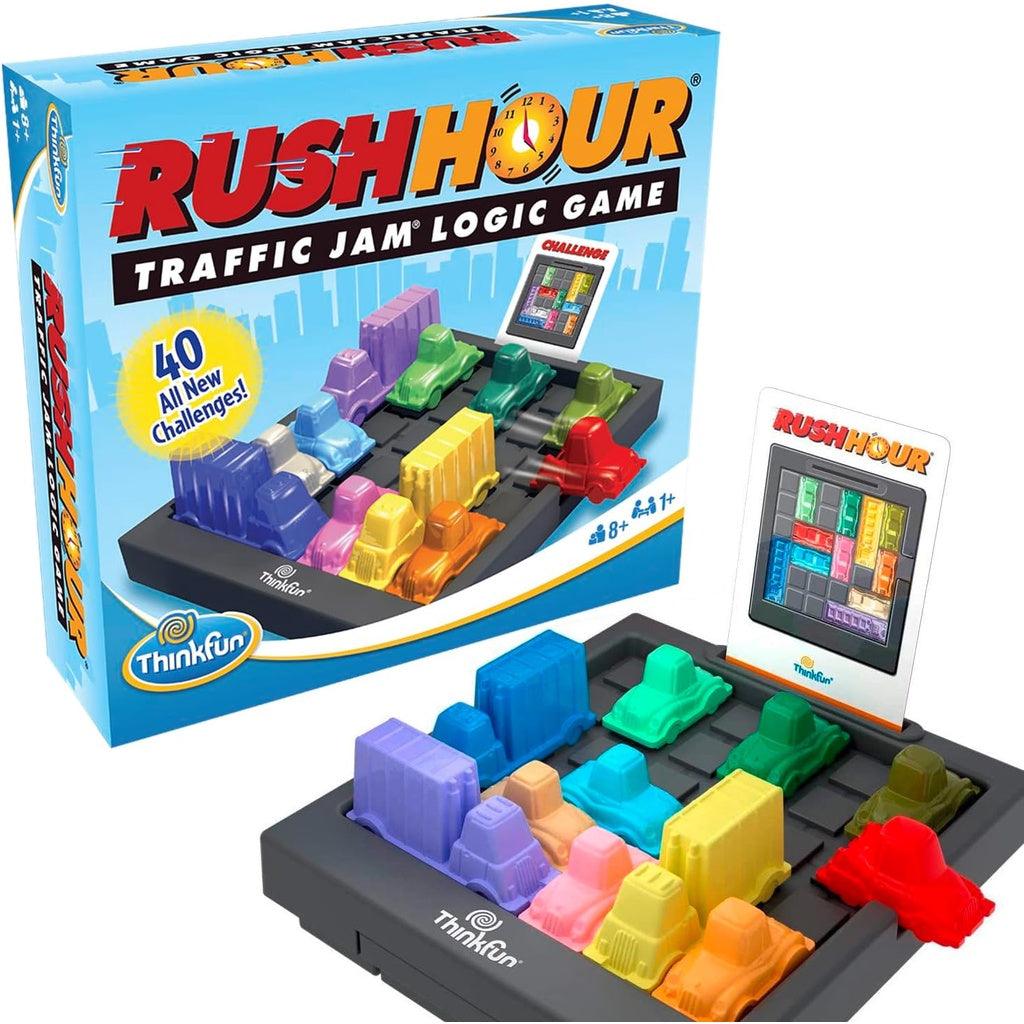
ThinkFun Rush Hour Junior
Fast-start traffic-jam logic puzzles
Pros
- ✓ Very low setup
- ✓ Clear challenge cards
- ✓ Good early logic practice
Cons
- ✗ Single-player
- ✗ Can feel repetitive
- ✗ Limited collaborative play
Portable quiet play for travel and waiting rooms
Pros
- ✓ Very affordable
- ✓ Travel friendly
- ✓ Instant setup
Cons
- ✗ Sticker loss
- ✗ Shorter sessions
- ✗ Theme-limited
Silent tactile input on desks, notebooks, and devices
Pros
- ✓ Invisible in class
- ✓ No loose parts
- ✓ Great for quick regulation
Cons
- ✗ Adhesive wears over time
- ✗ Limited texture per strip
- ✗ Needs clean surfaces
Liquid Motion Bubbler Timer
Visual calming during short reset breaks
Pros
- ✓ Quiet visual input
- ✓ Low setup
- ✓ Good calm-down corner fit
Cons
- ✗ Can leak if damaged
- ✗ Mostly passive
- ✗ Some kids lose interest quickly
Early vocabulary and guided language play
Pros
- ✓ Strong language outcomes
- ✓ Simple interaction model
- ✓ Trusted learning brand
Cons
- ✗ Skews younger
- ✗ Can feel repetitive for older kids
- ✗ Audio can be loud
Creative drawing plus letter/number exposure
Pros
- ✓ Good learning-creative hybrid
- ✓ Lower mess than paper crafts
- ✓ Fast setup
Cons
- ✗ Older kids may outgrow it
- ✗ Audio prompts can annoy
- ✗ Not enough challenge for some kids
Why These Picks Made the List
ThinkFun Rush Hour Junior
ThinkFun Rush Hour Junior is the best overall road trip choice for many 6-year-olds because the play loop is compact and obvious. Choose a card, place the cars, slide them around, and try to free the ice cream truck. It gives a real thinking challenge without markers, glue, Wi-Fi, or a big table.
It is strongest for kids who like puzzles or can handle a little frustration with encouragement. Start with the easiest cards before the trip so the first car session feels familiar. The caution is that it is single-player and small pieces can drop. Use a shallow lap tray, a zip pouch, or a back-seat organizer so the cars have a home between challenges.
Melissa & Doug Reusable Sticker Pad
A reusable sticker pad works when your child wants story play more than logic. Six-year-olds can build scenes, sort characters, invent tiny trips, and redo the same page without needing scissors or colouring supplies. It is cheap enough to rotate by theme and flat enough to pack in a seat-back pocket.
The limitation is session length. Some kids will finish one scene quickly, and stickers can collect lint or disappear under seats. Treat it as a 15-minute tool, not an all-day entertainment system. It pairs well with a clipboard, a small folder, and one rule: only one sheet of stickers out at a time.
Calm Strips (Textured Stickers)
Calm Strips are not a toy in the traditional sense, but they are extremely useful on trips because they provide quiet tactile input with no loose parts. Put one on a notebook, water bottle, lap desk, or the side of a booster seat if the surface is appropriate.
They help most during transition moments: waiting at a border crossing, sitting through construction traffic, or calming down after a noisy rest stop. They will not entertain a child for an hour, but they can reduce fidgeting and arguing. If tactile tools work well for your child, Best Desk Fidgets for Homework Time has more quiet options for home routines.
Liquid Motion Bubbler Timer
A liquid motion bubbler is a visual reset tool. It gives a child something calm to watch without asking them to answer questions, follow rules, or perform. That can matter on a road trip because boredom is not the only problem; overstimulation is often the bigger issue.
Use it after snack spills, sibling arguments, or long stretches of scenery that start to feel endless. The downside is durability. Keep it in a padded pouch, inspect it for cracks, and avoid leaving it in extreme heat. It is mostly passive, so pair it with another activity rather than expecting it to carry the whole drive.
LeapFrog Learning Friends 100 Words Book
This book skews younger than the title age, but it can still work for a 6-year-old who likes language play, younger sibling participation, or audio-backed browsing. It is also useful when the child is tired and does not want a challenge.
The main tradeoff is sound. Test the volume before packing it, and consider whether everyone in the car can tolerate repeated phrases. It is not the most age-stretching pick, but for mixed-age back seats it can keep a younger sibling busy while the 6-year-old helps or points out words.
VTech Doodle and Draw Learning Center
The VTech Doodle and Draw Learning Center is best for hotel rooms, restaurants, and short parked breaks rather than a bumpy highway. It gives creative drawing with less paper mess and can be a bridge between travel and a calmer evening routine.
For a 6-year-old, the value depends on temperament. Kids who still enjoy letter prompts and guided drawing may use it well. Kids who want more open-ended art may outgrow it quickly. If your child prefers pure creative building, Best Toys for Kids Who Get Bored Easily may point you toward higher-replay options.
How to Pack a Road Trip Toy Kit
Do not hand over the whole bag at once. Too much choice makes the back seat louder and shortens the life of every activity. Pack three small categories instead:
1. A thinking toy such as Rush Hour Junior for the first quiet stretch.
2. A creative toy such as stickers or a drawing board for restaurants and stops.
3. A calming tool such as Calm Strips or a liquid timer for recovery moments.
Use pouches instead of a big open bin. Label one pouch “car,” one “restaurant,” and one “hotel” if your child likes clear categories. Keep one fresh item hidden until the return drive. The surprise matters less than the timing: a new activity is most useful after lunch, in traffic, or during the late-day slump.
For six-year-olds, snacks, movement, and expectations matter as much as toys. A quick run at a rest stop can make the next toy work better. If your child is already dysregulated, do not start with the hardest puzzle card. Start with a calmer activity, then move to logic once their body is ready.
Want better toy picks without the research rabbit hole?
Short, practical recommendations by age, need, and budget.
Practical Setup Tips
1) Keep only 2 to 4 toys within reach
A packed car can become visually overwhelming. Put one active toy beside the child and keep the rest in a parent-controlled bag. Rotation works better than access to everything.
2) Use short play blocks
Try 15 to 25 minute sessions with a clear start and finish. “Do two cards,” “finish one sticker scene,” or “watch the timer twice” is easier than “stay busy until we get there.”
3) Plan for dropped pieces
Bring a lap tray, zip bags, and a small flashlight for rest-stop searches. If a toy cannot survive one missing piece, do not make it the only activity in the car.
4) Pair movement with focus toys
A quick movement break before table play improves transitions. At rest stops, give your child a real body job: carry a small bag, stretch, hop to a sign, or race to a tree and back.
5) Rotate on the way home
The return drive often feels harder because the novelty is gone. Save one activity, one snack, and one calmer toy for that leg instead of using everything on day one.
FAQ
Are these toys only for kids with a diagnosis?
No. These picks can help many kids who need better focus, calmer transitions, or lower stimulation play. They can also support ADHD, sensory needs, anxiety around travel, or ordinary boredom.
How many toys should we pack for a 6-year-old road trip?
For a full-day drive, pack 4 to 6 small options but keep only 2 to 4 visible. Include one logic toy, one creative activity, one sensory calmer, and one backup for restaurants or delays.
What if my child gets bored quickly?
Use shorter sessions, rotate slowly, and avoid giving every toy at the start. Also check the basics: hunger, heat, motion sickness, and needing to move can look like toy boredom.
Are electronic learning toys good for road trips?
Sometimes, but volume and repetition matter. If a toy talks, test it in a quiet room first and make sure there is a low-volume setting. For many cars, quiet analog toys are easier on everyone.
Related reads
- Best Travel Toys for Airplanes with Kids
- Best Gifts for Kids Under $25
- Best Toys for Kids Who Get Bored Easily
- Best Desk Fidgets for Homework Time
If You Can Only Buy One
ThinkFun Rush Hour Junior.
It gives the best balance of calm engagement, portability, and real replay value for most 6-year-olds, especially when you introduce the easiest cards before the drive and pack it in a pouch or lap tray.
Want better toy picks without the research rabbit hole?
Get concise recommendations by age, need, and budget.
Where to go next
By age
Best Bedtime Calm Toys for 6-Year-Olds
Keep the recommendations age-appropriate for your kid’s stage.
By need
Gifts for Neurodivergent Kids: A Parent's Guide (2026)
Jump to picks focused on ADHD, sensory, and regulation support.
By budget
Best Gifts for Kids Under $25 (2026)
Compare strong options in lower price brackets before you buy.
Related Articles

Mental Blox vs Rush Hour Junior for Logic Skills
Compare two low-tech logic toys for kids who need more thinking reps without screens.
Read more →
Monster Scale vs Numberblocks MathLink Cubes for Preschool Math
Compare two hands-on math toys for early counting, number sense, and quiet learning play.
Read more →
Best Calm Waiting-Room Toys for Kids
Small quiet toys for appointments, restaurants, waiting rooms, and other moments where kids need help staying regulated.
Read more →