GraviTrax vs Rush Hour for Problem-Solving Kids
Compare GraviTrax and Rush Hour for logic depth, frustration risk, and long-term replay.
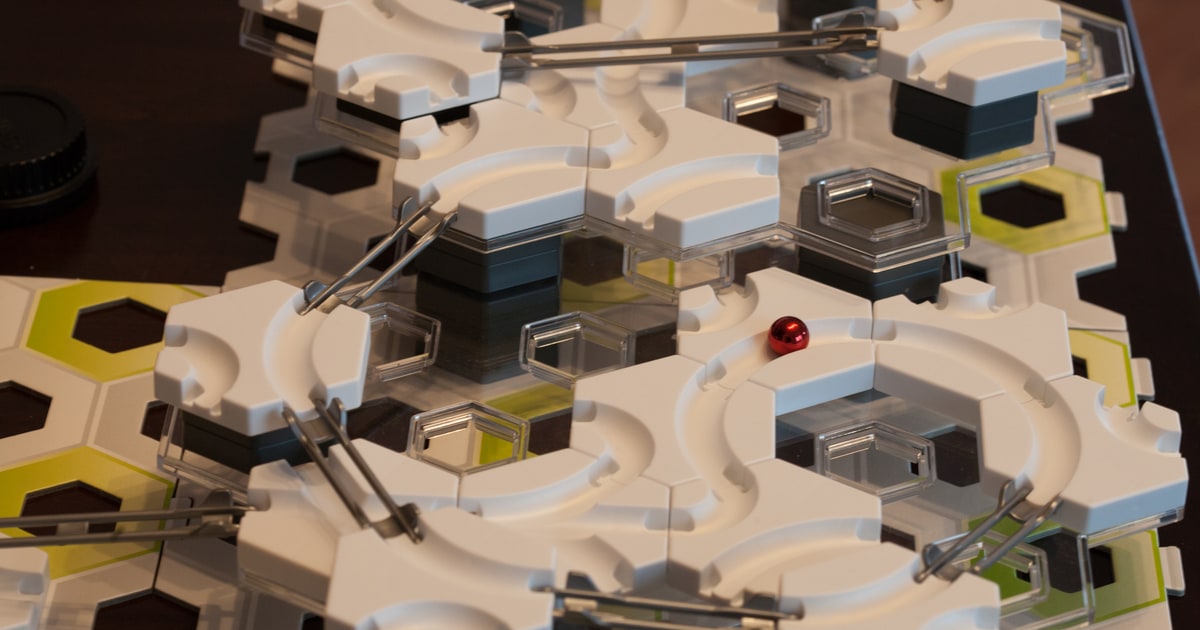
Snapshot
| Toy | Age | Price | Best for | Link |
|---|---|---|---|---|
| Ravensburger GraviTrax Starter Set | 8+ | CAD $55–$85 | Physics through play | Check Price |
| ThinkFun Rush Hour | 8+ | CAD $20–$35 | Quiet logic focus and travel-friendly puzzles | Check Price |
Affiliate links. Prices can change.
GraviTrax and Rush Hour both build problem-solving, but they do it in completely different ways. GraviTrax is a physical systems toy: build a marble run, test it, watch it fail, adjust the pieces, and try again. Rush Hour is a compact logic puzzle: slide cars in the right order until the red car escapes.
That difference matters. Some kids need the big, visible cause-and-effect loop of GraviTrax. Other kids do better with the tidy challenge-card structure of Rush Hour.
This is a two-toy comparison. The goal is not to list every nearby STEM toy; it is to make the better choice between these two.
These belong together because both are age-8+ screen-free problem-solving toys with logic and spatial reasoning at the centre. The tradeoff is open-ended system building versus compact puzzle progression.
Quick Answer
- Choose GraviTrax if your child likes building tracks, testing cause and effect, and iterating on a physical system.
- Choose ThinkFun Rush Hour if you want a compact, lower-prep logic puzzle with clear challenge cards.
- Choose GraviTrax for hands-on physics and “what happens if?” experimentation.
- Choose Rush Hour for travel, quiet focus, and short daily thinking reps.
Comparison Table
| Decision point | Ravensburger GraviTrax Starter Set | ThinkFun Rush Hour |
|---|---|---|
| Best fit | Kids who like building and testing physical systems | Kids who like contained logic puzzles |
| Learning style | Physics, prediction, cause and effect, iteration | Sequencing, planning, spatial reasoning |
| First-session feel | Bigger, more exciting, more pieces | Faster to explain, easier to contain |
| Setup friction | Needs floor or table space and a build area | Opens fast and resets quickly |
| Parent involvement | Helpful at first, especially with layout ideas | Mostly independent after the rules click |
| Best long-term use | Better for open-ended experimentation | Better for short solo logic sessions |
The Two Picks
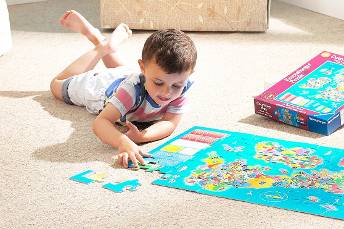
Physics through play
Pros
- ✓ Strong experimentation loop
- ✓ Visual cause/effect
- ✓ Expandable
Cons
- ✗ Needs floor/table space
- ✗ Pieces can be lost
- ✗ Best with a clear build area
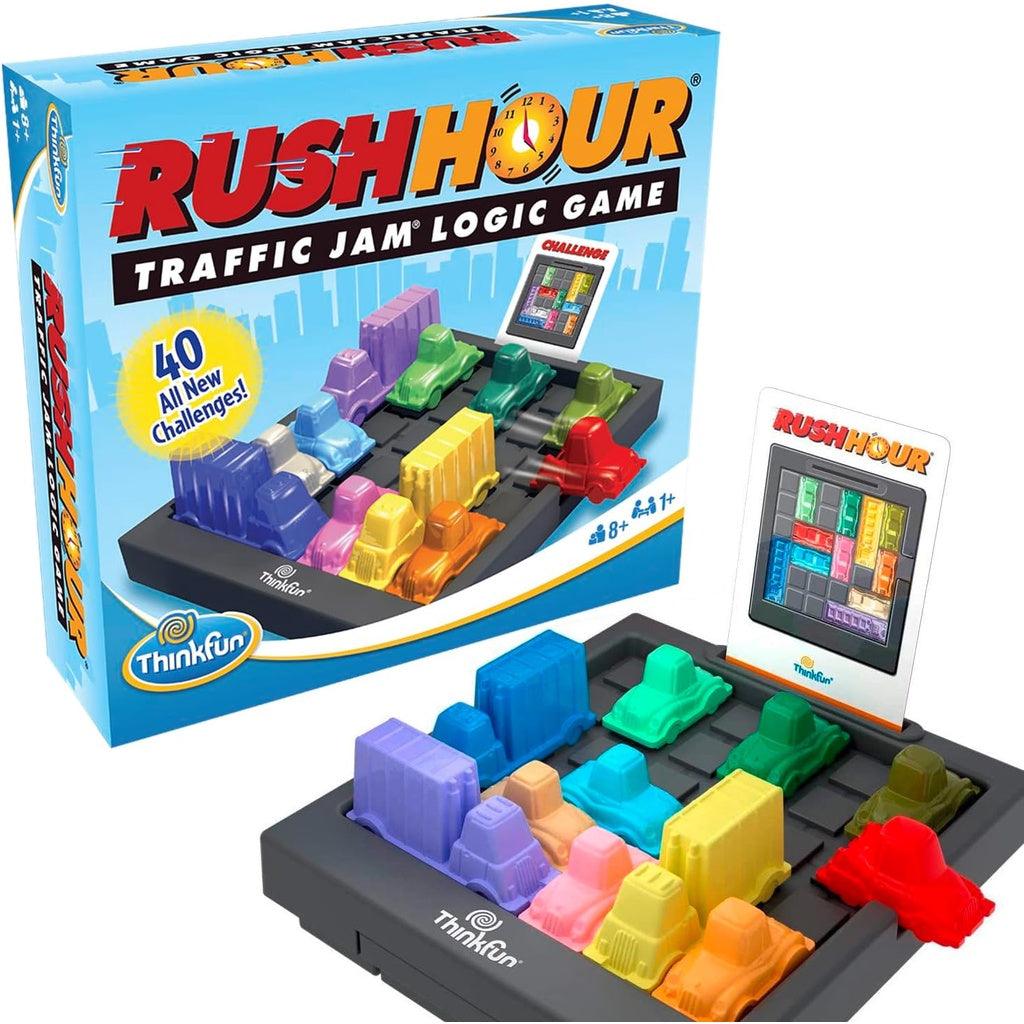
Quiet logic focus and travel-friendly puzzles
Pros
- ✓ No batteries
- ✓ Portable
- ✓ Great thinking reps
Cons
- ✗ Single-player
- ✗ Can feel hard at first
- ✗ Needs progression support
What Makes These Toys Different
GraviTrax teaches problem-solving through physical feedback. If the marble slows down, falls off, misses the target, or stops short, the child can see the problem. They have to adjust height, direction, spacing, and timing. That makes the toy feel alive. It is not just “solve the puzzle”; it is “build a system that works.”
Rush Hour teaches problem-solving through constraints. Every car blocks or unlocks another move. The child learns to pause, look ahead, undo a bad route, and sequence steps. It is quieter than GraviTrax, but it is not less valuable. It builds the kind of patient logic kids need for math, coding, chess, and planning-heavy games.
The practical difference is energy level. GraviTrax is active and spatial. Rush Hour is compact and focused.
Setup and Parent Involvement
GraviTrax asks more of the room. It needs a table or floor area where pieces can stay spread out for a while. The first session may also need an adult nearby to help interpret the instructions, stabilize a build, or suggest a smaller goal. Without that, some kids build too big too fast and get frustrated when the track fails.
Rush Hour has almost no setup. Open the grid, choose a challenge card, place the cars, and start sliding. The parent job is mostly emotional: helping the child not treat a stuck puzzle as failure. A good line is, “Being stuck is the game.” That reframes the frustration as part of the challenge.
If you want something that can live on a coffee table or go in a bag, Rush Hour wins. If you want a bigger hands-on project for a weekend morning, GraviTrax is the better fit.
Which One Builds Better Problem-Solving?
GraviTrax is better for kids who learn by testing. It builds prediction, cause and effect, spatial planning, and flexible experimentation. A child might think, “If I raise this tile, the marble will go faster,” then immediately see whether that is true. That loop is powerful because the feedback is visible and physical.
Rush Hour is better for kids who need structured logic practice. It builds sequencing, working memory, planning, and restraint. You cannot just move pieces randomly forever. Eventually the child has to think: “Which car is really blocking the red car? What has to move before that?”
Neither is the smarter toy in every situation. GraviTrax is more exploratory. Rush Hour is more disciplined.
Frustration Risk
GraviTrax frustration usually comes from builds collapsing, marbles flying off, or the child trying to make a complicated track before they understand the pieces. The fix is to start with small builds. One launch, one curve, one drop, one target. Let the child win quickly before making the system bigger.
Rush Hour frustration usually comes from feeling stuck. Some kids love that. Others shut down. The fix is to start below their actual age level and let them build fluency. A puzzle that feels “too easy” is useful if it teaches the pattern of looking ahead.
If your child handles trial-and-error well, GraviTrax is exciting. If your child likes clear rules and steady progress, Rush Hour is safer.
Replay Value Over Time
GraviTrax has strong replay value because the system can keep changing. Kids can rebuild tracks, make races, test height, add expansions, and invent challenges. The risk is that the starter set can become either a favourite project toy or a box of pieces that only comes out with parent help.
Rush Hour has strong replay value because the challenge cards create a built-in progression. The child can do one puzzle at breakfast, after school, or before bed. The risk is that once a child finishes the deck or loses interest in the format, there is less open-ended play to fall back on.
For long sessions, GraviTrax has more potential. For frequent short sessions, Rush Hour is more reliable.
Travel, Storage, and Cleanup
Rush Hour wins easily for travel and storage. It is compact, self-contained, and easy to put away. That makes it useful for restaurants, grandparents’ houses, road trips, and quiet time.
GraviTrax is a home toy. It needs a bin, a build surface, and enough room that the child is not constantly knocking pieces over. If you have that space, it feels more substantial. If you do not, the friction can keep it on the shelf.
Where to Go Next
If the GraviTrax side sounds right, compare it with another engineering-style pick in Roller Coaster Challenge vs GraviTrax. If the Rush Hour side sounds right, you may also want Mental Blox vs Rush Hour Junior. For a broader list, see STEM toys for kids who hate worksheets.
Related articles: Roller Coaster Challenge vs GraviTrax | Mental Blox vs Rush Hour Junior | STEM toys for kids who hate worksheets
Final Recommendation
Start with GraviTrax if your child enjoys building, experimenting, and seeing physical cause and effect. It is the better choice for hands-on STEM play and kids who like to tinker.
Choose Rush Hour when you need the lower-prep, compact option. It is better for quiet focus, travel, and kids who enjoy solving one clear challenge at a time.
FAQ
Which one is easier to start with?
Rush Hour is easier to start because the rules are simple and the setup is contained. GraviTrax is more exciting visually, but it has more pieces and more room for first-session chaos.
Which one has more long-term depth?
GraviTrax has more open-ended depth because kids can keep building new systems. Rush Hour has strong puzzle depth, but it stays within the challenge-card format.
Which one is better for kids who get frustrated?
Rush Hour is better if the child likes calm, structured challenges. GraviTrax is better if frustration turns into experimentation. If your child gets upset when a build fails, start with small GraviTrax tracks or choose Rush Hour first.
Can siblings play together?
GraviTrax is better for sibling play because one child can build while another tests or suggests changes. Rush Hour is mostly a solo puzzle, although a parent or sibling can help talk through moves.
Should I buy both?
Not at first. Buy GraviTrax for the builder-experimenter. Buy Rush Hour for the quiet logic kid. Add the other later if your child shows appetite for both kinds of problem-solving.
Want better toy picks without the research rabbit hole?
Get concise recommendations by age, need, and budget.
Where to go next
By age
Best Toys for 4-Year-Olds (Learning Through Play) (2026)
Keep the recommendations age-appropriate for your kid’s stage.
By need
Gifts for Neurodivergent Kids: A Parent's Guide (2026)
Jump to picks focused on ADHD, sensory, and regulation support.
By budget
Best Gifts for Kids Under $25 (2026)
Compare strong options in lower price brackets before you buy.
Related Articles
Best STEM Toys for 10-Year-Olds: 4 Project Styles
Four current electronics, coding, drawing, and spatial-reasoning toys for 10-year-olds, with honest setup, device, replay, and frustration tradeoffs.
Read more →
Best Screen-Free Math Toys for Preschoolers
Three current, hands-on math toys for preschoolers: counting, matching quantities, sorting, and early pattern work without turning play into a worksheet.
Read more →
Best Low-Noise Tabletop Logic Toys for Apartments
Three manual logic toys for apartment tables, with honest guidance on setup, storage, loose pieces, and mechanical noise.
Read more →