Best Screen-Free Weekend Toys for 6-Year-Olds
Three current screen-free weekend toys for six-year-olds, chosen for a clear first action, age fit, storage reality, and an easy stopping point.
Snapshot
| Toy | Age | Price | Best for | Link |
|---|---|---|---|---|
| #1 ThinkFun Rush Hour Junior | 5+ | Check current price | A compact, quiet logic challenge with a contained start and finish | Check Price |
| #2 Learning Resources Mental Blox Critical Thinking Game | 5+ | Check current price | Two-person spatial building and problem-solving without a screen | Check Price |
| #3 The Original Stomp Rocket Stunt Planes | 5+ | Check current price | A short outdoor movement break with a simple launch-and-adjust loop | Check Price |
Affiliate links. Prices can change.
A screen-free weekend does not need six new activities competing with a tablet. It needs a few options a six-year-old can actually start: one short puzzle, one build-and-test challenge, and one outdoor release valve. The setup should be ready before boredom peaks.
These exact Amazon.ca listings were checked as current when this guide was updated. Stock and prices change. The recommendations are research-based product choices, not promises that every child will play for a set length of time.
ThinkFun Rush Hour Junior
The easiest quiet starter here for a six-year-old: a compact, age-appropriate puzzle with short challenge cards and a clean stopping point.
Quick Answer
Use Rush Hour Junior for a quiet table challenge before lunch, Mental Blox for cooperative build-and-solve play, and Stomp Rocket Stunt Planes when the family needs a genuinely active outdoor option. These are not three versions of the same toy. Pick the one that matches the next hour.
Our Top 3 Picks
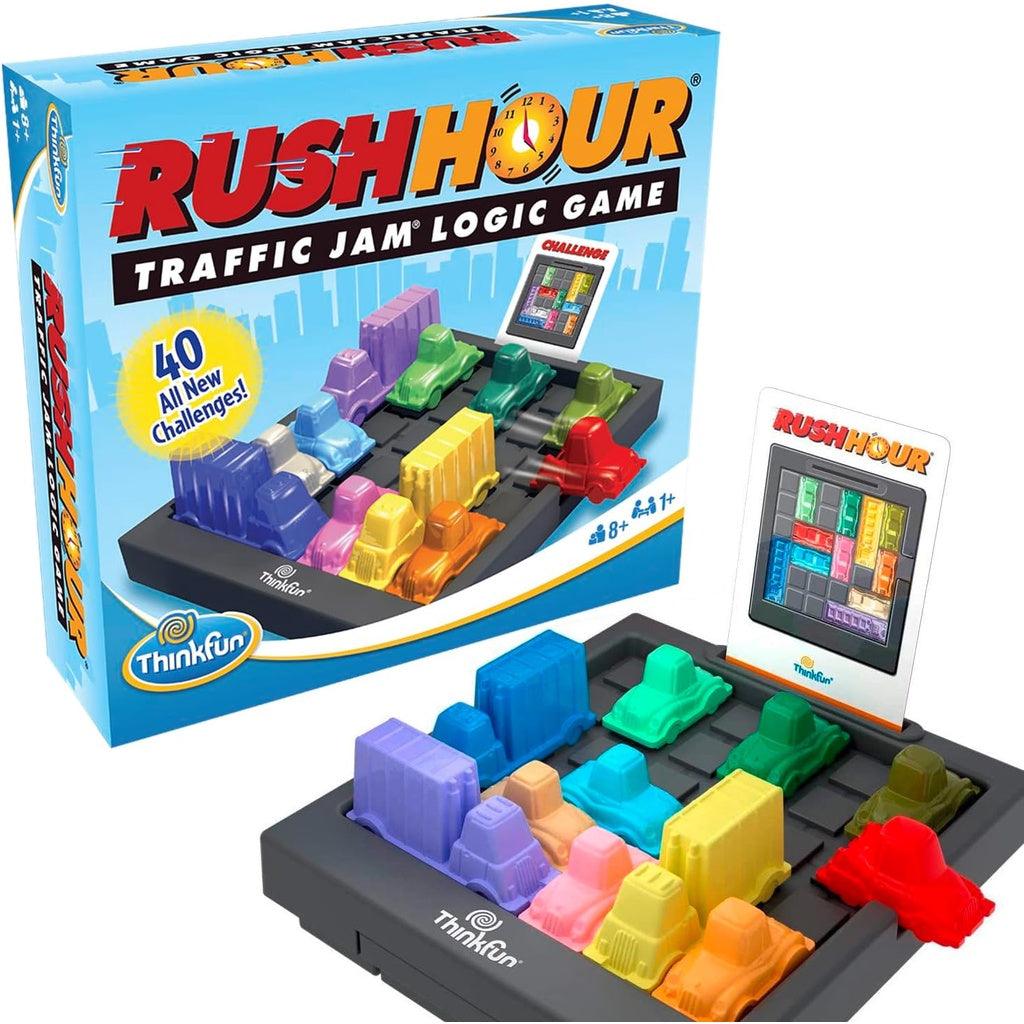
ThinkFun Rush Hour Junior
A compact, quiet logic challenge with a contained start and finish
Pros
- ✓ Age-appropriate 5+ entry point
- ✓ No batteries or app
- ✓ Challenge cards make it easy to stop after one success
Cons
- ✗ Mostly solo play
- ✗ Small vehicle pieces need a tray or case
- ✗ A frustrated child may need an easier card rather than more hints
Open the case with one easy card selected. The child moves the vehicles to free the red hero car, then resets the board when done. That is enough. The goal is not to make a six-year-old finish a stack of puzzles; it is to give them a complete, repeatable off-screen task. Keep the pieces on a tray if siblings or pets are nearby.
Two-person spatial building and problem-solving without a screen
Pros
- ✓ A parent or sibling can share roles
- ✓ Blocks make spatial prompts visible
- ✓ No battery or app dependency
Cons
- ✗ Pieces scatter without a play tray
- ✗ Some cards need a reader or adult prompt
- ✗ Not the right choice when everyone is already tired
Mental Blox works best as co-solving, not a test. One person reads or describes a card, one person builds, then you compare the result. For a six-year-old, begin with the simplest cards and let the child turn the piece in their hands before telling them the answer. It is a better rainy-morning table activity than a high-energy afternoon toy.
A short outdoor movement break with a simple launch-and-adjust loop
Pros
- ✓ No app or charging
- ✓ Immediate physical feedback
- ✓ Easy to pack away after a few launches
Cons
- ✗ Needs a safe open outdoor area
- ✗ Foam planes can drift or get lost
- ✗ Not an indoor or windy-day solution
Stomp Rocket is for the moment when a tabletop toy will make the room worse. Take it outside to an open area, set a boundary before launching, and stop after a small number of turns. The engineering is simple and real: change the stomp, launch angle, or plane setup and see what changes. Do not frame it as a quiet indoor replacement for a screen.
Make the Weekend Easy to Start
Set out one option, not a toy buffet. Before the weekend begins, put a Rush Hour Junior card in the case, keep Mental Blox in one zip pouch or bin, and choose the outdoor launch spot. A child is more likely to begin when the first action is visible: slide this piece, build this shape, stomp here.
It also helps to use real stopping points. One card, one build, or five launches is enough. When the child asks to continue, that is useful information. When they are done, the toy can go away cleanly without the adult having to negotiate a “screen-free lesson.”
Choose the First Action, Not the Whole Afternoon
Six-year-olds often reject an activity when they cannot see how to begin. Avoid asking, “What do you want to do instead?” Put the first Rush Hour card beside the board, make the first Mental Blox shape with one piece missing, or carry the Stomp Rocket to the door. The child then has a small decision rather than the job of designing their own weekend.
If they choose not to start, let that be information. Offer a transition or a shared non-toy activity instead of escalating the pitch. A screen-free plan works when it is available, not when it becomes another adult demand.
When a Toy Is Not the Answer
A six-year-old can be bored, hungry, stuck indoors, tired from a busy day, or looking for company. Those are different problems. Before opening a box, try a no-buy reset: make a snack together, put on shoes for a short walk, let the child choose music while they help with a small task, or sit down for one round of a game you already own.
The toys here earn their place when they make the next twenty minutes easier. They are not supposed to replace outdoor time, family attention, or a break when the child has already had enough decisions.
Want better toy picks without the research rabbit hole?
Short, practical recommendations by age, need, and budget.
FAQ
What should I buy for an indoor-only weekend?
Choose Rush Hour Junior for a quiet solo option or Mental Blox if an adult or sibling can join. Stomp Rocket belongs outside.
Are these all independent-play toys?
Rush Hour Junior can be. Mental Blox is stronger with a partner at first. Stomp Rocket needs outdoor supervision appropriate to the setting.
What if my child says every toy is boring?
Start with a no-buy reset: snack, water, a short walk, or helping set up one task. A new toy does not solve a child who needs a transition more than another option.
Related Reads
- Screen-free toys for rainy days
- Easy science toys for kids who get frustrated fast
- Screen-free weekend toys for 8-year-olds
If You Can Only Buy One
Rush Hour Junior. It has the simplest contained start, a clear challenge loop, and no screen, battery, or large-room setup.
Want better toy picks without the research rabbit hole?
Get concise recommendations by age, need, and budget.
Where to go next
By age
Best Bedtime Calm Toys for 6-Year-Olds
Keep the recommendations age-appropriate for your kid’s stage.
By need
Gifts for Neurodivergent Kids: A Parent's Guide (2026)
Jump to picks focused on ADHD, sensory, and regulation support.
By budget
Best Gifts for Kids Under $25 (2026)
Compare strong options in lower price brackets before you buy.
Related Articles
Mental Blox vs Rush Hour Junior for Logic Skills
Compare two low-tech logic toys for kids who need more thinking reps without screens.
Read more →
Monster Scale vs Numberblocks MathLink Cubes for Preschool Math
Compare two hands-on math toys for early counting, number sense, and quiet learning play.
Read more →
Best Calm Waiting-Room Toys for Kids
Small quiet toys for appointments, restaurants, waiting rooms, and other moments where kids need help staying regulated.
Read more →