Screen-Free Toys That Kids Actually Want to Play With (2026)
12 toys with zero screens, zero apps, and zero batteries that kids choose over tablets. Tested by boredom, approved by parents.

Snapshot
| Toy | Age | Price | Best for | Link |
|---|---|---|---|---|
| #1 ThinkFun Roller Coaster Challenge | 6+ | CAD $45–$70 | Engineering logic through build-and-test coaster puzzles | Check Price |
| #2 Learning Resources Mental Blox Critical Thinking Game | 5+ | CAD $35–$55 | Spatial logic, following directions, and co-solving | Check Price |
| #3 Plus-Plus Big Building Set | 5+ | CAD $20–$35 | Fine-motor creative focus | Check Price |
| #4 Liquid Motion Bubbler Timer | 3+ | CAD $15–$25 | Visual calming during short reset breaks | Check Price |
Affiliate links. Prices can change.
The strongest screen-free toys give kids something to build, solve, imagine, or regulate without adult micromanagement. They do not simply replace a tablet with a pile of parts; they create a clear reason to stay engaged.
The right toy can lower friction, support calmer transitions, and make day-to-day life noticeably easier. The wrong one becomes another bin of pieces that only gets pulled out when a parent suggests it.
ThinkFun Roller Coaster Challenge
Reliable engagement, low setup friction, and strong replay value for real family routines.
This guide focuses on toys that are practical, repeatable, and useful beyond the first week. It is especially helpful if you are trying to reduce tablet dependence, fill after-school dead zones, or build a calmer rotation of toys that kids can start on their own.
What Counts as a Good Screen-Free Toy?
A good screen-free toy has to compete with very easy entertainment. That means it needs a fast start, visible progress, and enough depth that the child does not exhaust it in one afternoon.
Look for:
- Fast entry. If setup is complicated, attention disappears before play begins.
- Clear feedback. Kids stay engaged when they can see progress quickly.
- Replay value. Good toys survive past the novelty spike because the outcome changes each time.
- Regulation support. The best toys help kids recover, not just stay busy.
- Parent tolerance. If the toy is loud, messy, or impossible to store, it will not stay in the active rotation.
This is also why the best screen-free toys are not all “educational” in the obvious school-skill sense. A marble logic puzzle, a tactile calm-down timer, or a magnetic building set can build planning, persistence, spatial reasoning, and emotional regulation without announcing itself as homework.
Our Top 6 Picks
Engineering logic through build-and-test coaster puzzles
Pros
- ✓ Clear challenge progression
- ✓ Great cause-and-effect feedback
- ✓ Stronger novelty than another circuit kit
Cons
- ✗ Pieces need organization
- ✗ One-player-at-a-time tendency
- ✗ Harder cards may need help
Spatial logic, following directions, and co-solving
Pros
- ✓ Good group/sibling play
- ✓ Strong spatial reasoning
- ✓ Low-tech and classroom-friendly
Cons
- ✗ Requires reading or verbal prompts
- ✗ Pieces can scatter
- ✗ Less flashy as a gift
Plus-Plus Big Building Set
Fine-motor creative focus
Pros
- ✓ Compact
- ✓ Quiet tabletop use
- ✓ Strong concentration
Cons
- ✗ Smaller pieces
- ✗ Learning curve
- ✗ Can frustrate younger kids
Liquid Motion Bubbler Timer
Visual calming during short reset breaks
Pros
- ✓ Quiet visual input
- ✓ Low setup
- ✓ Good calm-down corner fit
Cons
- ✗ Can leak if damaged
- ✗ Mostly passive
- ✗ Some kids lose interest quickly
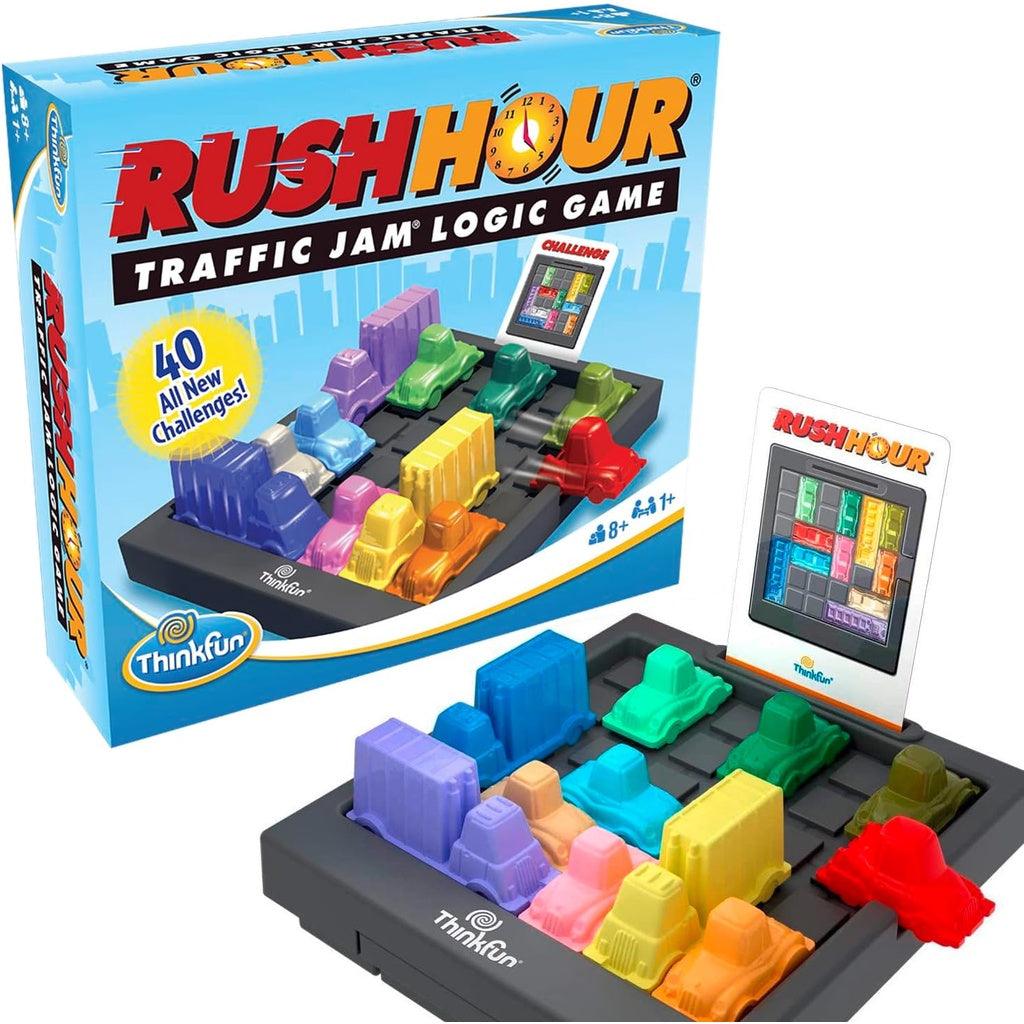
ThinkFun Rush Hour Junior
Fast-start traffic-jam logic puzzles
Pros
- ✓ Very low setup
- ✓ Clear challenge cards
- ✓ Good early logic practice
Cons
- ✗ Single-player
- ✗ Can feel repetitive
- ✗ Limited collaborative play
Open-ended building and creative focus
Pros
- ✓ Quiet play
- ✓ Long replay value
- ✓ Works solo or together
Cons
- ✗ Higher upfront cost
- ✗ Pieces scatter
- ✗ Needs storage bin
Why These Picks Made the List
ThinkFun Roller Coaster Challenge
ThinkFun Roller Coaster Challenge is the best fit when a child likes building but needs a clear problem to solve. Each card gives a starting structure and a goal, then the child has to arrange the track pieces so the coaster car actually reaches the end. That fail-adjust-test rhythm is much stronger than open-ended building for kids who drift when there are no rules.
The main parent advantage is that it feels exciting without being loud. It works well after school, on weekend mornings, or during a quiet hour when a child still needs challenge. The main downside is piece management. Keep the cards and track pieces in a shallow tray or labelled bin; if half the supports disappear into a toy box, the toy becomes frustrating fast.
For a deeper engineering lane, compare it with GraviTrax for problem-solving kids or the broader building toys beyond LEGO.
Learning Resources Mental Blox Critical Thinking Game
Mental Blox is a strong screen-free pick for kids who like puzzles but do better when another person is involved. One child can describe a structure while another builds it, or a parent can read the challenge card and let the child copy or recreate it. That makes it more social than many logic toys.
It is especially useful for spatial language: above, below, beside, taller, shorter, mirror, and rotate. Those words matter for math readiness and classroom problem-solving, but the toy still feels like block play. The tradeoff is that it may need a reader or helper at first, so it is not always a completely independent pick for younger kids. If your goal is sibling play, it pairs well with ideas from open-ended toys for shared sibling play.
Plus-Plus Big Building Set
Plus-Plus is quiet, compact, and surprisingly sticky for kids who like fine-motor construction. The pieces connect in a simple way, but they can make flat mosaics, 3D animals, small vehicles, bracelets, and invented shapes. That flexibility gives it more replay value than a single craft kit.
The learning curve is real. Some kids need to copy a few sample builds before they understand how the pieces behave. After that, it becomes a good tabletop toy for restaurants, quiet mornings, and travel bags. Use a zip pouch or divided container because the pieces are small enough to migrate everywhere.
Liquid Motion Bubbler Timer
A liquid motion bubbler is not a deep play system. It is a reset tool. That is why it belongs here. Screen-free life is not only about replacing every minute with a big activity; it is also about helping kids move from stimulation to calm without grabbing a device.
Use it for short transitions: before homework, after a noisy outing, during a calm-down corner, or when a child needs something visual but not demanding. It works best beside a more active option, such as Rush Hour Junior or Magna-Tiles, rather than as the only toy on offer. For more regulation-focused options, see calm-down corner toys that actually help.
ThinkFun Rush Hour Junior
Rush Hour Junior is one of the easiest logic toys to start. Put the cars on the grid, choose a challenge card, and slide the blocking vehicles until the ice cream truck can exit. Kids get immediate feedback because either the truck escapes or it does not.
It is a good fit for children who like order, vehicles, or puzzle progression. It is less ideal for kids who need co-play, because the board naturally pulls one player into the decision-making seat. To make it more social, have one child place the cars and another solve, or let siblings take turns choosing challenge cards. For a direct comparison, read BrainBolt Boost vs Rush Hour Junior for focus breaks.
Magna-Tiles Clear Colors 32-Piece Set
Magna-Tiles are the most open-ended pick here. They start instantly, clean up faster than many construction toys, and work across a wide age range. Younger kids build towers and garages; older kids create patterns, houses, ramps, and pretend-play worlds.
The value comes from access. If the tiles are in a clear bin at kid height, they get used. If they are mixed with unrelated plastic pieces, they fade into the background. The 32-piece set is a sensible starter, but children who build large structures may eventually want more squares and triangles. If cost is the main constraint, check best gifts for kids under $25 for lower-budget alternatives.
How to Choose by Situation
For after-school decompression
Choose one calming object and one low-friction challenge. A liquid motion timer followed by Rush Hour Junior works better than handing over six choices. The goal is not maximum stimulation; it is an easier landing after a demanding day.
For rainy weekends
Use a build-and-test toy such as Roller Coaster Challenge or Magna-Tiles. Add a simple challenge prompt: “Can you make it taller than yesterday?” or “Can the car make it through three turns?” A prompt gives structure without turning play into a lesson.
For siblings
Mental Blox and Magna-Tiles are the easiest to share. Rush Hour Junior and Roller Coaster Challenge can work, but they need turn-taking rules because one child tends to control the board. If sibling arguments are the problem, choose toys with enough pieces, roles, or parallel building space.
For travel or small apartments
Plus-Plus, Rush Hour Junior, and a small calm-down timer are easier to contain than large building systems. Use pouches, trays, or a lap desk so screen-free play does not create a cleanup problem in a tight space. For quieter home options, see best quiet toys for apartments.
Want better toy picks without the research rabbit hole?
Short, practical recommendations by age, need, and budget.
Practical Setup Tips
1) Keep only 3 to 5 toys visible
Fewer options usually means deeper play and less overwhelm. Store the rest out of sight, then rotate one or two items each week.
2) Use short play blocks
Try 15 to 25 minute sessions with a clear start and finish. A child who resists “go play” may accept “try this puzzle until snack.”
3) Pair movement with focus toys
A quick movement break before table play improves transitions. Five minutes of jumping, crawling, or outdoor movement can make a logic toy feel more accessible.
4) Rotate weekly
Rotation keeps engagement high without constant new purchases. When a toy returns after a week away, it often feels fresh again.
5) Store by play mode
Do not mix calm-down tools, building toys, and challenge games in one chaotic bin. Store them by purpose so kids can find the kind of play their body needs.
FAQ
Are these toys only for kids with a diagnosis?
No. These picks can help many kids who need better focus, calmer transitions, or lower stimulation play. They can also be useful for ADHD, anxiety, sensory-seeking behaviour, or simply a child who has built a strong tablet habit.
How many toys should we use at one time?
Start with 3 to 5 active options. Too much visual choice can reduce sustained attention, especially for kids who already bounce quickly between activities.
What if my child gets bored quickly?
Use short sessions, rotate weekly, and focus on toys with immediate feedback and open-ended replay. If boredom is the main issue, also see best toys for kids who get bored easily.
Should screen-free toys be educational?
They should be useful, not forced. Building, sorting, planning, calming, and turn-taking all count. A toy does not need an app or curriculum to support learning.
Related reads
- Best Toys for Kids Who Get Bored Easily
- Best Building Toys Beyond LEGO
- Best Quiet Toys for Apartments
- Calm-Down Corner Toys That Actually Help
If You Can Only Buy One
ThinkFun Roller Coaster Challenge.
It gives the best balance of calm engagement, clear feedback, flexibility, and long-term replay for most households.
Want better toy picks without the research rabbit hole?
Get concise recommendations by age, need, and budget.
Where to go next
By age
Best Toys for 4-Year-Olds (Learning Through Play) (2026)
Keep the recommendations age-appropriate for your kid’s stage.
By need
Gifts for Neurodivergent Kids: A Parent's Guide (2026)
Jump to picks focused on ADHD, sensory, and regulation support.
By budget
Best Gifts for Kids Under $25 (2026)
Compare strong options in lower price brackets before you buy.
Related Articles
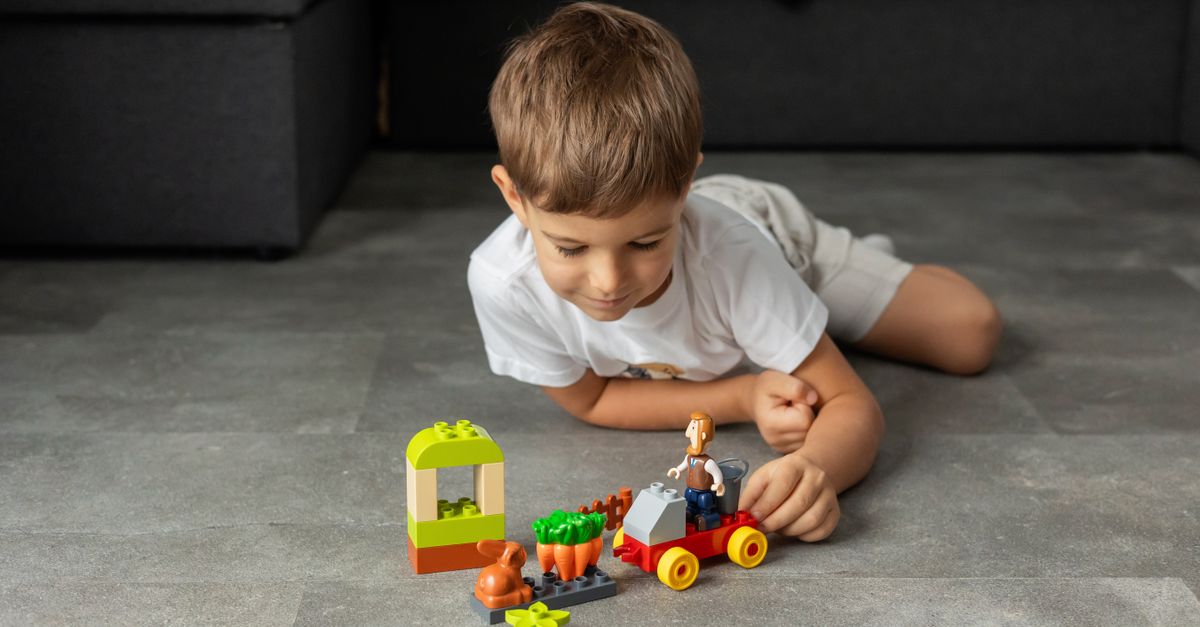
Plus-Plus vs LEGO Classic for Open-Ended Building Play
Which open-ended building toy fits better for independent play, mixed-age creativity, and flexible building sessions?
Read more →
Best Fine-Motor Toys for Early Elementary Kids
Building, threading, peg-placement, and hands-on toys that give early elementary kids distinct kinds of hand-and-finger play.
Read more →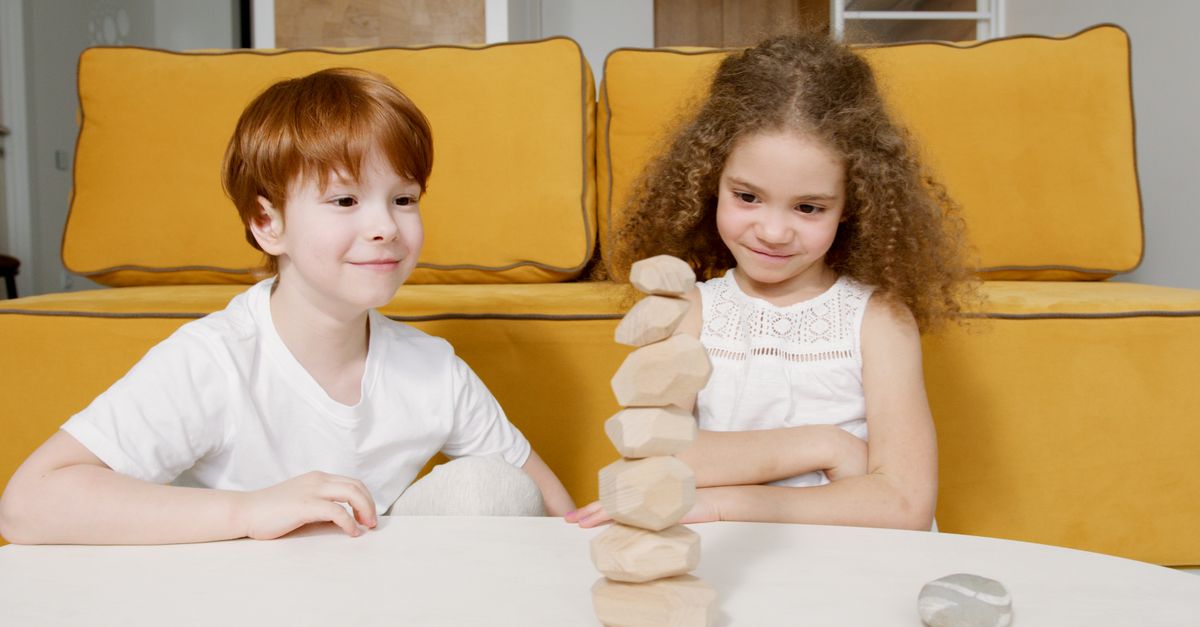
Best Shared Sibling Toys for 6-Year-Olds
Flexible toys siblings can use together around age 6, with fewer arguments and more cooperative play.
Read more →