Best Toys for 7-Year-Olds with ADHD
10 toys that help 7-year-olds with ADHD focus better, regulate energy, and stay engaged longer at home.
Snapshot
| Toy | Age | Price | Best for | Link |
|---|---|---|---|---|
| #1 Learning Resources Mental Blox Critical Thinking Game | 5+ | CAD $35–$55 | Spatial logic, following directions, and co-solving | Check Price |
| #2 Liquid Motion Bubbler Timer | 3+ | CAD $15–$25 | Visual calming during short reset breaks | Check Price |
| #3 Weighted Lap Pad | 4+ | CAD $25–$45 | Deep-pressure input during homework, meals, and regulation breaks | Check Price |
| #4 Calm Strips (Textured Stickers) | 6+ | CAD $6–$13 | Silent tactile input on desks, notebooks, and devices | Check Price |
Affiliate links. Prices can change.
Age seven needs a mix of sensory regulation and just-enough challenge.
Many seven-year-olds with ADHD are past the toddler-style sensory toy stage, but they still need movement, tactile input, fast feedback, and clear structure. The right toy should make it easier to start, easier to stay with the activity, and easier to stop without a fight.
Learning Resources Mental Blox Critical Thinking Game
Reliable engagement, low setup friction, and strong replay value for real family routines.
This guide focuses on toys that are practical, repeatable, and useful beyond the first week. For younger siblings or kids who still need simpler play, compare this with best toys for 6-year-olds with ADHD. For broader sensory support, start with best sensory toys for ADHD kids.
What to Look For
- Fast entry. If setup is complicated, attention disappears.
- Clear feedback. Kids stay engaged when they can see progress quickly.
- Replay value. Good toys survive past the novelty spike.
- Regulation support. The best toys help kids recover, not just stay busy.
- A real job for the toy. At seven, “something to fiddle with” is less useful than “this helps during homework,” “this is for calm-down time,” or “this is the puzzle we do after dinner.”
How to Match the Toy to the Moment
A toy that works during a calm Saturday morning might fail completely after school. Before buying, think about when you need help most:
- After school: choose low-demand sensory tools, movement cards, or visual calmers.
- Homework time: choose silent fidgets, lap pressure, or short logic puzzles.
- Sibling play: choose cooperative or co-solving toys with clear turns.
- Bedtime wind-down: avoid competitive toys and choose slow visual or body-awareness tools.
If evenings are the hardest part of your day, the related guides on best calm-down toys for after school and best bedroom calm toys for night routine are worth reading next.
Our Top 6 Picks
Spatial logic, following directions, and co-solving
Pros
- ✓ Good group/sibling play
- ✓ Strong spatial reasoning
- ✓ Low-tech and classroom-friendly
Cons
- ✗ Requires reading or verbal prompts
- ✗ Pieces can scatter
- ✗ Less flashy as a gift
Mental Blox is a strong fit because it gives ADHD kids a visible problem to solve with their hands. Instead of asking a seven-year-old to “focus,” it gives them a card, blocks, and a clear challenge.
The best use is co-solving. Read the prompt, let your child build, then ask one helpful question instead of taking over. This makes it especially useful for kids who can think spatially but struggle with multi-step verbal directions. It is also more flexible than a one-and-done puzzle because you can use the cards, copy each other's builds, create memory challenges, or make sibling “build this” rounds.
Liquid Motion Bubbler Timer
Visual calming during short reset breaks
Pros
- ✓ Quiet visual input
- ✓ Low setup
- ✓ Good calm-down corner fit
Cons
- ✗ Can leak if damaged
- ✗ Mostly passive
- ✗ Some kids lose interest quickly
A liquid motion timer is not meant to entertain for half an hour. Its job is to slow the moment down. That makes it useful for transitions, waiting, frustration breaks, and the first few minutes after school.
For some kids, the slow dripping gives enough visual input to stop the escalation cycle. For others, it becomes boring quickly. Pair it with a simple instruction: flip it twice, breathe while it drips, then choose the next activity. If you are building a dedicated reset area, see calm-down corner toys that actually help.
Weighted Lap Pad
Deep-pressure input during homework, meals, and regulation breaks
Pros
- ✓ Grounding pressure input
- ✓ No setup needed
- ✓ Works across routines
Cons
- ✗ Too heavy for some kids
- ✗ Not ideal for travel
- ✗ Needs correct weight selection
A weighted lap pad is not a toy in the classic sense, but it can be one of the most useful supports in the house. Deep pressure can help some kids feel more grounded during seated tasks, especially homework, reading, meals, or quiet time.
Fit matters. A lap pad should feel calming, not restrictive. Use it only when your child wants it, follow the product's weight guidance, and avoid treating it like a rule. It is best as an option: “Do you want the lap pad while we do two math questions?”
Silent tactile input on desks, notebooks, and devices
Pros
- ✓ Invisible in class
- ✓ No loose parts
- ✓ Great for quick regulation
Cons
- ✗ Adhesive wears over time
- ✗ Limited texture per strip
- ✗ Needs clean surfaces
Calm Strips work because they remove the “where did the fidget go?” problem. Stick one on a homework pencil box, notebook, bedframe, or desk edge and it becomes quiet tactile input that is always available.
They are especially helpful for kids who pick at sleeves, chew pencils, tap loudly, or grab random objects during focus tasks. They will not replace active play, but they can make boring minutes more tolerable. For more discreet options, see fidget toys that don't look like fidget toys and best desk fidgets for homework time.
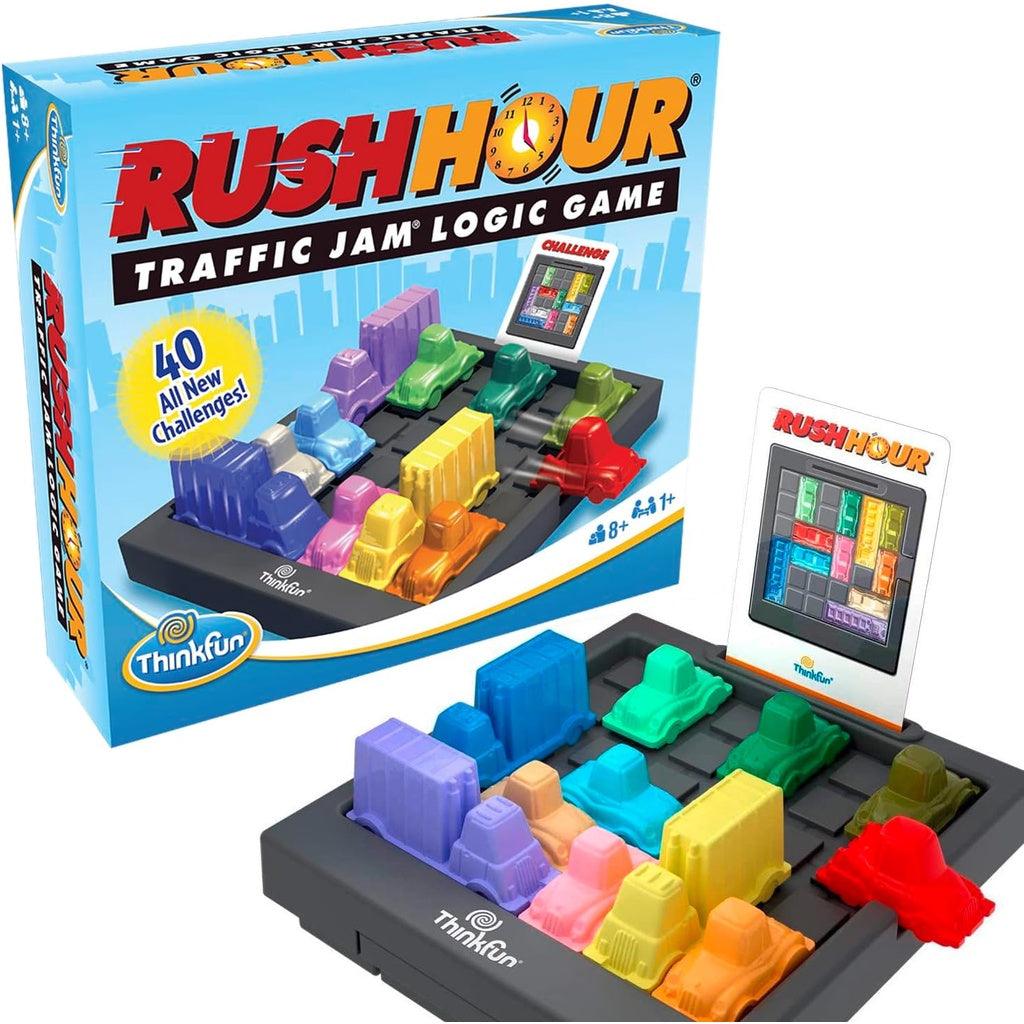
ThinkFun Rush Hour Junior
Fast-start traffic-jam logic puzzles
Pros
- ✓ Very low setup
- ✓ Clear challenge cards
- ✓ Good early logic practice
Cons
- ✗ Single-player
- ✗ Can feel repetitive
- ✗ Limited collaborative play
Rush Hour Junior is a good seven-year-old ADHD toy when your child likes a defined challenge. The board sets up quickly, the goal is obvious, and the cards create a built-in progression.
The trap is pushing too hard. If a puzzle goes from interesting to stuck, ADHD frustration can rise fast. Let your child skip cards, talk through moves, or use it as a parent-child puzzle. If your main goal is quiet logic, Mental Blox vs Rush Hour Junior gives a more direct comparison.
The Kids' Yoga Deck
Guided movement breaks and body-awareness practice
Pros
- ✓ No pieces beyond cards
- ✓ Good transition tool
- ✓ Works solo or with parent prompts
Cons
- ✗ Needs participation
- ✗ Not a toy every kid chooses independently
- ✗ Cards can scatter
A yoga deck is useful when the problem is not boredom but body state. Seven-year-olds with ADHD often need help noticing whether they are revved up, floppy, frustrated, or restless. Movement cards give that energy a script.
Use two or three cards at a time. Let your child choose one stretch, one balance pose, and one breathing card. Keep it playful rather than corrective. “Let's reset our bodies” lands better than “calm down.” For more movement-based resets, see best toys for focus breaks between homework.
Want better toy picks without the research rabbit hole?
Short, practical recommendations by age, need, and budget.
Practical Setup Tips
1) Keep only 3 to 5 toys visible
Fewer options usually means deeper play and less overwhelm. Keep one movement option, one sensory option, one logic option, and one open-ended favourite available.
2) Use short play blocks
Try 15 to 25 minute sessions with a clear start and finish. ADHD kids often do better with a small complete task than an open-ended “go play.”
3) Pair movement with focus toys
A quick movement break before table play improves transitions. Yoga cards before Mental Blox, or three wall pushes before Rush Hour Junior, can change the whole tone.
4) Define the job before the toy comes out
Say “this is for a homework reset,” “this is for quiet hands,” or “this is our after-school decompression toy.” Clear purpose makes it easier to build a routine.
FAQ
Are these toys only for kids with a diagnosis?
No. These picks can help many kids who need better focus, calmer transitions, or lower-stimulation play. A diagnosis can guide support, but the toy still needs to fit the child in front of you.
How many toys should we use at one time?
Start with 3 to 5 active options. Too much visual choice can reduce sustained attention and create more negotiation than play.
What if my child gets bored quickly?
Use short sessions, rotate weekly, and focus on toys with immediate feedback and open-ended replay. Boredom is not always failure; sometimes the task just needs a clearer goal.
Should I buy sensory toys or thinking toys first?
If your child is frequently dysregulated, start with sensory and movement support. If regulation is manageable but homework or boredom is the issue, add logic and building toys.
Related reads
- Best Sensory Toys for ADHD Kids
- Learning Toys for ADHD Kids
- Calm-Down Corner Toys That Actually Help
- Best Toys for Emotional Regulation Kids
- Best Homework Fidgets for Kids
If You Can Only Buy One
Learning Resources Mental Blox Critical Thinking Game.
It gives the best balance of calm engagement, flexible challenge, and long-term replay for most households. It is also easier to turn into shared play than most single-purpose fidgets.
Want better toy picks without the research rabbit hole?
Get concise recommendations by age, need, and budget.
Where to go next
By age
Best Homework Break Toys for 7-Year-Olds
Keep the recommendations age-appropriate for your kid’s stage.
By need
Sensory, Movement, and Structured Play for Kids With ADHD
Jump to picks focused on ADHD, sensory, and regulation support.
By budget
Best Gifts for Kids Under $25 (2026)
Compare strong options in lower price brackets before you buy.
Related Articles
Best Toys for Kids Who Rush Through Homework
Four optional short reset activities, with clear stop points, practical limits, and no promise to change homework speed or accuracy.
Read more →
Contained Bedroom Toys: Three Low-Mess Picks
Three contained bedroom toys, with storage, sound, light, timing, and shared-room limits spelled out.
Read more →
Calm Strips vs Marble Mesh Fidget for Classroom Focus
A quiet fidget comparison for school, homework, and kids who need discreet tactile input.
Read more →