Best Toys for 4-Year-Olds (Learning Through Play) (2026)
12 genuinely useful toys for 4-year-olds that build language, motor skills, creativity, and early STEM without feeling like homework.
Top Picks Snapshot
Fast compare| Toy | Age | Price | Best for | Link |
|---|---|---|---|---|
| Magna-Tiles Classic 100-Piece | 3+ | ~$120 | Best all-around toy for 4-year-olds | Check Price |
| LEGO DUPLO Town Deluxe Brick Box | 1.5+ | ~$70 | Fine motor + imaginative scene building | Check Price |
| Osmo Little Genius Starter Kit | 3-5 | ~$100 | Guided learning with movement and touch | Check Price |
| Kinetic Sand Sandbox Set | 3+ | ~$30 | Sensory play and calming transitions | Check Price |
Affiliate links. Prices can change.
Age four is peak curiosity.
They ask "why" all day, start making up wild stories, and want toys that do more than blink and play a song.
Magna-Tiles Classic (100-Piece Set)
Open-ended, no rules required, and grows with your child. Great for spatial skills, storytelling, and cooperative play.
The best toys at this age are simple enough to use independently, but open-ended enough to stay fun for years.
What matters most at age 4
- Open-ended play over single-purpose toys
- Hands-on building and pretend scenarios
- Short setup, long play (if setup is annoying, it won't get used)
- Durability (because four-year-olds test everything)
Top picks
Magna-Tiles Classic 100-Piece
Best for: Best all-around toy for 4-year-olds
Pros
- ✓ Infinite builds
- ✓ Strong independent play
- ✓ Great for sibling play
Cons
- ✗ Pricey
- ✗ Need big set for best value
- ✗ Magnets can weaken over years
If you want one toy that gets used daily, this is it.
LEGO DUPLO Town Deluxe Brick Box
Best for: Fine motor + imaginative scene building
Pros
- ✓ Easy to handle
- ✓ Huge creative range
- ✓ Very durable
Cons
- ✗ Can feel repetitive with smaller sets
- ✗ Storage needed
DUPLO at age 4 is still a win, especially for kids who enjoy building worlds.
Osmo Little Genius Starter Kit
Best for: Guided learning with movement and touch
Pros
- ✓ Interactive without passive screen time
- ✓ Excellent literacy/pre-math exposure
- ✓ Engaging characters
Cons
- ✗ Requires iPad
- ✗ Pieces can get lost
- ✗ Best with parent setup first
One of the better "smart" options if you already own an iPad.
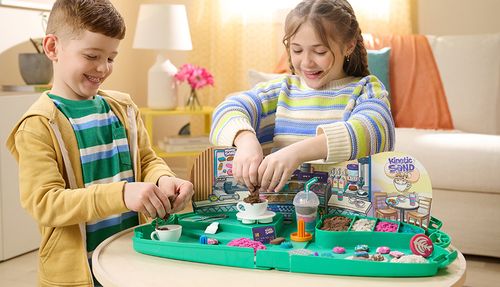
Kinetic Sand Sandbox Set
Best for: Sensory play and calming transitions
Pros
- ✓ Mess-light sensory play
- ✓ Very calming
- ✓ Easy reset
Cons
- ✗ Can still get everywhere
- ✗ Dries over time if not sealed
Fantastic for post-daycare decompression.
Melissa & Doug Wooden Building Blocks (100)
Best for: Classic stacking, balance, and open-ended play
Pros
- ✓ Simple and timeless
- ✓ Strong motor skill work
- ✓ Great value
Cons
- ✗ No novelty factor
- ✗ Needs floor space
Old-school for a reason. Blocks still work.
Play-Doh Kitchen Creations Starter
Best for: Creativity + hand strength
Pros
- ✓ Cheap and engaging
- ✓ Great for hand control
- ✓ Pretend play booster
Cons
- ✗ Dries out if left open
- ✗ Cleanup required
Easy win, especially if your child likes pretend cooking.
Yoto Mini Player
Best for: Screen-free stories and independent listening
Pros
- ✓ No ads, no algorithm
- ✓ Builds listening stamina
- ✓ Travel friendly
Cons
- ✗ Cards are extra
- ✗ Initial setup needed
Great for quiet time and winding down.
Learning Resources Pretend & Play Cash Register
Best for: Early number sense and social play
Pros
- ✓ Natural counting practice
- ✓ Role-play friendly
- ✓ Durable
Cons
- ✗ Chunky storage footprint
- ✗ Sound effects may annoy adults
Math practice disguised as shopkeeper roleplay.
What to skip at this age
- Overly complex STEM kits with heavy instructions
- Toys with one trick and no replay value
- Tiny-piece sets that frustrate more than teach
Best combo if you're buying just 3
1. Magna-Tiles (build + imagination)
2. Kinetic Sand (sensory + calm)
3. Yoto Mini (language + independent listening)
That gives you movement, calm, creativity, and language without overloading your shelves.
FAQ
Are educational toys better than regular toys?
Only if the child actually uses them. A "less educational" toy played with every day beats a perfect learning toy that sits untouched.
How many toys should a 4-year-old have out at once?
Fewer than most homes currently have. Toy rotation works. Keep 6-10 high-use toys accessible and rotate weekly.
Is screen-based learning okay at 4?
In small doses, yes. Prioritize interactive over passive. If a screen toy turns your child into a zombie, it's not helping.
Related guides: Best creative toys for 5-year-olds | Best toys for kids who get bored easily
Affiliate Disclosure: Smart Toy Guide is a participant in the Amazon Services LLC Associates Program. When you buy through our links, we may earn a small commission at no extra cost to you. This helps us keep the site running and continue creating free content. Read our full disclosure.
Related Articles

Best Travel Toys for Airplanes (Kids Actually Use) (2026)
12 carry-on friendly travel toys for toddlers and kids that reduce boredom, meltdowns, and screen-dependence on flights.
Read more →
Best Gifts for Kids Under $25 (2026)
10 genuinely good kids gifts under $25. Budget-friendly picks that feel thoughtful, useful, and fun.
Read more →
Best Subscription Boxes for Kids (2026)
8 kids' subscription boxes compared: KiwiCo, Lovevery, Little Passports, and more. What's actually worth the monthly cost.
Read more →